


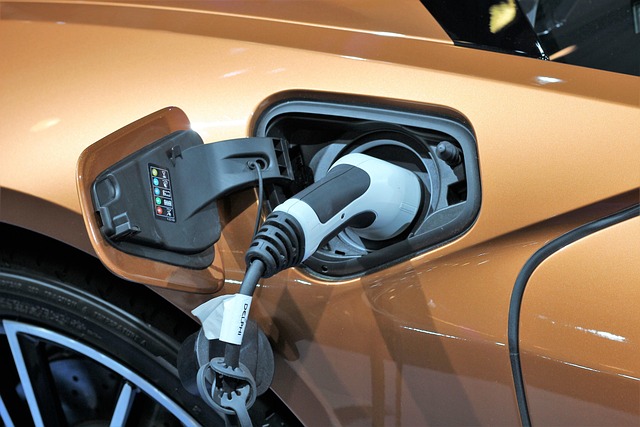

BMW Surpasses 2 Million EV Production Milestone
BMW’s achievement of producing over two million electric vehicles marks a decisive step in its transformation from a traditional automaker to a global leader in electrification. This milestone reflects not only the brand’s technical maturity but also its ability to scale electric mobility across diverse market segments. For the premium automotive sector, BMW’s progress signals how legacy manufacturers can compete with pure EV players while maintaining profitability and brand prestige.
BMW’s Milestone in Electric Vehicle Production
BMW’s production surpassing two million electric units underscores a strategic inflection point. It demonstrates the company’s long-term commitment to electrification and sets the tone for its future strategy under platforms like Neue Klasse.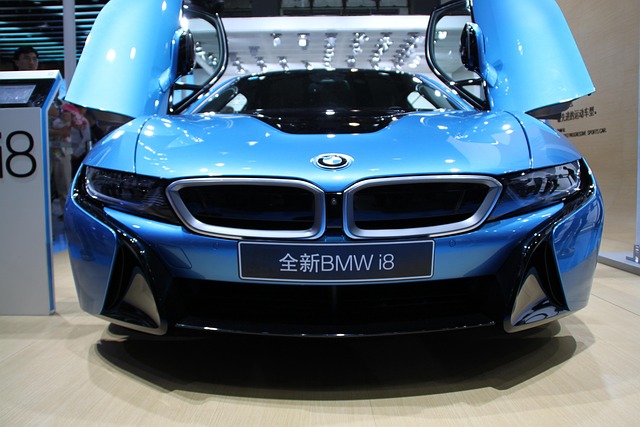
The Significance of Surpassing 2 Million Electric Units
Crossing the two million mark is more than a numerical feat; it is a strategic benchmark that validates BMW’s electrification roadmap. In an industry where Tesla dominates volume and Mercedes-Benz accelerates its EQ lineup, this figure reinforces BMW’s capability to balance scale and quality. The milestone also strengthens investor confidence, suggesting that BMW can maintain momentum as global EV adoption accelerates.
When compared to global EV production trends among premium automakers, BMW’s progress stands out for its integration of plug-in hybrids and full-electric models under one scalable manufacturing system. This hybridized approach has allowed it to stay profitable during transition years when full-electric demand fluctuated by region.
From a market positioning perspective, achieving this level of output cements BMW as one of the few heritage brands capable of competing head-to-head with EV specialists while preserving its engineering identity rooted in performance and precision.
Historical Context of BMW’s Electrification Journey
BMW’s path toward electrification began with experimental hybrid concepts in the early 2000s, leading to the launch of the i3 in 2013—a vehicle that redefined urban mobility with its carbon-fiber chassis and sustainable materials. Subsequent models like the i8 bridged performance with eco-conscious design, setting benchmarks for hybrid sports cars.
Key milestones include the expansion of eDrive technology across core series such as the 3 Series and X5, followed by fully electric models like the i4 and iX. Each iteration reflected incremental improvements in battery efficiency, range, and software integration.
Sustainability has remained central to this evolution. BMW integrated renewable energy sourcing across plants and committed to reducing lifecycle emissions per vehicle by over 40% by 2030. These goals align with broader EU decarbonization frameworks and reflect a manufacturing philosophy that ties profitability directly to environmental responsibility.
Strategic Shifts in BMW’s Electric Vehicle Portfolio
As consumer expectations diversify, BMW has expanded its electric portfolio beyond niche offerings into mainstream luxury categories. This shift is driven by modular architectures enabling flexibility across body styles and powertrains.
Expansion Across Model Lines and Market Segments
BMW now offers electric variants across sedans (i4), SUVs (iX3, iX), and performance vehicles (i7 M70). This diversification ensures coverage across key luxury segments without diluting brand identity. The company continues to produce internal combustion models but increasingly integrates shared components through scalable platforms like CLAR, easing production complexity.
The upcoming Neue Klasse architecture represents a leap forward—it will underpin next-generation bmw electric car models starting mid-decade, offering improved energy density, faster charging times, and reduced manufacturing costs through unified cell technology.
Balancing legacy ICE models with these new architectures allows BMW to maintain market share during transitional years while progressively shifting investment toward full electrification.
Technology Integration and Platform Innovation
Technological evolution remains central to BMW’s competitive edge. Advances in battery chemistry—particularly high-nickel cathodes—have extended range without compromising performance. Vehicle efficiency gains come from weight optimization using aluminum-intensive structures and aerodynamic refinements derived from wind tunnel testing at Munich facilities.
The move toward software-defined vehicle architecture transforms each bmw electric car into an upgradable digital platform. Over-the-air updates now enable continuous improvement post-sale, enhancing safety features, infotainment systems, and energy management algorithms.
Digitalization within production lines further enhances flexibility. Smart robotics synchronized via cloud-based monitoring reduce downtime while optimizing resource use—a model consistent with Industry 4.0 standards adopted across German automotive manufacturing hubs.
Manufacturing Transformation and Global Production Footprint
BMW’s global footprint reflects a deliberate balance between localization and scalability. Its manufacturing transformation focuses on agility—producing multiple drivetrains on shared lines without sacrificing output quality or sustainability targets.
Scaling Production Capacity Across Global Facilities
Major EV production centers include Dingolfing (Germany), Shenyang (China), Spartanburg (U.S.), and Debrecen (Hungary). Each facility specializes in distinct model families while sharing standardized digital control systems for consistent quality assurance worldwide.
Localization strategies help mitigate risks related to tariffs or supply chain disruptions. By sourcing batteries regionally—such as CATL partnerships in China or Northvolt collaborations in Europe—BMW reduces logistical costs while strengthening local economic ecosystems.
Collaborative initiatives extend beyond suppliers; joint ventures with semiconductor producers ensure stable access to critical microchips used in advanced driver assistance systems (ADAS) integral to modern EVs.
Sustainability and Resource Efficiency in Production Processes
Circular economy principles are embedded throughout BMW factories: closed-loop recycling systems recover aluminum scrap; battery modules undergo second-life applications before material extraction; water usage per vehicle is minimized through filtration reuse cycles.
Energy sourcing increasingly relies on renewables—solar installations at Leipzig plant alone offset thousands of tons of CO₂ annually—supporting carbon-neutral assembly goals across Europe by 2025. These measures underscore how industrial sustainability can coexist with high-volume output when guided by data-driven efficiency metrics.
Market Dynamics and Competitive Positioning
The competition among luxury automakers intensifies as electrification reshapes brand hierarchies. Within this landscape, BMW leverages engineering credibility and customer trust built over decades of precision craftsmanship.
Comparing BMW’s EV Output with Industry Peers
Benchmarking against Tesla reveals contrasting strategies: Tesla leads on pure volume but lacks diversification across hybrid segments where BMW maintains strength. Mercedes-Benz follows closely through EQ-branded expansion yet trails slightly in total electrified deliveries due to later entry into compact categories.
Audi’s e-tron portfolio competes directly but faces cost challenges linked to platform overlap with combustion counterparts. In contrast, BMW benefits from modularity allowing quicker adaptation between drivetrain types without major retooling expenses—a structural advantage that preserves margins even amid volatile raw material prices.
Within the luxury EV segment, market share analyses show steady upward momentum for BMW since 2021 as consumers respond positively to balanced performance-efficiency ratios characteristic of its vehicles.
Consumer Perception and Brand Evolution in the Electric Era
Consumer perception has evolved: buyers now expect sustainability without sacrificing driving dynamics—a combination that aligns perfectly with BMW’s “Sheer Driving Pleasure” ethos reinterpreted for electrification. Design language emphasizes aerodynamic purity while retaining signature proportions such as short overhangs and rear-wheel bias stance.
Driving experience remains central; instant torque delivery paired with adaptive suspension maintains hallmark handling precision even under heavier battery loads. Post-purchase engagement through digital ecosystems—MyBMW app services or connected charging networks—strengthens loyalty by integrating ownership into daily digital routines rather than treating it as isolated product use.
Policy, Regulation, and Future Growth Trajectories
Regulatory alignment shapes every strategic decision within automotive transformation cycles. For BMW, compliance is not reactive but anticipatory—embedding future policy requirements into present-day product planning frameworks.
Alignment with Global Emission Standards and Policy Frameworks
European Union mandates targeting zero-emission new car sales by 2035 drive much of BMW’s roadmap design. The company already meets interim CO₂ fleet targets set under EU Regulation (EU) 2019/631 through progressive electrification mix adjustments each fiscal year.
In the U.S., alignment with EPA Tier 3 standards ensures compatibility across state-level zero-emission programs like California ZEV mandates. Meanwhile, partnerships within China support compliance under NEV credit systems while tapping into government incentives stimulating local demand growth for premium EVs.
Government subsidies continue influencing near-term sales volumes though long-term competitiveness depends more on intrinsic cost parity achieved via technological innovation than policy dependence alone.
Outlook for BMW’s Next Phase of Electrification Strategy
The next phase begins with Neue Klasse rollout from 2025 onward—a platform engineered exclusively for electric propulsion featuring sixth-generation battery cells promising up to 30% improved range efficiency per kilowatt-hour compared to current packs. Production will commence at Debrecen before scaling globally through flexible modular lines adaptable across multiple body configurations.
By early 2030s, projections indicate majority-electric fleet composition supported by declining battery costs approaching $100/kWh threshold cited by BloombergNEF as industry tipping point for mass affordability within premium segments. For investors, this transition suggests sustained profitability potential tied less to unit margins than recurring software revenue streams derived from connected services integrated into every bmw electric car sold after mid-decade launches.
FAQ
Q1: Why is reaching two million EVs significant for BMW?
A: It confirms scalability of its electrification strategy while maintaining profitability amid global transition toward sustainable mobility solutions.
Q2: What role does Neue Klasse play in future production?
A: Neue Klasse introduces next-gen architecture optimized for electric drivetrains enabling higher efficiency, lower costs, and enhanced digital functionality starting from 2025 models onward.
Q3: How does BMW compare against Tesla or Mercedes-Benz?
A: While Tesla leads volume-wise, BMW excels through diversified product mix balancing hybrids and full-electrics; Mercedes-Benz remains close competitor focusing on EQ expansion trajectory.
Q4: Which markets contribute most to BMW’s EV growth?
A: Europe leads due to regulatory incentives followed closely by China where local partnerships enhance scale; North America shows rapid acceleration driven by SUV demand patterns.
Q5: How does sustainability influence manufacturing decisions?
A: Every factory integrates renewable energy sourcing alongside closed-loop recycling ensuring reduced lifecycle emissions aligning corporate goals with international climate commitments such as Paris Agreement targets.