




BYD’s Smallest and Cheapest Electric Car Gets LiDAR Self-Driving Tech
BYD has taken a bold step by integrating LiDAR into its smallest and cheapest electric car, signaling a new era where high-end autonomous technologies reach mass-market vehicles. This move not only redefines the perception of affordability in the EV sector but also positions BYD as a pioneer in making advanced driver-assistance systems accessible to everyday consumers. The inclusion of LiDAR is not just a technical upgrade—it’s a strategic statement about how automation can coexist with cost efficiency.
The Emergence of BYD’s Affordable Electric Vehicle with LiDAR Integration
BYD’s latest initiative to equip an entry-level EV with LiDAR reflects both its market ambition and technological confidence. As global competition intensifies, the company aims to merge affordability with intelligence, challenging the notion that advanced autonomy belongs only in premium cars.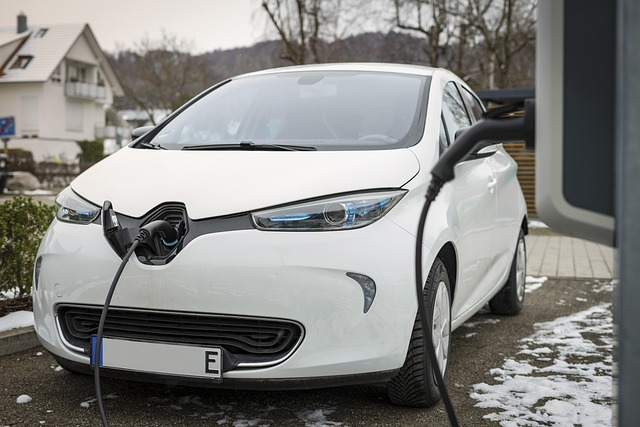
BYD’s Position in the Global EV Market
BYD has rapidly evolved from a battery manufacturer into one of the world’s largest electric vehicle producers. Its growth trajectory has been defined by vertical integration—controlling everything from battery chemistry to software development. In 2023, BYD surpassed several international rivals in unit sales, largely due to its ability to scale production while maintaining quality control across diverse models.
Compared with competitors like Wuling or Renault in the budget EV segment, BYD offers richer technology stacks even at lower price points. Its Dolphin and Seagull models already feature intelligent cockpit systems and efficient blade batteries, setting benchmarks for performance and safety within compact categories.
Introducing autonomous features such as LiDAR into this lineup signals a shift from value-driven design toward innovation-driven differentiation. It demonstrates that cost-sensitive markets no longer need to compromise on intelligence or safety.
The Strategic Motivation Behind Integrating LiDAR into a Low-Cost EV
The decision to integrate LiDAR into an affordable model carries deep strategic implications. Traditionally, LiDAR sensors have been reserved for luxury or prototype vehicles due to their high cost. By democratizing this technology, BYD challenges existing pricing norms and accelerates consumer exposure to semi-autonomous driving experiences.
From an economic standpoint, integrating solid-state LiDAR units—now smaller and cheaper than mechanical counterparts—creates a favorable cost-benefit ratio. For manufacturers, it opens opportunities for software-based differentiation without significant hardware expenses. For consumers, it enhances perceived value by offering premium-level safety at an accessible price.
This move also influences consumer psychology: when advanced sensing becomes standard even in entry-level cars, expectations for safety and automation rise across the entire market spectrum.
Technical Overview of LiDAR Integration in BYD’s Compact EV
LiDAR integration within a compact platform presents unique engineering challenges that go beyond simple sensor placement. Every gram of weight and watt of energy matters when dealing with small urban EVs designed for efficiency.
Architecture and Placement of the LiDAR System
The system architecture centers around front-mounted solid-state LiDAR units positioned near the windshield or roofline for optimal field-of-view coverage. Engineers must balance aerodynamic drag against sensor visibility—an especially delicate task for compact cars where every contour affects range efficiency.
Weight distribution is another constraint; mounting too high can alter vehicle dynamics, while low placements risk contamination from road debris. Therefore, modular housings with self-cleaning lenses are being explored to maintain consistent performance under real-world conditions.
Coordination between LiDAR units, cameras, and radar sensors forms a multi-modal perception network. This data fusion enables redundancy: if one sensor type faces interference (for instance, glare affecting cameras), others compensate seamlessly.
Software Stack and Sensor Fusion Capabilities
The onboard computing stack interprets millions of data points per second from LiDAR streams using dedicated AI processors optimized for low latency. These processors synchronize with HD maps stored locally or updated via cloud connectivity, allowing real-time modeling of surroundings down to centimeter precision.
Through sensor fusion algorithms combining radar depth data and camera color information, the system improves object classification accuracy—distinguishing pedestrians from static obstacles even under poor lighting. In traffic scenarios typical of dense Asian cities, such precision drastically reduces false alarms while supporting smoother adaptive cruise control behavior.
Manufacturing and Cost Optimization Strategies for LiDAR Deployment
To make this technology viable at scale within the cheapest electric car category, BYD had to rethink manufacturing economics around component design and sourcing logistics.
Innovations in Component Design and Supply Chain Efficiency
Solid-state or hybrid LiDAR designs eliminate moving parts found in traditional spinning systems, reducing both production complexity and maintenance needs. This simplification aligns perfectly with mass-market economics where reliability trumps experimental sophistication.
Partnerships with domestic sensor suppliers further cut costs by minimizing import dependencies. Localization efforts extend across optics fabrication and semiconductor packaging—areas where China’s industrial ecosystem already holds competitive advantages.
Such vertical integration streamlines procurement cycles while enhancing quality control during assembly phases—a strategy that mirrors BYD’s earlier success in battery manufacturing efficiency.
Balancing Performance with Affordability in Mass Production
Achieving balance between performance metrics like detection range (typically 120–150 meters) and affordability required iterative calibration during pilot runs. Lower-resolution sensors suffice for urban driving contexts where top speed rarely exceeds 100 km/h.
A modular approach allows shared platforms across multiple vehicle models: once validated on one compact EV, similar sensor suites can be adapted upward into mid-range sedans without major redesigns. This scalability reduces amortized R&D costs per unit sold.
Ultimately, these efficiencies help maintain competitive retail pricing even after adding expensive sensing components—keeping BYD’s small EVs within reach of mainstream buyers while still advancing technological sophistication.
The Role of LiDAR in Enhancing Autonomous Driving Capabilities
Adding LiDAR transforms driver assistance from reactive safety features into proactive autonomy layers capable of semi-independent navigation under controlled conditions.
Evolution from Driver Assistance to Semi-Autonomous Operation
LiDAR enables precise environmental mapping necessary for Level 2+ or Level 3 automation functions such as automated lane changes or traffic jam assist modes. These capabilities rely on centimeter-level accuracy unattainable through camera-radar setups alone.
In real-world testing across congested city streets, vehicles equipped with such systems demonstrate smoother acceleration profiles and fewer abrupt braking events—a sign that predictive modeling truly enhances comfort alongside safety compliance under emerging ISO 26262 standards governing functional automotive safety.
Comparative Analysis with Camera-Radar-Based Systems
While camera-radar systems remain dominant due to lower costs, they struggle under certain conditions like fog or night-time glare where depth estimation falters. LiDAR provides direct distance measurements unaffected by ambient light variations.
However, it remains sensitive to heavy rain or dust accumulation which can scatter laser pulses; therefore hybrid architectures combining all three modalities offer best-in-class redundancy—a principle increasingly endorsed by IEEE research on multi-sensor fusion reliability metrics within autonomous frameworks.
Market Impact and Industry Implications of BYD’s Approach
BYD’s decision reverberates far beyond its own product line—it redefines what “affordable” means within smart mobility discourse globally.
Redefining Value Proposition in the Affordable EV Segment
By embedding advanced sensing hardware inside its cheapest electric car models, BYD effectively shifts consumer focus from price alone toward perceived intelligence value. Entry-level buyers now expect features once limited to flagship vehicles—automatic braking precision or adaptive cruise tuned through AI learning loops—not stripped-down basics.
This evolution pressures other automakers to revisit their low-cost strategies; what was once optional luxury becomes baseline expectation almost overnight as competitive parity adjusts around technology adoption curves rather than raw horsepower metrics.
Competitive Response from Other Manufacturers and Suppliers
Rivals will likely follow suit through accelerated partnerships with sensor startups or Tier-1 suppliers offering miniaturized modules suitable for sub-$20k vehicles. Such ripple effects shorten innovation cycles across supply chains—from optical MEMS development to firmware optimization routines ensuring seamless OTA updates post-sale.
Standardization initiatives may emerge under global bodies like ISO TC204 focusing on intelligent transport systems interoperability frameworks—a necessary step before large-scale deployment across mixed-brand fleets sharing infrastructure networks worldwide.
Future Outlook for LiDAR Adoption Across Electric Vehicle Segments
As economies of scale mature and software ecosystems evolve through continuous updates, LiDAR is poised to migrate beyond experimental phases into mainstream mobility landscapes over this decade.
Technological Advancements Driving Broader Accessibility
Ongoing miniaturization trends reduce both size and unit cost without sacrificing detection fidelity. Coupled with over-the-air firmware improvements extending functionality throughout ownership cycles, these advances transform static hardware into evolving assets adaptable via cloud-linked analytics engines monitoring fleet behavior patterns globally.
This dynamic adaptability makes long-term ownership more appealing since early adopters benefit from incremental capability upgrades rather than obsolescence risks traditionally associated with fixed electronics architectures.
Strategic Implications for BYD’s Long-Term Innovation Roadmap
Data harvested from thousands of mass-market vehicles operating daily will feed machine learning pipelines refining perception algorithms continuously—a feedback loop enhancing future generations’ autonomy reliability rates exponentially faster than lab-only testing could achieve alone.
Such scalable intelligence opens doors toward shared mobility applications where fleets require robust yet inexpensive autonomous solutions—cementing BYD’s leadership not merely as an automaker but as an integrated smart mobility platform provider shaping next-generation transportation ecosystems worldwide.
FAQ
Q1: Why is BYD adding LiDAR to its cheapest electric car?
A: To make advanced autonomous driving features accessible at lower price points while improving safety perception among budget-conscious buyers.
Q2: How does LiDAR improve driving performance compared with cameras?
A: It measures distance directly using laser reflections, offering superior accuracy in depth perception especially under low-light conditions where cameras struggle.
Q3: Will integrating LiDAR significantly increase vehicle prices?
A: Not substantially; solid-state designs have lowered costs enough that inclusion adds marginally compared with benefits gained through enhanced automation features.
Q4: What level of autonomy will these cars achieve?
A: Current configurations target Level 2+ functionality enabling partial self-driving under specific scenarios such as highway cruising or congestion management.
Q5: Could this trend influence other automakers’ strategies?
A: Yes; competitors are expected to adopt similar technologies quickly as consumer expectations shift toward smarter baseline equipment even in entry-tier electric vehicles.