



Thai Auto Sector Facing Crisis Unless EV Policy Is Overhauled, Industry Groups Warn
Thailand’s automotive industry, once the pride of Southeast Asia, now stands at a crossroads. The global shift toward electric vehicles (EVs) is accelerating, yet Thailand’s policy framework lags behind. Without decisive reform, the country risks losing its manufacturing edge to neighbors like Indonesia and Vietnam. Industry leaders caution that inconsistent incentives, weak infrastructure planning, and fragmented regulations could derail Thailand’s EV ambitions. The sector’s survival depends on aligning policy with market realities and rebuilding investor confidence before the next wave of electrification passes it by.
The Current Landscape of Thailand’s Automotive Sector
Thailand’s auto industry remains one of the region’s most mature manufacturing ecosystems, but its traditional strengths are now being tested by technological disruption.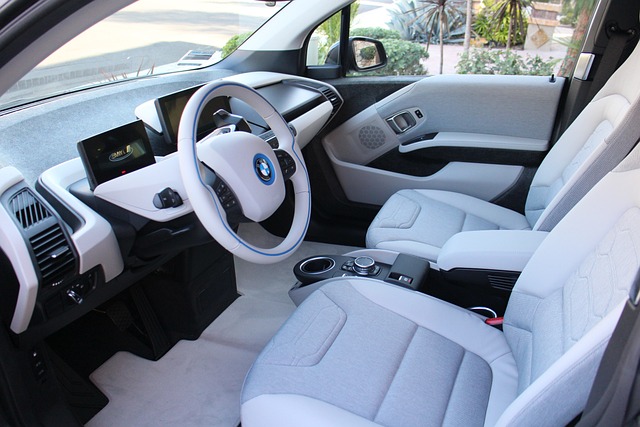
Overview of Thailand’s Automotive Industry Structure
Thailand ranks as the largest vehicle producer in Southeast Asia and among the top ten globally by output. The country produces over 2 million vehicles annually, exporting nearly half to markets such as Australia, Japan, and ASEAN neighbors. Japanese automakers dominate production through joint ventures with local firms. For decades, internal combustion engine (ICE) vehicles have been the economic backbone—supporting hundreds of thousands of jobs across assembly lines, parts suppliers, and logistics networks. This structure has created deep industrial linkages but also made adaptation to EVs more complex.
Policy Environment and Market Dynamics
Government policy has historically favored export-oriented growth through tax incentives for assemblers and component makers. In recent years, Bangkok introduced limited EV subsidies under the “30@30” plan—targeting 30% EV production by 2030—but execution has been uneven. Trade agreements within ASEAN shape competitiveness; Indonesia leverages mineral resources to attract battery manufacturers while Vietnam promotes integrated domestic brands like VinFast. These developments pressure Thai policymakers to act swiftly as global automakers reallocate investment toward electrification.
How Global Shifts Toward Electrification Are Influencing Thai Manufacturers
The global automotive landscape is moving rapidly toward zero-emission mobility. European and Chinese automakers have already committed to phase out ICE models within the next decade. Thai assemblers face rising pressure from parent companies demanding local EV capacity expansion. Yet without coordinated national strategy—covering charging infrastructure and supply chain localization—manufacturers struggle to justify large-scale retooling investments.
Policy Uncertainty and Its Impact on EV Transition?
Despite ambitious targets, uncertainty in Thailand’s EV policy framework continues to undermine progress across production and consumption fronts.
Gaps in Current EV Policy Framework
The current incentive system lacks long-term clarity for both manufacturers and consumers. Subsidy programs are revised frequently without clear timelines for renewal or phase-out. Moreover, inconsistencies persist between industrial policy promoting investment and environmental policy setting emission goals. Energy planning also remains misaligned: while power utilities discuss grid modernization, there is no national roadmap for charging network deployment or battery recycling facilities.
Investor Confidence and Industrial Planning Challenges
Policy ambiguity discourages foreign direct investment (FDI). Investors seek predictable regulatory environments before committing billions in new plants or R&D centers. Delayed decisions on tax breaks or import tariffs disrupt planning cycles for suppliers of motors, batteries, and semiconductors—all critical for EV cars production chains. Local assemblers hesitate to convert existing ICE lines due to uncertain demand signals from both government fleets and private buyers.
How Uncertainty Disrupts Supply Chain Development for EV Components
A fragmented approach slows localization of key components such as battery packs and control systems. Without stable incentives or clear technical standards aligned with international norms like ISO 6469 for electric safety or IEC 61851 for charging systems, suppliers face high compliance costs. This weakens Thailand’s position as a regional hub compared with countries offering integrated policy frameworks.
Potential of EV Cars to Reshape the Industry Structure?
If managed strategically, the rise of EV cars could transform Thailand’s industrial base from traditional assembly toward advanced technology manufacturing.
Shifts in Manufacturing Ecosystems
Transitioning from ICE-focused supply chains requires rethinking everything from casting plants to electronics integration. New entrants specializing in batteries, software management systems, and digital connectivity see opportunities where conventional suppliers may exit. Labor markets will need reskilling programs focusing on mechatronics and high-voltage systems rather than mechanical assembly alone.
Opportunities for New Entrants Specializing in Batteries, Software, and Electronics
Startups focusing on energy storage management or AI-based vehicle diagnostics can thrive if supported by targeted R&D grants. Collaboration with universities could accelerate innovation clusters around Bangkok or Rayong industrial zones—mirroring models seen in China’s Shenzhen ecosystem where hardware startups co-locate near major OEMs.
Implications for Labor Markets and Skill Development Within the Sector
The shift will inevitably reshape employment patterns. Traditional mechanics must adapt to electronics-heavy systems requiring diagnostic tools rather than wrenches. Technical colleges need curriculum updates covering lithium-ion chemistry, cybersecurity in connected vehicles, and smart grid integration principles guided by IEEE standards.
Regional Competition and Strategic Positioning?
Thailand faces intensifying competition from regional peers aggressively courting EV investments through clearer strategies.
Comparative Analysis with Neighboring Countries’ EV Policies
Indonesia positions itself as a global battery hub by leveraging nickel reserves under its “Battery Electric Vehicle Roadmap.” Vietnam integrates brand development through VinFast while offering tax holidays up to 15 years for investors building local supply chains. These coherent frameworks contrast sharply with Thailand’s fragmented approach where overlapping agencies dilute accountability.
Strategic Partnerships with Global Automakers
Partnerships remain crucial for technology transfer. Collaborations with Chinese firms bring expertise in cost-effective mass-market EVs; Japanese alliances ensure continuity in hybrid technologies; European automakers contribute premium design capabilities and advanced safety standards compliant with UNECE regulations. Joint ventures could anchor Thailand as an export base serving ASEAN markets under common tariff regimes.
Positioning Thailand as an Export Base for Next-Generation Vehicles Within the Region
Maintaining export leadership demands upgrading logistics infrastructure at ports like Laem Chabang to handle increased shipments of high-voltage vehicles requiring specialized handling protocols under UN38.3 battery transport rules.
Infrastructure, Energy Policy, and Supply Chain Readiness?
The success of electrification depends not only on factories but also on energy networks capable of supporting large-scale adoption.
Charging Infrastructure Development Needs
Thailand currently has fewer than 2,000 public chargers nationwide—insufficient for projected demand growth beyond 2027. Expansion requires partnerships between utilities such as EGAT and private operators adopting interoperable payment systems similar to Europe’s roaming model under ISO 15118 communication standards.
Public-Private Partnership Models for Sustainable Infrastructure Investment
Public-private collaboration can accelerate rollout through concession models allowing investors long-term revenue recovery from service fees rather than upfront subsidies alone. Transparent regulation will be key to attract institutional capital into this emerging asset class.
Integration With Smart Grid Systems to Balance Energy Demand From EVs
As adoption grows, balancing grid loads becomes critical during peak hours when home charging coincides with residential demand spikes. Smart meters combined with time-of-use tariffs can mitigate strain while enabling renewable integration consistent with IEA recommendations on sustainable mobility transitions.
Battery Production and Recycling Ecosystem Development
Developing a domestic battery ecosystem will determine whether Thailand captures value beyond simple vehicle assembly.
Localizing Battery Supply Chains
Securing raw materials such as lithium or nickel through bilateral agreements within ASEAN would reduce vulnerability to global price swings dominated by a few exporting nations. Establishing pilot cell manufacturing plants supported by government-backed credit lines could stimulate downstream industries including module assembly and energy storage systems for grid applications.
Circular Economy Opportunities
Recycling used batteries presents both economic potential and environmental necessity. Closed-loop recovery systems can reclaim up to 95% of valuable metals using hydrometallurgical processes validated under ISO 14001 environmental management frameworks—reducing dependence on imported resources while minimizing waste generation.
Pathways Toward a Sustainable EV Future in Thailand?
For Thailand to sustain its automotive leadership amid electrification trends, structural reforms must align industrial ambition with environmental responsibility.
Policy Reforms to Strengthen the Transition
Long-term incentives should be codified into law rather than short-term decrees subject to political cycles. Harmonizing emission standards with global benchmarks would attract multinational OEMs seeking consistent compliance regimes across markets defined by UNECE WP29 agreements.
Building an Integrated Ecosystem for Competitiveness
Cross-sector coordination among automakers, utilities, digital firms, and academia is vital to create a cohesive ecosystem supporting innovation across mobility services—from smart charging apps using IoT sensors to predictive maintenance powered by AI analytics platforms deployed at fleet scale.
Developing Workforce Retraining Programs to Align Skills With Future Industry Needs
Human capital remains central: retraining initiatives should target technicians transitioning from ICE maintenance toward high-voltage safety certification programs accredited under IEC guidelines—ensuring workforce readiness as production shifts toward fully electric platforms.
FAQ
Q1: Why is Thailand considered a major automotive hub?
A: It hosts one of Southeast Asia’s largest vehicle manufacturing bases with strong export orientation supported by Japanese joint ventures established over decades.
Q2: What challenges hinder Thailand’s transition toward ev cars?
A: Unclear policies on incentives, limited charging infrastructure planning, and fragmented regulatory oversight slow down investor commitment in new technologies.
Q3: How does regional competition affect Thailand?
A: Countries like Indonesia attract battery investments using resource advantages while Vietnam promotes national brands—pressuring Thailand to refine its strategy quickly.
Q4: What role does domestic demand play in driving change?
A: Local adoption influences economies of scale; without sufficient consumer uptake through pricing support or fleet electrification mandates, manufacturers face low utilization rates.
Q5: Which reforms are most urgent?
A: Establishing consistent long-term incentives aligned with emission goals and integrating energy planning across ministries are immediate priorities if Thailand aims to remain competitive globally.