



Why Does Space Life Science Matter Now?
Space life science starts with a direct question: what happens to living systems when Earth is no longer the normal place to live and work? If you follow Space Science coverage, this field is now close to the center of Moon and Mars planning. It is not only about astronaut medicine. It also covers plants, microbes, cells, tissue models, closed habitats, food systems, and the data records that let scientists compare one mission with another.
A Living Laboratory Above Earth
The International Space Station has given researchers a long-running test site that is hard to match on the ground. NASA’s 2025 station anniversary material notes that continuous human presence began on November 2, 2000, and that the orbiting lab has supported thousands of investigations and technology demonstrations.
That matters because biology needs time to show clear patterns. A short flight may show a stress reaction, while a six-month stay can show whether the body adapts, weakens, or recovers after landing.
Five Human Risks NASA Tracks
NASA’s Human Research Program, in its 2026 risk pages, groups astronaut health concerns around five spaceflight hazards: space radiation, isolation and confinement, distance from Earth, gravity fields, and hostile or closed environments. These risks often overlap during a mission.
Radiation can damage cells, weak gravity can change bones and fluids, and isolation can affect sleep and behavior. None of these risks comes as a separate problem, so mission teams have to study them together.
A Practical Bridge to Earth Medicine
Space life science also feeds useful work back into Earth health. Bed-rest studies, tissue chips, immune research, and bone-loss work all connect with problems seen in aging, hospital care, and long periods of low activity.
The setting is harsh, but the questions are common in medicine. How does the body keep muscle, heal tissue, fight infection, and stay alert under stress?
How Does Microgravity Change the Human Body?
Microgravity does not mean the body sees no effect. It removes the daily pull that the body is built around. Bones no longer carry normal load, muscles do less work against weight, and fluids move in ways that look odd from an Earth point of view. NASA station research summaries describe microgravity as one of the main reasons the ISS can show changes that are hard to separate on Earth.
Bones and Muscles Lose Their Usual Load
On Earth, standing up is a form of work, even when people do not notice it. In orbit, that steady load is missing.
NASA’s Human Research Program states that astronauts use exercise during missions to counter losses in bone density, muscle strength, and heart and blood vessel performance. This is not about gym culture in space; it is basic upkeep, because without planned resistance and aerobic work, the body saves energy by cutting tissue it thinks it no longer needs.
Fluids Move Toward the Head
Fluid shift is another common space problem. NASA station research has linked long missions with vision changes, and researchers have studied whether fluid moving from the lower body toward the head can change pressure and eye shape.
This is why a normal-looking eye scan aboard the ISS can matter as much as a spacewalk for health planning. Small measurements help mission planners check whether a Mars crew can still read displays clearly months from home.
Immune and Gene Signals Shift
The NASA Twins Study, published in Science on April 11, 2019, remains one of the best-known human examples in this field. Scott Kelly spent nearly a year on the ISS while his identical twin, Mark Kelly, stayed on Earth.
NASA reported changes in telomere dynamics, gene expression, immune response, DNA damage signals, and other markers. One useful number is still cited often: 91.3% of Scott Kelly’s gene expression levels returned to baseline within six months after landing, according to NASA’s Twins Study materials.
What Does Radiation Mean for Deep Space Biology?
Radiation is one of the plain hard problems in deep space. Low Earth orbit still gets some help from Earth’s magnetic field. A lunar surface crew or Mars transit crew has less protection. For this reason, space life science has to work with physics, spacecraft design, solar forecasting, and medical monitoring.
Mars Data Set the Scale
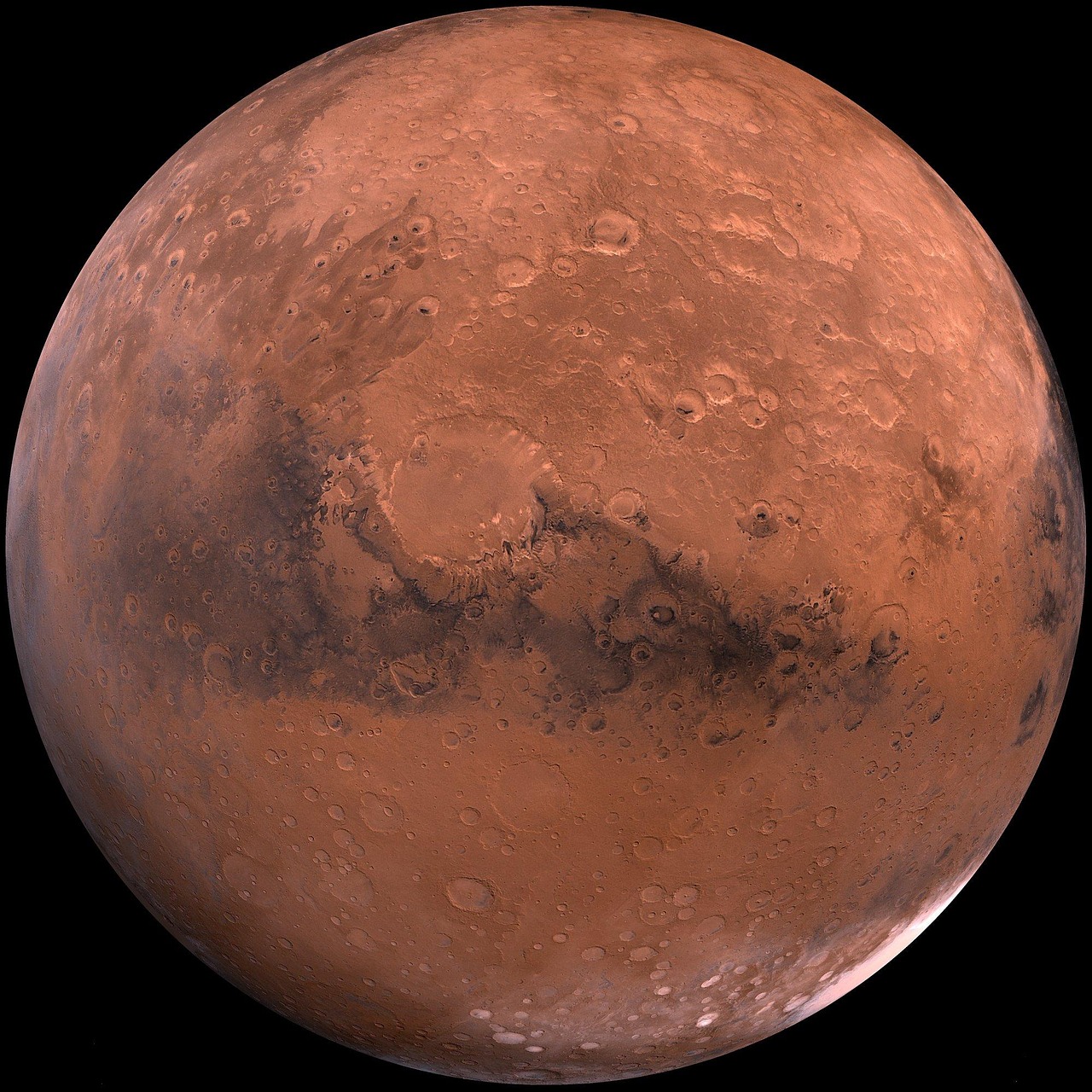
Curiosity’s Radiation Assessment Detector gave mission planners a real measurement instead of a lab-based estimate. NASA reported in December 2013 that Curiosity measured an average surface dose rate of 0.67 millisieverts per day at Gale Crater from August 2012 to June 2013.
NASA also said that, when combined with cruise measurements, a round-trip human Mars mission under similar solar-cycle conditions could be on the order of 1,000 millisieverts. That is why radiation is treated as a mission design issue, not a small note at the end.
Cells Carry the Early Warnings
Radiation harm starts at the cell level. DNA breaks, oxidative stress, inflammatory signals, and cell-cycle changes can appear before a person feels anything wrong.
That is why cell cultures, model organisms, and molecular datasets are not extra science on the side. They are early-warning tools, and NASA’s Space Radiation Element describes ground research at facilities such as the NASA Space Radiation Laboratory at Brookhaven National Laboratory, where scientists test biological effects and shielding ideas before hardware flies.
Shielding and Timing Shape Mission Choices
A Mars ship cannot just be wrapped in unlimited shielding, because mass is costly and heavy shielding can create secondary particles. Mission teams have to weigh materials, vehicle layout, storm shelters, solar timing, and biological countermeasures.
In daily planning terms, it is a bit like preparing for a long desert drive. The difference is that the weather report includes solar particle events, and the nearest safe stop may be millions of miles away.
Can Plants and Microbes Support Longer Missions?
A long mission cannot rely forever on sealed meal packs and fresh cargo. Plants and microbes may become part of the life-support system, food supply, and waste loop. They also bring risks that need close control. A plant chamber is not just a small garden; it is a living setup with water, light, roots, microbes, crew time, and food safety checks.
Fresh Food Beyond Packaged Meals
NASA’s 2025 ISS science summary says astronauts have grown more than 50 plant species in space, including tomatoes, bok choi, romaine lettuce, and chili peppers. NASA’s Veggie and Advanced Plant Habitat work shows why this matters for longer missions. See also: AI.
Fresh crops can add nutrients, support crew morale, and help researchers learn how roots, leaves, microbes, and water systems behave when gravity is not pulling every droplet downward. That knowledge is basic work for any future food system away from Earth.
Microbes as Partners and Risks
Microbes are not all bad for a spacecraft. Some support plant growth, help recycle materials, or point toward future biological production of useful compounds.
At the same time, a closed spacecraft is also a place where unwanted microbes can stay on surfaces, in water systems, and around people. NASA’s Space Biology Program includes bacteria, fungi, plants, animals, and cell systems because a habitat is an ecosystem, not just a metal shell with air inside.
Closed Habitats Need Biological Balance
Future crews will need systems that recycle water, handle waste, grow food, and keep air breathable with less help from Earth. NASA’s Space Crops material, updated in 2026, frames plant research as part of future exploration because crops can support food, oxygen, fiber, fuel, and habitat quality.
The business-like point is simple: biology can reduce resupply pressure, but only if it stays stable and easy enough for crews to manage. If it fails often, it becomes another operating burden.
How Do Open Data and Ground Studies Speed Safer Exploration?
Flight time is limited, and crew time is even more limited. Space life science therefore depends on careful reuse of data and well-run ground analogs. The best experiment is not always the most eye-catching one. Often it is the one with clean metadata, matched controls, and samples that another lab can study five years later.
NASA OSDR Makes Experiments Reusable
NASA’s Open Science Data Repository, described in NASA Science materials updated in 2026, combines GeneLab omics data with Ames Life Sciences Data Archive records. It hosts data from spaceflight and spaceflight-like experiments, including DNA, RNA, protein, metabolite, physiology, imaging, behavioral, and environmental records.
This gives scientists a way to compare across missions instead of treating every flight as a separate story. For a field with limited flight opportunities, that kind of reuse is not optional; it is part of how the work moves faster.
Analogs Test Countermeasures Before Flight
Ground studies help narrow the list before anything goes to orbit. ESA’s 2025 bed-rest materials describe 60-day campaigns that simulate some effects of weightlessness, including muscle and bone loss and fluid shifts.
Bed rest is not space, and researchers know the limits. Still, it lets teams test exercise, nutrition, artificial-gravity ideas, and medical checks in a controlled setting before asking astronauts to spend valuable orbital hours on them.
Commercial Missions Add New Human Data
Commercial crewed flights are changing the sample pool as well. NASA’s OSDR materials on Inspiration4 note that the four-person civilian mission generated omics and phenotypic data made available for wider study through the Space Omics and Medical Atlas package.
More varied mission profiles help researchers compare short flights, private missions, ISS stays, and later lunar operations. The dataset is still young, but it gives the field a wider view than government crew data alone.
What Should You Watch Next in Space Life Science?
The next phase will be less about proving that space affects biology. That part is already clear. The harder work is deciding which countermeasures are strong enough for real exploration. The Moon is close enough for learning, but far enough to expose gaps. Mars will allow less room for mistakes.
Moon Missions Raise the Stakes
Lunar missions add partial gravity, dust, radiation, distance, and surface operations. A crew living on or near the Moon will need more medical autonomy than an ISS crew.
That changes the question from what happened to the body to what the crew can do about it without a fast ride home. It also puts more pressure on training, onboard diagnostics, and simple procedures that can work under mission limits.
Better Sensors Will Bring Finer Data
Wearable sensors, compact imaging tools, small lab devices, and automated plant chambers should make biology easier to track during missions. The useful data may be ordinary: sleep timing, grip strength, hydration, inflammation markers, leaf color, and microbial counts.
Space history has many dramatic moments, but safer exploration may depend on routine numbers collected every Tuesday. Those quiet records are what tell engineers and medical teams whether a system is drifting before it becomes a serious problem.
Earth Benefits May Arrive Quietly
The Earth payoff may not come as one single breakthrough device. It may show up as better bone-loss care, improved remote medicine, stronger food-growth systems, cleaner closed-environment monitoring, or better public datasets for biomedical research.
Space life science is useful because it asks hard health and biology questions in a place with little margin for error. Then the data, tools, and methods can come back into hospitals, remote sites, research labs, and controlled-environment agriculture on Earth.
FAQ
- Q1: What Is Space Life Science? A: Space life science studies how living systems respond to space conditions such as microgravity, radiation, confinement, altered day-night cycles, and closed habitats.
- Q2: Why Is Microgravity a Health Risk? A: Microgravity reduces normal body loading, so bones, muscles, fluids, eyes, the heart, and immune signals can change during long missions.
- Q3: How Much Radiation Did Curiosity Measure on Mars? A: NASA reported an average surface dose rate of 0.67 millisieverts per day at Gale Crater from August 2012 to June 2013.
- Q4: Can Astronauts Grow Food in Space? A: Yes. NASA reports that astronauts have grown more than 50 plant species in space, including lettuce, tomatoes, bok choi, and chili peppers.
- Q5: Why Does Open Biology Data Matter for Spaceflight? A: Open data lets researchers compare missions, reuse hard-won samples, check results, and build better countermeasures for future Moon and Mars crews.