




Cyber Awareness Month: Phishing and Software Updates
Cyber Awareness Month has become a pivotal initiative for reinforcing organizational resilience against phishing. Its core message is simple yet urgent: cybersecurity is not just a technical matter but a behavioral one. Each October, companies revisit their defense layers, test staff awareness, and recalibrate policies to face evolving threats. The most effective programs treat awareness not as an event but as a continuous cycle of learning and adaptation. In practice, this means using Cyber Awareness Month as both a checkpoint and a launchpad for stronger, data-driven security strategies that extend across the year.
The Role of Cyber Awareness Month in Strengthening Phishing Defense Strategies
Cyber Awareness Month serves as an annual catalyst for revisiting the basics of digital hygiene while integrating new threat intelligence into daily operations. It promotes shared responsibility across departments and encourages leadership to invest in long-term employee education.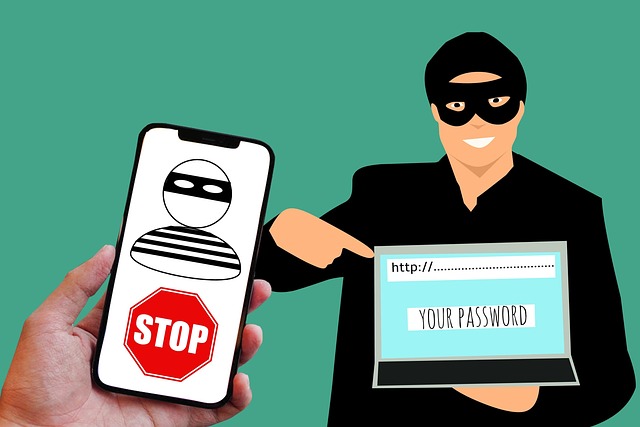
Understanding the Objectives of Cyber Awareness Month
The main aim of Cyber Awareness Month is to highlight proactive cybersecurity practices across industries. It pushes organizations to assess their phishing defense mechanisms and identify weak points before attackers do. This initiative also bridges the gap between public and private sectors, fostering collaboration that enhances collective resilience. For instance, government agencies often release updated guidance during this period, prompting companies to align with national cybersecurity frameworks such as NIST or ISO 27001.
How Awareness Campaigns Shape Organizational Security Culture
Awareness campaigns act as behavioral anchors within corporate culture. Regular training sessions during Cyber Awareness Month remind employees that vigilance is not optional—it’s integral to business continuity. When staff repeatedly engage with simulated phishing exercises, they internalize response patterns that reduce real-world risks. Over time, this repetition normalizes security-conscious behavior in everyday workflows—from verifying sender addresses to reporting anomalies immediately.
Key Lessons from Cyber Awareness Month on Phishing Threat Evolution
Phishing tactics evolve faster than most organizations can adapt their defenses. The lessons drawn from each awareness cycle reveal how attackers exploit psychology, technology gaps, and even emerging AI tools.
Emerging Trends in Phishing Techniques
Recent years have seen a surge in AI-generated phishing content designed to mimic legitimate corporate communication with uncanny accuracy. Attackers now operate across multiple channels—email, SMS, messaging apps—making detection more complex. Credential harvesting remains common, while business email compromise (BEC) continues to cause major financial losses globally. These trends underscore the need for adaptive defenses capable of analyzing context rather than relying solely on static filters.
The Human Factor in Phishing Defense
Human behavior remains both the strongest defense and the weakest link in phishing prevention. Cognitive biases—such as urgency or authority bias—often lead users to click without scrutiny. Continuous education helps mitigate these tendencies by training employees to pause before acting under pressure. Behavioral analytics can further support defense strategies by flagging unusual login patterns or data transfers that indicate compromised accounts.
Strategic Approaches to Building Effective Phishing Defenses
Building an effective anti-phishing framework requires layered protection combining technology, process control, and user behavior management. Each layer compensates for potential failure in another.
Layered Security Frameworks for Phishing Mitigation
A layered approach divides responsibility across systems rather than relying on a single barrier.
Email Security Gateways and Filtering Systems
Advanced gateways use threat intelligence feeds to block malicious attachments and links before they reach inboxes. Real-time URL scanning adds another layer by preventing users from accessing fraudulent websites even if they click through.
Identity and Access Management Controls
Strong identity controls limit exposure when breaches occur. Multi-factor authentication (MFA) should be mandatory on all critical systems, reducing the risk of credential misuse. Applying least privilege principles further minimizes attack surfaces by restricting unnecessary access rights.
Integrating Threat Intelligence into Defense Strategies
Threat intelligence transforms reactive defense into proactive action. By monitoring indicators of compromise (IOCs), security teams gain early warnings about ongoing phishing campaigns targeting their sector. Correlating this data within SIEM platforms improves detection speed and accuracy while information sharing among industry peers strengthens collective resilience—a principle supported by global cybersecurity alliances.
The Role of Technology and Automation in Phishing Prevention
Technology now plays an indispensable role in identifying threats faster than human analysts could manage alone. Automation reduces fatigue while machine learning refines detection accuracy over time.
AI and Machine Learning Applications in Threat Detection
Machine learning models analyze communication patterns to detect anomalies such as tone shifts or irregular metadata in emails. Automated classification reduces false positives that often overwhelm analysts during peak alert periods. More advanced adaptive algorithms continuously learn from new attack vectors, maintaining efficacy even as attackers modify techniques.
Automation in Incident Response and Recovery
Automation accelerates containment once an incident occurs. Predefined playbooks guide consistent responses—isolating affected accounts or endpoints within seconds instead of hours. Integration with SIEM platforms provides unified visibility across network environments so no breach goes unnoticed due to siloed monitoring tools.
Institutionalizing a Continuous Learning Approach Beyond Cyber Awareness Month
True resilience depends on continuous reinforcement beyond October’s campaigns. Organizations that embed year-round learning see measurable improvements in detection rates and response times.
Developing Year-Round Training Programs for Cyber Resilience
Microlearning modules keep engagement high after Cyber Awareness Month ends by delivering short lessons throughout the year via internal portals or mobile apps. Regular phishing simulations test retention levels and expose knowledge gaps early enough for corrective action.
Measuring the Effectiveness of Awareness Initiatives Over Time
Metrics bring accountability to awareness programs by quantifying behavioral change rather than assuming it.
Metrics for Evaluating Behavioral Change and Risk Reduction
Tracking reductions in click-through rates on simulated phishing emails provides tangible proof of progress. Likewise, measuring time-to-report incidents shows whether employees are responding faster when faced with suspicious messages.
Aligning Awareness Outcomes with Organizational Risk Appetite
Organizations should benchmark awareness outcomes against established frameworks like NIST CSF or ISO 27001 controls to confirm alignment with regulatory expectations. As threat landscapes evolve, training intensity must adjust accordingly—more frequent refreshers during high-risk periods can maintain readiness without overwhelming staff.
FAQ
Q1: Why does Cyber Awareness Month focus heavily on phishing?
A: Because phishing remains the most common entry point for breaches worldwide; it exploits human trust rather than technical flaws.
Q2: How can small businesses participate effectively?
A: By using free toolkits from national cybersecurity agencies that include posters, templates, and simulation guides suitable for smaller teams.
Q3: Are automated phishing filters enough protection?
A: No single tool offers full coverage; filters must be combined with employee education and MFA enforcement for reliable protection.
Q4: What metrics best reflect improved cyber maturity?
A: Reduced click rates on test emails, faster incident reporting times, and higher participation rates in training programs all indicate maturity growth.
Q5: Does AI make phishing harder or easier to fight?
A: Both—it enables smarter attacks but also powers more precise detection systems capable of spotting subtle manipulation patterns unseen by humans.