



The James Webb Space Telescope Reveals an Early
The James Webb Space Telescope (JWST) has transformed modern cosmology by exposing galaxies and structures that formed just a few hundred million years after the Big Bang. Its infrared instruments have captured light from epochs previously hidden, reshaping theories of galaxy formation, star birth, and cosmic reionization. Experts now face a universe that appears to have matured faster and more efficiently than long-standing models predicted.
The James Webb Space Telescope and Its Role in Cosmological Discovery
The JWST represents a new era in astrophysical research. Designed to probe the universe’s earliest light, it extends observational reach beyond any previous telescope.
Overview of the Telescope’s Mission and Capabilities
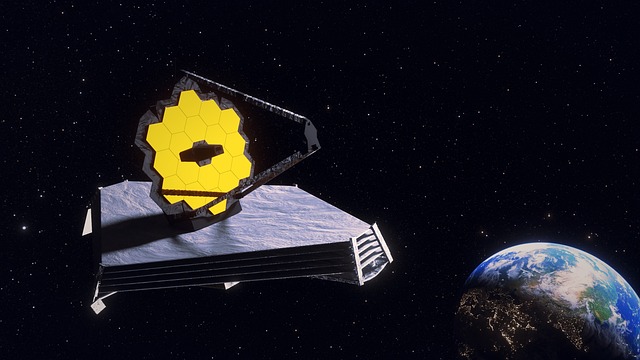
The James Webb Space Telescope is engineered to observe primarily in infrared wavelengths, enabling it to detect faint signals from distant galaxies formed shortly after the Big Bang. Its suite of instruments—NIRCam, NIRSpec, MIRI, and FGS/NIRISS—provides high-resolution imaging and spectroscopy across a broad range of wavelengths. Compared with Hubble’s optical focus, JWST’s sensitivity allows astronomers to capture details of early cosmic structures with exceptional clarity. This capability makes it possible to measure stellar populations, chemical abundances, and dust content in galaxies that existed more than 13 billion years ago.
How JWST Extends Beyond Previous Observational Limits
Beyond Hubble’s limits, JWST’s deep-field imaging reveals galaxies at redshifts greater than 10, corresponding to less than 500 million years after the Big Bang. Its infrared vision penetrates dense cosmic dust clouds that obscure visible light, unveiling regions where new stars are forming rapidly. Through spectroscopy, JWST provides precise data on elemental composition and stellar ages, allowing scientists to reconstruct the timeline of galactic evolution with unprecedented precision.
Observations of Early Universe Structures by JWST
JWST’s first deep-field images stunned researchers by showing mature-looking galaxies at unexpectedly early times. These observations forced cosmologists to reconsider how quickly structure could emerge after cosmic dawn.
Detection of Unexpectedly Mature Galaxies in the Early Epochs
Several early-universe galaxies observed by JWST appear far more massive than theoretical models predicted for their age. Their stellar masses suggest intense star formation within a few hundred million years after the Big Bang. The luminosity distribution measured across these systems challenges hierarchical formation scenarios that rely on slow accumulation through mergers. Instead, it points toward rapid assembly processes that may involve efficient gas cooling or alternative feedback mechanisms.
Insights into Star Formation and Metallicity at High Redshift
Spectroscopic data show surprisingly high metallicities in some early galaxies—evidence that heavy elements formed rapidly through successive generations of stars. Emission-line diagnostics indicate vigorous star formation rates exceeding hundreds of solar masses per year in certain cases. Such accelerated chemical enrichment suggests feedback cycles far more dynamic than previously modeled for this epoch.
Mapping Large-Scale Structure Formation in the Early Universe
Deep-field surveys conducted with JWST reveal proto-clusters forming earlier than ΛCDM models predict. Filamentary bridges connecting young galaxies are visible across tens of millions of light-years, hinting at the nascent cosmic web structure that defines large-scale matter distribution today. These findings suggest gravitational clustering was already well underway during the first billion years.
Comparing JWST Discoveries with Current Cosmological Models
The telescope’s discoveries have triggered active debate among theorists working within the ΛCDM framework. Observed galaxy populations seem inconsistent with standard growth rates derived from cold dark matter simulations.
Discrepancies Between Observations and ΛCDM Predictions
JWST data show an excess number density of massive galaxies at high redshift compared with model expectations. Simulations built on cold dark matter physics struggle to reproduce such rapid mass buildup without invoking modified feedback or exotic dark matter behavior. Some researchers propose refinements to baryonic processes or alternative forms of dark matter interaction to bridge this gap.
Reassessing Star Formation Efficiency in Early Epochs
Current cosmological models may underestimate how efficiently gas cools under primordial conditions. Adjusting parameters governing molecular cloud formation could bring theoretical predictions closer to observed star formation rates. Other hypotheses explore whether supernova-driven feedback or non-standard initial mass functions played stronger roles during early epochs.
Implications for Cosmic Reionization Timelines
JWST observations imply that reionization—the process by which ultraviolet photons ionized neutral hydrogen—may have advanced faster than earlier estimates suggested. Bright early galaxies likely produced more ionizing radiation than expected, altering calculations for photon escape fractions and intergalactic medium opacity evolution.
Theoretical Interpretations and Future Directions in Cosmology
These findings compel theorists to revisit foundational assumptions about galaxy evolution and cosmological parameters while planning new observational campaigns for validation.
Potential Revisions to Galaxy Formation Frameworks
Incorporating non-linear baryonic effects into simulations could help reconcile observed galaxy masses with theoretical constraints. Alternative dark matter candidates such as warm or self-interacting particles are also being reexamined for their potential influence on small-scale structure growth. Adjustments to cosmological constants might be necessary if discrepancies persist across multiple datasets.
Upcoming Observational Campaigns and Collaborative Efforts
Future programs will expand deep-field coverage across multiple sky regions, improving statistical confidence in early-universe samples. Cross-correlation with data from ALMA, Euclid, and next-generation ground-based telescopes will refine constraints on stellar population synthesis models and dust evolution scenarios. Simulation frameworks will continue evolving as JWST results feed back into cosmological modeling pipelines worldwide.
FAQ
Q1: How does JWST differ from Hubble?
A: JWST observes mainly in infrared wavelengths while Hubble focuses on optical and ultraviolet light, allowing JWST to see through dust clouds and detect older cosmic structures.
Q2: Why are early massive galaxies surprising?
A: They suggest faster growth rates than predicted by standard cosmological models based on cold dark matter theory.
Q3: What role does spectroscopy play in JWST research?
A: It measures chemical compositions and stellar ages precisely, helping determine how quickly elements formed after the Big Bang.
Q4: Could these findings change our view of dark matter?
A: Possibly yes; some interpretations require modified dark matter properties or interactions to explain rapid galaxy assembly.
Q5: What future missions will complement JWST?
A: Projects like Euclid and ALMA will provide complementary data on structure formation, while upcoming ground-based observatories will extend spectral coverage further into near-infrared ranges.