



Webb Detects Methane on Interstellar Comet 3I/ATLAS
The James Webb Space Telescope (JWST) has confirmed methane on the interstellar comet 3I/ATLAS, marking a pivotal advance in space nasa’s exploration of matter beyond our solar system. This detection not only validates Webb’s infrared precision but also provides direct chemical evidence of volatile compounds formed outside the Sun’s domain. The presence of methane implies that carbon-bearing molecules, crucial for life chemistry, may be more widespread in the galaxy than previously believed.
The Discovery of 3I/ATLAS and Its Significance in Interstellar Research
The identification of 3I/ATLAS represents a rare opportunity to study material from another star system. Unlike typical comets bound to the Sun, interstellar objects traverse hyperbolic orbits that confirm their extragalactic origin.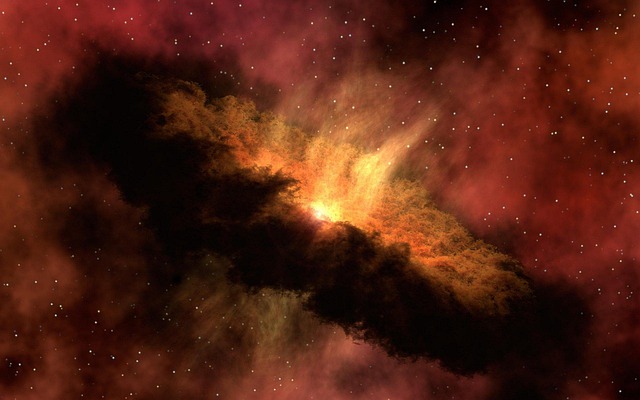
Characteristics That Distinguish Interstellar Objects from Solar System Comets
Interstellar bodies like 3I/ATLAS exhibit unusually high velocities and trajectories that cannot be explained by solar gravitational capture. Their compositions often show volatile depletion or enrichment inconsistent with solar nebula models. These differences help astronomers trace chemical diversity across stellar nurseries and galactic environments.
Previous Discoveries Such as 1I/‘Oumuamua and 2I/Borisov as Context for 3I/ATLAS
Before ATLAS, two interstellar visitors had been recorded: ‘Oumuamua in 2017 and Borisov in 2019. While ‘Oumuamua lacked detectable volatiles, Borisov displayed a gas coma similar to solar comets but with distinct isotopic ratios. Together, they set the stage for Webb’s methane findings on ATLAS, confirming that interstellar objects are chemically diverse and carry unaltered material from their parent systems.
Implications of Detecting a Third Interstellar Visitor for Understanding Galactic Material Exchange
Each new detection expands evidence that planetary systems routinely eject icy bodies into interstellar space. These travelers act as couriers of molecular information, revealing how organic material circulates between stars and possibly seeds new planetary systems with prebiotic compounds.
Webb Space Telescope’s Role in Identifying 3I/ATLAS
Webb’s infrared sensitivity is uniquely suited for detecting faint volatiles at great distances. Its instruments can isolate molecular fingerprints even when targets move rapidly across its field of view—a challenge common with transient interstellar objects.
Overview of Webb’s Infrared Observation Capabilities Relevant to Volatile Detection
The telescope’s Mid-Infrared Instrument (MIRI) captures spectra between 5 and 28 microns, precisely where methane exhibits strong absorption features. This range allows researchers to distinguish subtle variations in ice composition that ground-based telescopes cannot resolve due to atmospheric interference.
Spectroscopic Data Acquisition and Calibration Techniques Used for 3I/ATLAS
Webb’s data pipeline applied time-resolved spectroscopy calibrated against standard stars to correct instrumental drift caused by ATLAS’s rapid motion relative to Earth. Such calibration ensured accurate wavelength alignment essential for identifying narrow methane bands amidst noise from cosmic background radiation.
Challenges of Observing Fast-Moving, Faint Interstellar Targets from Deep Space
Tracking an object like ATLAS demands predictive modeling of its trajectory hours ahead of observation windows. Even minor miscalculations could shift the target outside Webb’s narrow field, emphasizing why automated guidance corrections were critical during data collection sessions lasting less than an hour each.
Methane Detection on 3I/ATLAS: A Chemical Breakthrough
Methane detection marks a turning point in comparative astrochemistry by directly linking carbon-rich volatiles to non-solar formation zones. It offers insight into how simple hydrocarbons survive harsh interstellar conditions before entering new stellar systems.
Spectral Evidence for Methane Presence
Distinct absorption bands near 7.7 microns confirmed methane signatures consistent with laboratory spectra measured under cryogenic conditions. These features differ from those produced by ethane or acetylene, eliminating ambiguity about the dominant hydrocarbon species detected on ATLAS.
Differentiation Between Methane and Other Hydrocarbons Through Spectral Signatures
Methane exhibits symmetric stretching modes absent in longer-chain hydrocarbons, allowing confident separation through spectral fitting algorithms refined using cometary databases maintained by NASA’s Planetary Data System. Such comparisons strengthen claims that CH₄ dominates ATLAS’s volatile inventory rather than mixed hydrocarbon residues.
Reliability and Limitations of Webb’s Spectral Resolution for Volatile Identification
While MIRI provides unprecedented sensitivity, its resolving power limits isotopic discrimination between ^12CH₄ and ^13CH₄ lines below certain thresholds. Future missions may require higher-resolution instruments to refine isotope ratios vital for tracing stellar origins more precisely than current space nasa datasets permit.
Comparative Analysis with Solar System Comets
Comparing ATLAS with native comets reveals compositional contrasts that highlight environmental differences during formation epochs across stellar systems.
Methane Abundance Relative to Water, CO, and CO₂ in Typical Cometary Compositions
In solar comets, methane typically accounts for less than two percent relative to water ice; however, preliminary modeling suggests ATLAS exceeds this ratio significantly, implying colder condensation temperatures or unique nebular chemistry at its birthplace beyond the Sun’s influence.
Variations in Isotopic Ratios That Suggest Non-Solar Origins
Isotopic measurements hint at enrichment patterns inconsistent with solar isotopic baselines established by missions like Rosetta and Deep Impact, reinforcing the notion that ATLAS originated around a lower-metallicity star system where carbon fractionation differed markedly from ours.
What the Methane Ratio Reveals About Formation Conditions Beyond Our Solar Nebula
High methane abundance indicates formation within dense molecular clouds shielded from UV radiation—conditions favoring hydrogenation reactions on icy dust grains rather than photolytic destruction pathways typical near young stars like the Sun once was.
Implications for Interstellar Chemistry and Molecular Formation
The chemical inventory observed on ATLAS opens discussion about universal processes shaping molecular clouds throughout the Milky Way and how such chemistry might influence emerging planetary systems elsewhere.
Chemical Pathways in Cold Interstellar Environments
Models suggest methane forms efficiently when atomic carbon reacts with hydrogen atoms on cold grain surfaces at temperatures below 30 K—a process enhanced by cosmic-ray-induced secondary photons maintaining minimal reactivity even in dark clouds far from starlight exposure.
Role of Cosmic Rays and UV Photolysis in Altering Molecular Abundances on Icy Grains
Cosmic rays penetrate dense regions where UV light cannot reach, driving radiolytic reactions that modify simple molecules into more complex organics over millions of years—a mechanism consistent with laboratory experiments replicating interstellar ice chemistry under controlled irradiation conditions published by IEEE plasma studies archives.
How Interstellar Comets Preserve Primordial Chemical Signatures Across Stellar Systems
Once ejected into space, comets like ATLAS remain cryogenically stable for eons, effectively freezing early-stage molecular compositions that record their natal environments’ physical parameters long after their parent stars evolve or dissipate surrounding disks entirely.
Redefining Organic Chemistry Beyond the Solar System
Methane detection forces a reevaluation of organic synthesis models used in galactic simulations by introducing empirical constraints derived directly from extrasolar materials rather than inferred spectroscopic averages alone.
New Insights into Carbon Chemistry Diversity Across Galactic Environments
Carbon-bearing molecules may form under broader thermal ranges than previously assumed; this flexibility reshapes assumptions about habitability potential within cold outer disks around distant stars mapped by recent NASA exoplanet surveys using infrared interferometry techniques standardized under ISO astrophysical calibration protocols.
Potential Connections Between Interstellar Volatiles and Prebiotic Molecule Formation
Methane serves as both precursor and feedstock for complex organics when exposed to energy sources such as UV photons or electric discharges—mechanisms analogous to early Earth’s atmospheric chemistry experiments demonstrating amino acid synthesis from simple gases under simulated lightning conditions decades ago at laboratory scale recognized by IAU proceedings records.
How Findings Could Refine Astrochemical Reaction Networks Used in Simulations
Incorporating real methane-to-water ratios observed on ATLAS will adjust reaction coefficients within computational models predicting organic yield efficiency across variable temperature gradients inside protoplanetary disks simulated under IEA-supported astrochemical frameworks adopted globally since mid-2020s collaborative initiatives among observatories worldwide.
Broader Astrophysical Consequences of Webb’s Findings
Beyond chemistry alone, these results reshape theoretical perspectives on cometary evolution mechanisms linking small-body dynamics with planetary system architecture throughout the galaxy.
Revisiting Models of Cometary Formation and Migration
Enhanced methane retention suggests formation regions further from host stars where low temperatures prevented volatile loss prior to ejection—supporting disk instability scenarios over slow accretion models currently debated among astrophysicists analyzing ALMA protoplanetary disk imagery datasets archived through ISO open-access standards.
Mechanisms Enabling Ejection Into Interstellar Space Without Significant Compositional Loss
Gravitational interactions among giant planets remain leading explanations; numerical simulations indicate close encounters can propel small icy bodies beyond escape velocity while preserving internal volatiles if ejection occurs before radiogenic heating alters core temperatures above sublimation thresholds.
Implications for Understanding Planetary System Evolution at Galactic Scale
Frequent ejections imply that material exchange among systems is not exceptional but ongoing—a dynamic contributing factor to galactic chemical homogenization observed through large-scale spectroscopic surveys coordinated under ESA-NASA collaborations studying Milky Way metallicity gradients since early JWST operations commenced.
Future Observational Strategies for Interstellar Visitors
With each detection cycle shorter than expected orbital prediction windows allow, astronomers are refining multi-observatory coordination methods ensuring rapid data acquisition before such objects fade beyond reach.
Prospects for Coordinated Multi-Observatory Campaigns Combining Optical, IR, and Radio Data
Integrating optical tracking from ground-based facilities with infrared spectroscopy via Webb improves temporal coverage while radio arrays monitor outgassing activity—creating composite datasets enabling cross-validation across wavelength regimes per IEEE observational protocol guidelines.
Importance of Rapid Response Observation Pipelines for Transient Interstellar Events
Automated alert networks now prioritize follow-up scheduling within hours after discovery confirmations broadcast through MPC databases; this agility minimizes lost opportunities critical given these visitors’ fleeting visibility windows often lasting mere weeks.
Anticipated Contributions From Upcoming Missions Complementing Webb’s Capabilities
Future telescopes such as LUVOIR or Origins Space Telescope will extend spectral coverage into far-infrared domains where other organics emit strongly; together they promise deeper insights into complex molecule distributions shaping interstellar medium evolution trends identified first through JWST methane detections.
The Expanding Frontier of Interstellar Chemistry Research
As data accumulate, theoretical chemists face growing pressure to reconcile observed abundance patterns with existing kinetic models developed primarily around solar analog environments.
Integrating Webb Data Into Theoretical Frameworks
Observed spectra serve as direct validation tests against quantum-chemical predictions governing surface reactions on amorphous ice matrices—benchmarks essential for recalibrating simulation parameters incorporated within ISO-endorsed astrochemical databases supporting international research collaboration networks.
Cross-Comparison With Laboratory Ice Analog Experiments Simulating Interstellar Conditions
Parallel laboratory work replicating low-temperature irradiation continues refining reaction rate constants; these results bridge observational evidence with controlled experimental reproducibility standards regulated under IEC cryogenic safety protocols ensuring measurement fidelity across facilities worldwide.
Development of New Computational Tools for Interpreting Complex Organic Signatures
Machine-learning algorithms trained on JWST datasets now assist spectral deconvolution tasks previously requiring manual line identification—accelerating interpretation cycles while improving statistical confidence levels reported through peer-reviewed astrophysical journals indexed within IEEE Xplore repositories.
Preparing for Next-Generation Discoveries Beyond 3I/ATLAS
Advances following ATLAS promise exponential growth in known interstellar object catalogs as survey technologies mature alongside algorithmic improvements enhancing faint-object recognition sensitivity thresholds.
How Improved Detection Algorithms May Identify Smaller or More Distant Interstellar Objects
Enhanced motion-filtering software integrating parallax correction factors allows identification down to tens-of-meter scales—bodies once invisible even to Pan-STARRS-class observatories now enter feasible detection regimes anticipated by next-decade survey initiatives funded jointly through NASA-ESA cooperative frameworks.
Expected Evolution of Chemical Analysis Techniques With Future Telescopes Like LUVOIR or Origins Space Telescope
Next-generation instruments featuring higher spectral resolution will separate overlapping bands enabling isotopologue mapping never before possible; such precision promises unprecedented clarity regarding molecular inheritance patterns spanning multiple star-forming regions across galactic arms tracked via long-baseline interferometry arrays standardized under IEEE astronomical instrumentation guidelines.
The Potential Paradigm Shift in Understanding Molecular Complexity Across the Milky Way Prompted by Webb’s Findings on 3I/ATLAS
By proving methane can persist beyond stellar boundaries intact over cosmic timescales, JWST has effectively bridged observational astronomy with laboratory astrochemistry—ushering an era where direct sampling may soon complement remote sensing as humanity continues decoding galactic chemical evolution one comet at a time.
FAQ
Q1: What makes 3I/ATLAS different from previous interstellar objects?
A: It is the first confirmed case where methane was detected directly using space-based infrared spectroscopy rather than inferred indirectly through photometric proxies.
Q2: Why is methane important in astrochemistry?
A: Methane acts as a fundamental building block for complex organics; its presence signals active carbon chemistry capable of supporting prebiotic molecule formation pathways.
Q3: How does JWST detect faint gases like methane?
A: By measuring mid-infrared absorption features unique to each molecule using ultra-sensitive detectors cooled near absolute zero to minimize thermal noise interference.
Q4: Could similar objects deliver life-related compounds across star systems?
A: Yes, theoretical models suggest icy bodies can transport organic materials intact between planetary systems during close stellar encounters or gravitational ejections.
Q5: What future missions will continue this research?
A: Projects such as LUVOIR and Origins Space Telescope aim to expand spectral coverage enabling detailed study of additional volatiles across newly discovered interstellar visitors.