


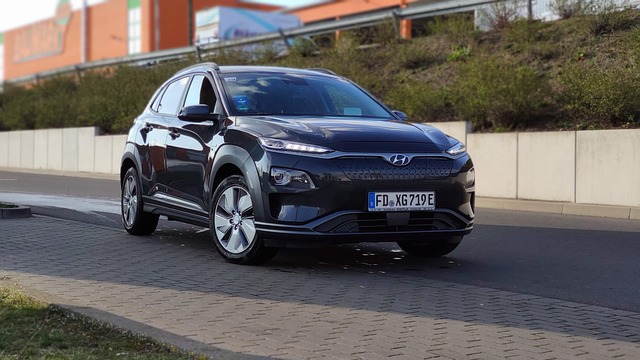

ID.4 Sales Slump as VW Halts Production in Chattanooga
Volkswagen’s decision to pause production of the ID.4 at its Chattanooga, Tennessee plant signals a recalibration of its electric vehicle (EV) strategy in North America. The move comes amid slower-than-expected sales, shifting consumer sentiment toward hybrids, and intensified competition from established and emerging automakers. While the halt is temporary, it underscores broader challenges facing Volkswagen’s electrification roadmap—balancing global ambitions with regional realities.
Volkswagen ID.4 Production Pause in Chattanooga
The production halt at Volkswagen’s Chattanooga facility has drawn attention across the automotive industry, raising questions about the company’s EV momentum in the U.S. market. This move reflects both operational recalibration and strategic caution as VW reassesses its position in a rapidly evolving EV landscape.
Overview of the Production Halt
Volkswagen temporarily suspended ID.4 production at its Chattanooga plant following internal reviews of supply chain flows and market dynamics. The pause allows VW to align inventory levels with actual retail demand while evaluating component sourcing efficiency. Industry analysts note that such pauses are not uncommon during transitional phases, especially when automakers seek to balance cost control with long-term electrification goals.
The decision also highlights Volkswagen’s ongoing struggle to achieve consistent traction for its electric SUV lineup in North America. Despite initial optimism surrounding localized production, ID.4 sales have lagged behind expectations due to fluctuating incentives and competitive pricing pressures.
Factors Behind the Decision
A key factor driving the production halt is lower-than-expected demand for the Volkswagen ID.4 across major U.S. markets like California and Texas, where EV adoption had been projected to accelerate more rapidly. Shifts in federal and state-level incentives have further complicated purchase decisions for consumers, particularly as eligibility rules around tax credits evolve.
Additionally, Volkswagen is optimizing its global EV network by reallocating resources toward regions showing stronger growth potential, such as Europe and China. This reallocation supports efficient use of manufacturing capacity while preventing excess inventory buildup in slower markets.
Market Dynamics Affecting the ID.4’s Performance
The ID.4’s performance cannot be viewed in isolation; it sits within a highly competitive mid-size SUV segment where consumer preferences are shifting faster than anticipated. The interplay between competition, infrastructure readiness, and regional policy frameworks has reshaped how buyers perceive value in electric vehicles.
Competitive Pressures in the EV Segment
Volkswagen faces intense competition from Tesla’s Model Y, Hyundai’s Ioniq 5, and Ford’s Mustang Mach-E—all offering compelling performance metrics and brand cachet that resonate strongly with U.S. consumers. These rivals have set new benchmarks for charging speed, software integration, and driving range.
Emerging Chinese brands entering global markets have also disrupted pricing structures by offering advanced EVs at aggressive price points. This global compression on margins forces legacy manufacturers like VW to rethink their cost structures while maintaining technological parity.
Consumer Behavior and Adoption Trends
EV adoption remains uneven across the U.S., with coastal states leading uptake while central regions show resistance due to limited infrastructure and higher upfront costs. Many consumers still express anxiety about charging availability during long-distance travel—a barrier that continues to slow nationwide adoption rates.
Interestingly, hybrid vehicles have regained popularity as a transitional choice for buyers hesitant to commit fully to battery-electric models. This shift diverts potential customers away from pure EVs like the ID.4 toward more flexible alternatives that alleviate range concerns.
Strategic Implications for Volkswagen’s North American Operations
Volkswagen’s pause presents an opportunity for introspection regarding its North American manufacturing blueprint and product mix strategy. The company must balance short-term adjustments with long-term commitments to maintain credibility among stakeholders and investors.
Reassessment of Local Manufacturing Strategy
Chattanooga remains a cornerstone of Volkswagen’s U.S. operations, but its role may evolve if production capacity is redirected toward hybrid or next-generation models better aligned with current market trends. Such adjustments could involve retooling lines or diversifying output beyond pure EVs.
Supply chain localization—particularly battery sourcing—remains under scrutiny as VW explores partnerships within North America to meet regulatory requirements tied to domestic content thresholds under recent industrial policies.
Adjustments to Product Portfolio and Market Positioning
To regain traction, Volkswagen may introduce refreshed or region-specific variants of the ID family tailored for American preferences—potentially emphasizing performance trims or extended-range options suited for longer commutes typical in U.S. geography.
Software remains another critical differentiator; continuous over-the-air updates could enhance user experience and reinforce brand loyalty among early adopters who prioritize digital integration over mechanical refinement alone.
Global Context: Volkswagen’s Broader EV Transition Strategy
While challenges in Chattanooga reflect regional headwinds, they also mirror broader global balancing acts within Volkswagen’s electrification journey—harmonizing diverse market demands without diluting strategic coherence.
Balancing Regional Market Demands with Global Objectives
Volkswagen operates under a unified vision centered on its MEB modular platform architecture, which underpins multiple models across continents while allowing flexibility for local adaptation. This approach enables cost efficiencies yet requires careful calibration when demand diverges sharply between regions like Europe and North America.
Managing scalability across plants remains complex; ramping up or slowing down production entails logistical ripple effects throughout supplier ecosystems spanning three continents.
Future Outlook for Volkswagen’s Electrification Roadmap
Looking ahead, Volkswagen is expected to intensify investment into next-generation battery technologies aimed at improving energy density while reducing material costs—a critical lever for competitiveness against both Western peers and fast-moving Chinese entrants.
Strategic collaborations with software developers will further shape vehicle intelligence layers—from energy management systems to predictive maintenance algorithms—enhancing value propositions beyond hardware specifications alone.
Financial and Brand Implications of the Chattanooga Halt
Short-term disruptions often carry financial ripples but can yield strategic benefits if managed transparently. For Volkswagen, investor confidence hinges on how effectively it communicates this pause as part of a disciplined recalibration rather than a retreat from electrification goals.
Short-Term Financial Considerations
Temporarily halting assembly lines impacts quarterly earnings through reduced throughput and fixed-cost absorption inefficiencies. However, it also offers breathing room for inventory normalization—preventing deep discounting that could erode residual values across dealer networks.
Cost-saving measures such as deferred procurement cycles or maintenance scheduling during downtime can partially offset financial strain without compromising workforce stability.
Impact on Brand Perception and Stakeholder Confidence
Investor sentiment remains cautious but not alarmed; most view this pause as tactical rather than symptomatic of systemic failure within VW’s EV program. Dealers express concern over supply consistency but acknowledge that managing expectations transparently helps sustain consumer engagement during transitional periods.
Communication plays a pivotal role here: reinforcing commitment to long-term electrification while acknowledging short-term recalibrations maintains trust among customers who see sustainability as integral to brand identity.
FAQ
Q1: Why did Volkswagen pause ID.4 production in Chattanooga?
A: The company temporarily halted production due to lower-than-expected demand in key markets and ongoing supply chain adjustments aimed at aligning output with actual sales performance.
Q2: How long will the production pause last?
A: While no official timeline has been announced, industry sources suggest it will remain temporary until inventory levels stabilize relative to retail demand forecasts.
Q3: Does this signal reduced commitment to EVs by Volkswagen?
A: No; it reflects strategic realignment rather than retreat. VW continues investing heavily in electrification globally through new models and battery technology development programs.
Q4: What impact does this have on workers at Chattanooga?
A: Current reports indicate no large-scale layoffs are planned; instead, staff may be reassigned temporarily or involved in maintenance activities during downtime periods.
Q5: Could new models replace the ID.4 at this facility?
A: It is possible that future hybrid or next-generation electric models will utilize available capacity depending on evolving consumer preferences within North America’s SUV segment.