



Porsche Just Admitted Hyundai Is Setting the Pace for Fun EVs
Hyundai’s electric cars are reshaping what “performance” means in the EV age. Porsche’s public acknowledgment of Hyundai’s progress marks a shift in how the industry defines driving excitement. The conversation has moved from horsepower and luxury to software, battery control, and emotional connection. Hyundai is proving that fun-to-drive electric vehicles can be accessible, efficient, and deeply engaging—qualities once reserved for premium brands.
The Changing Landscape of Electric Vehicle Performance
Electric performance no longer revolves around traditional measures like engine displacement or turbo boost. The metrics have become digital, data-driven, and experience-oriented.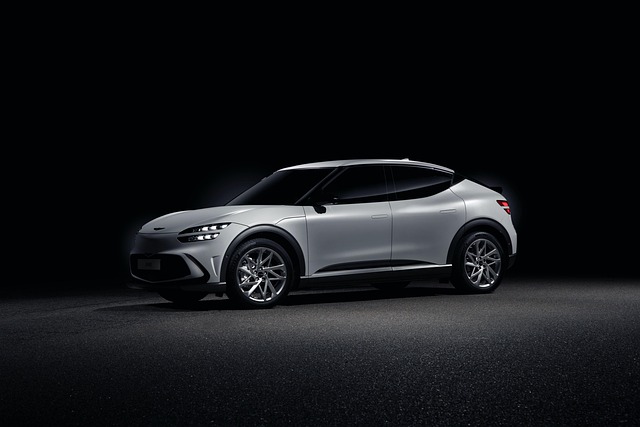
The Evolution of Performance Metrics in the EV Era
The instant torque of electric motors has redefined acceleration benchmarks. Horsepower still matters, but it now coexists with efficiency and energy management as key indicators of capability. Modern systems evaluate not only output but also how intelligently that power is delivered through software calibration and predictive control algorithms. Efficiency, battery thermal regulation, and regenerative braking integration determine real-world speed consistency more than raw numbers ever did. For many drivers, the thrill comes from precise throttle mapping and seamless torque distribution rather than mechanical noise or gear shifts.
How Hyundai’s Approach Challenges Legacy Performance Ideals
Hyundai’s development philosophy centers on making high performance attainable across its lineup rather than limiting it to halo models. The company’s E-GMP platform allows balanced weight distribution and a low center of gravity that enhance cornering stability while maintaining comfort. By combining high-efficiency motors with intelligent electronic control systems, Hyundai delivers dynamic handling without compromising everyday usability. This approach contrasts sharply with legacy automakers that often tie performance to exclusivity or luxury pricing tiers. Hyundai’s focus on driver engagement over brand prestige signals a cultural shift within automotive engineering.
Porsche’s Acknowledgment and Its Industry Implications
Porsche’s recognition of Hyundai’s EV progress is more than a compliment—it represents an inflection point for the entire industry where innovation outranks heritage.
Understanding Porsche’s Statement on Hyundai’s EV Progress
When a brand synonymous with precision engineering acknowledges another manufacturer’s momentum, it validates a broader truth: the definition of performance is evolving beyond lineage. Porsche’s statement suggests that Hyundai has reached technological maturity in electric mobility, blending efficiency with emotional appeal. This admission also reflects how innovation cycles are shortening; new entrants can now challenge decades-old hierarchies through superior battery management and software-defined driving experiences.
Strategic Implications for the Premium EV Segment
Hyundai’s advancements in motor control systems and modular architecture may push premium brands to accelerate their digital transformation strategies. As high-performance technology becomes more democratized, traditional pricing hierarchies face disruption. Consumers now expect advanced torque vectoring or adaptive energy management even in midrange models. Over time, this could blur distinctions between mainstream and luxury segments, leading to new forms of collaboration or competitive benchmarking among manufacturers seeking parity in both hardware and software sophistication.
Technological Foundations Behind Hyundai’s Electric Performance
Beneath Hyundai’s growing reputation lies a robust technological foundation designed to deliver agility, precision, and consistency across varied conditions.
The Role of the E-GMP Platform in Driving Dynamics
The Electric-Global Modular Platform (E-GMP) underpins most of Hyundai’s latest EVs, providing structural advantages crucial for handling performance. Its flat battery layout lowers the center of gravity while achieving near-perfect weight balance between axles—a combination that enhances cornering response and stability at high speeds. The platform supports scalable configurations ranging from compact crossovers to high-output sedans without sacrificing rigidity or efficiency. High-voltage 800V charging capability also reduces downtime significantly, reinforcing usability while sustaining spirited driving potential over long distances.
Powertrain and Software Synergy in Modern Hyundai EVs
Performance in a hyundai electric car increasingly depends on synchronized hardware-software communication. Integrated control units manage torque vectoring, regenerative braking intensity, and traction limits with millisecond precision. Continuous over-the-air updates refine these parameters post-purchase, effectively improving drivability as algorithms evolve through real-world data collection. Predictive energy management systems further optimize traction by analyzing road gradients, temperature variations, and driver behavior patterns—turning every drive into an adaptive experience rather than a static calibration exercise.
Market Positioning and Brand Perception Shifts
The shift toward electrification has allowed Hyundai to redefine its identity from a value-focused manufacturer to an innovator competing on technical merit.
How Hyundai Is Reframing Its Brand Identity Through Performance EVs
Hyundai now positions itself as a technology pioneer rather than merely a cost leader. Sub-brands like IONIQ N embody this transformation by merging motorsport-inspired tuning with practical design sensibilities. Marketing narratives emphasize tactile feedback—how steering feel translates digital inputs into organic motion—and highlight emotional connection alongside measurable data points such as lap times or range figures. This repositioning builds authenticity among enthusiasts who once viewed Korean automakers as utilitarian rather than aspirational.
Consumer and Industry Response to Hyundai’s Performance Strategy
Industry analysts note that consistent execution across multiple product cycles has strengthened Hyundai’s credibility far beyond marketing rhetoric. Enthusiast communities increasingly regard models like the IONIQ 5 N as legitimate performance contenders capable of challenging European benchmarks on track days or winding roads alike. Investor sentiment mirrors this perception shift; technological leadership is translating into tangible market share growth within both mainstream and premium-adjacent categories.
The Future Trajectory of Electric Performance Benchmarking
As electrification matures, performance metrics will evolve toward holistic ecosystems encompassing hardware durability, software intelligence, and sustainability outcomes.
Anticipating Next Steps in Competitive Development Cycles
Advances in solid-state battery chemistry promise higher energy density with reduced weight penalties—minimizing trade-offs between range and acceleration output. Meanwhile, software-defined driving modes will allow deeper personalization by adjusting suspension response or regenerative braking profiles based on individual preference rather than preset configurations. Cross-brand benchmarking will likely evolve into shared ecosystem comparisons where vehicle connectivity standards matter as much as lap times or efficiency ratings.
Long-Term Impact on Automotive Innovation Culture
Traditional divides between “mainstream” and “premium” manufacturers may gradually dissolve as open-source collaborations accelerate innovation cycles across supply chains. Shared platforms could standardize safety protocols while allowing differentiation through user experience layers like interface design or sound simulation technologies. Ultimately, performance will encompass not only speed but also sustainability metrics such as lifecycle carbon intensity and human-machine interaction quality—a direction aligning with global regulatory trends set by organizations including ISO and IEA toward cleaner mobility ecosystems.
FAQ
Q1: Why did Porsche acknowledge Hyundai’s progress in electric vehicles?
A: Porsche recognized that Hyundai has achieved significant technological maturity in electric performance engineering, redefining what makes an EV exciting to drive beyond traditional luxury cues.
Q2: What makes the E-GMP platform special?
A: It offers structural balance through low-mounted batteries and scalable architecture that supports both high power output and rapid charging without compromising stability or comfort.
Q3: How does software enhance driving dynamics in Hyundai EVs?
A: Integrated control units continuously adapt torque delivery and braking response while over-the-air updates refine vehicle behavior based on real-world feedback data.
Q4: How is Hyundai changing its brand perception?
A: By focusing on emotionally engaging yet accessible performance through models like IONIQ N, shifting its image from value-driven manufacturing to technology-led innovation.
Q5: What trends will shape future EV performance benchmarks?
A: Future benchmarks will combine sustainability indicators with digital adaptability—measuring not just acceleration but also efficiency optimization, update capability, and user experience integration across connected ecosystems.