




How the AI GPT Revolution Is Changing Work and Business
AI GPT has moved from a research novelty to a central force in global business strategy. It’s no longer just about automating text—it’s about reshaping how enterprises operate, innovate, and compete. The technology now drives decision-making, redefines workflows, and fuels entirely new business models. Companies adopting AI GPT early are already seeing measurable gains in efficiency, creativity, and market responsiveness. The next phase will not simply be about using AI but working alongside it as an active collaborator.
The Emergence of AI GPT in the Global Business Landscape
Generative AI is now a cornerstone of enterprise transformation. Its progression from rule-based systems to adaptive models marks a turning point in computational intelligence.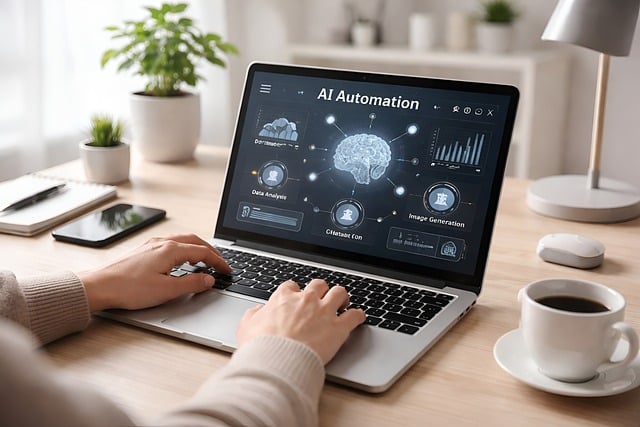
Overview of GPT Architecture and Its Progression Through Multiple Iterations
GPT architecture evolved through successive generations—GPT-1 to GPT-4—each expanding model size, training data diversity, and contextual reasoning depth. Early models focused on text prediction; newer versions perform code generation, translation, and multimodal synthesis. This iterative scaling has made GPT more fluent across domains like law, finance, and healthcare.
Key Advancements Enabling Contextual Understanding and Complex Task Automation
Advances in transformer networks and self-attention mechanisms allow models to capture semantic relationships across long text spans. Fine-tuning with reinforcement learning from human feedback (RLHF) improved coherence and factual reliability. These innovations enable complex task automation such as contract drafting or customer analytics that once required specialized teams.
The Shift From Static AI Tools to Dynamic, Adaptive Language Models
Traditional AI tools executed fixed commands. Modern GPT systems adapt dynamically to user intent, context, and tone. They learn continuously from interactions within secure environments, producing outputs that evolve over time rather than remaining static templates.
The Strategic Importance of AI GPT for Enterprises
As organizations digitize operations, the integration of AI GPT becomes a strategic differentiator rather than an optional upgrade.
Integration of AI GPT Into Enterprise Ecosystems for Operational Efficiency
Enterprises embed GPT into CRM platforms, ERP systems, and data warehouses to automate communication-heavy tasks. For example, financial institutions use language models for compliance reporting while logistics firms deploy them for predictive route planning.
Influence on Data-Driven Decision-Making and Predictive Analytics
AI GPT enhances decision intelligence by interpreting unstructured data—emails, reports, or social media—and translating it into actionable insights. Predictive analytics powered by these models helps executives anticipate market shifts faster than traditional BI tools.
Role in Reshaping Corporate Innovation Strategies and Digital Transformation Roadmaps
Companies now design innovation pipelines around generative capabilities: ideation bots for R&D brainstorming or virtual assistants for prototyping product concepts. This integration accelerates digital transformation by embedding creativity directly into operational workflows.
Redefining Business Models Through AI GPT Integration
The arrival of generative models is altering value creation logic across industries—from manufacturing to media.
Transformation of Traditional Value Chains
AI-driven automation cuts through knowledge-intensive bottlenecks such as legal review or technical documentation. Service providers scale faster since one model can handle thousands of client requests simultaneously without proportional headcount growth.
Enhanced Scalability Through AI-Driven Service Delivery Models
Cloud-based deployments let firms expand globally without infrastructure duplication. A single API endpoint can deliver multilingual support or content generation at enterprise scale with consistent quality control.
Impact on Cost Structures and Resource Allocation Efficiency
Operational costs decline when repetitive cognitive tasks shift from humans to machines. Resources can then be redirected toward higher-value creative or strategic functions that require human judgment.
Emergence of New Revenue Streams Enabled by AI GPT
Beyond efficiency gains, companies find fresh monetization paths built around generative capabilities.
Development of Subscription-Based and API-Access Business Models
Vendors now sell access to language models via tiered APIs or SaaS subscriptions. This model democratizes advanced NLP while generating recurring revenue streams similar to cloud computing services.
Monetization Opportunities in Content Generation, Customer Support, and Analytics Services
Media firms use GPT engines for article drafting; e-commerce brands deploy chatbots that handle 80% of customer queries autonomously; analytics startups offer automated insight summaries—all powered by the same underlying architecture.
Collaboration Between AI Providers and Enterprises to Co-Create Value-Added Solutions
Joint ventures between technology firms and sector leaders are emerging—for instance, co-developing legal drafting assistants or medical documentation tools tailored to regulatory contexts.
Enhancing Workflow Efficiency With AI GPT Technologies
Automation today extends beyond robotic process automation into language-driven orchestration across departments.
Intelligent Process Automation Across Departments
GPT systems streamline HR onboarding emails, procurement documentation, or IT troubleshooting scripts through conversational interfaces integrated into existing enterprise software like Slack or SAP.
Real-Time Document Synthesis, Summarization, and Report Generation Capabilities
Executives receive instant summaries of 100-page reports synthesized by language models trained on corporate data lakes—cutting analysis time from hours to minutes without losing accuracy.
Integration With Enterprise Software for Seamless Workflow Orchestration
APIs connect directly with project management tools so that when an employee updates a milestone note, the system automatically generates progress summaries for leadership dashboards.
Optimizing Knowledge Management and Collaboration
Knowledge flows more freely when contextualized through intelligent agents capable of understanding organizational memory.
Context-Aware Assistance for Research, Documentation, and Internal Communication
Employees query internal databases conversationally instead of navigating folders manually. The model retrieves relevant documents based on semantic similarity rather than exact keywords.
Adaptive Learning Mechanisms That Refine Outputs Based on User Feedback Loops
Continuous fine-tuning within corporate boundaries allows the system to improve phrasing styles or compliance tone depending on user corrections over time.
Cross-Departmental Collaboration Enhanced Through Unified Conversational Agents
Shared chat interfaces powered by centralized language models reduce departmental silos by providing uniform access to institutional knowledge regardless of function or geography.
The Role of Agentic AI Assistants in the Future Workplace
The next phase moves beyond reactive chatbots toward autonomous agents capable of executing multi-step reasoning tasks independently.
From Passive Tools to Autonomous Agents
Agentic assistants act proactively—scheduling meetings after detecting project delays or summarizing discussions before being asked. They combine reasoning chains with real-world actions such as sending emails or updating CRM entries automatically.
Capabilities in Task Delegation, Scheduling, and Multi-Step Reasoning Execution
These agents coordinate multiple subtasks: analyzing incoming data streams, prioritizing actions based on urgency metrics, then delegating execution across digital systems without constant supervision.
Ethical and Governance Considerations Surrounding Autonomous Agent Behavior
Autonomy raises accountability questions—who owns decisions made by self-directed algorithms? Enterprises address this via audit logs ensuring traceability under ISO/IEC governance frameworks for algorithmic transparency (ISO/IEC 38507).
Meta’s Vision for Advanced Agentic AI Systems
Meta’s move into agentic consumer assistants signals a broader convergence between consumer-grade intelligence and enterprise-grade reliability—a development likely to reshape competitive standards globally.
Overview of Meta’s Approach to Consumer-Grade Agentic Assistants Leveraging GPT Frameworks
Meta plans advanced ’agentic’ assistants built atop large-scale generative architectures similar to enterprise-grade GPT frameworks but optimized for personal use cases such as scheduling or social engagement management.
Potential Implications for Enterprise Adoption and Interoperability Standards
Consumer familiarity accelerates workplace adoption; employees accustomed to personal assistants expect similar functionality at work. Interoperability standards will thus evolve around open APIs enabling cross-platform communication between agents from different vendors.
Competitive Positioning Within the Broader Generative AI Ecosystem
By combining social graph data with generative reasoning engines, Meta positions itself against incumbents offering pure-play LLM services—potentially redefining how personalization integrates with productivity software ecosystems worldwide.
Challenges and Strategic Considerations for Adoption
Despite its promise, enterprise deployment faces hurdles spanning governance frameworks to workforce adaptation strategies.
Data Governance, Security, and Compliance Concerns
Organizations must safeguard proprietary datasets during fine-tuning phases while complying with GDPR or CCPA mandates requiring explicit consent management. Transparent audit trails become essential under IEEE P7000 ethical design standards ensuring accountability throughout algorithm lifecycles.
Organizational Readiness and Workforce Adaptation
Reskilling programs train employees in prompt engineering or model oversight roles so human expertise complements machine output rather than competes with it. Balanced automation preserves critical thinking where full autonomy could pose risk exposure.
Cultural Transformation Required To Embrace Continuous Learning and Innovation Cycles
Adoption succeeds only when leadership fosters experimentation cultures where iterative improvement outweighs fear of disruption—a mindset shift often harder than technical deployment itself.
Future Directions in AI GPT–Driven Enterprise Transformation
The convergence between generative intelligence and other frontier technologies defines the next decade’s innovation curve.
Convergence With Emerging Technologies
Integration between GPT engines and IoT networks enables voice-controlled industrial monitoring; blockchain adds verifiable provenance layers; edge computing reduces latency so inference occurs near data sources instead of centralized clouds.
Expansion Into Multimodal Intelligence Integrating Text, Vision, and Voice Processing Capabilities
Upcoming iterations will merge image recognition with natural conversation—an engineer could describe a malfunction verbally while showing live video feeds analyzed simultaneously by the same underlying model stack.
Long-Term Implications for Global Economic Structures
Generative adoption redistributes competitive advantage toward early movers who automate cognitive roles first. Labor markets shift accordingly as repetitive analytical jobs decline but creative supervisory roles rise—a dynamic already visible across consulting sectors tracked by Bloomberg Intelligence datasets citing double-digit productivity gains post-AI integration (Bloomberg 2024).
FAQ
Q1: How does AI GPT differ from earlier machine learning systems?
A: It uses transformer-based architectures capable of processing context at scale rather than relying on narrow rule sets typical in older ML systems.
Q2: What industries benefit most from integrating generative models?
A: Finance, healthcare documentation, marketing content creation, legal drafting services—all sectors handling large volumes of text-based reasoning tasks see immediate returns.
Q3: Are agentic assistants replacing human roles entirely?
A: Not yet; they handle structured routine decisions but still require oversight where ethical judgment or empathy plays a role.
Q4: How can companies manage security risks when deploying these systems?
A: By implementing encryption-in-use protocols during fine-tuning phases and maintaining compliance audits aligned with ISO/IEC 27001 information security standards.
Q5: What’s next after text-only generative models?
A: Multimodal systems combining speech recognition, visual interpretation, and tactile simulation will define the next frontier in practical human–AI collaboration.