



New James Webb Space Telescope Images Reveal How Massive Star Clusters Can Reshape Galaxies
The James Webb Space Telescope (JWST) has transformed the way astronomers examine galactic evolution. Its latest images show that massive star clusters play a decisive role in shaping galaxies through feedback processes, gas expulsion, and triggered star formation. These high-resolution infrared observations reveal how energy from young stars influences the structure and chemistry of their host galaxies. The telescope’s ability to detect faint protostars and map molecular clouds provides unprecedented clarity into how clusters form, evolve, and ultimately sculpt the interstellar medium.
The Role of the James Webb Space Telescope in Observing Star Cluster Formation
Webb’s advanced instruments allow researchers to explore the earliest phases of stellar assembly hidden within opaque clouds of dust and gas. This capability surpasses previous telescopes by revealing structures that were once invisible.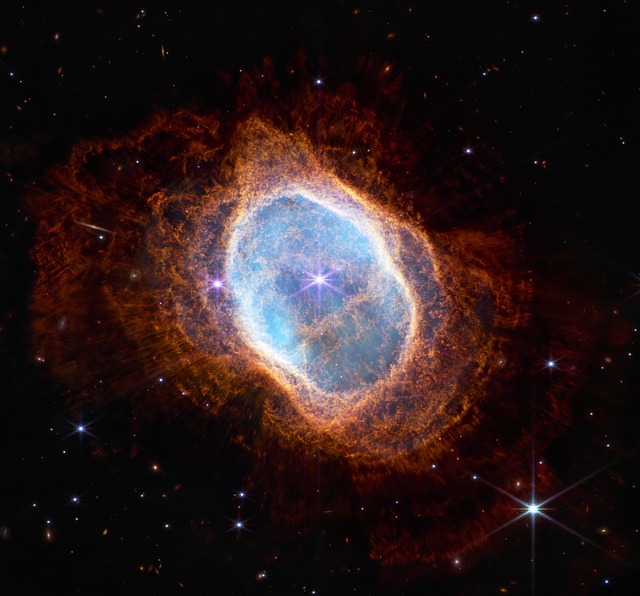
Advancements in Infrared Imaging Capabilities
Webb’s infrared sensors penetrate dense molecular clouds where new clusters emerge. By observing at longer wavelengths, it captures light from deeply embedded protostars still cocooned in dust. High-resolution imaging exposes disks, jets, and accretion flows associated with early protostellar evolution. Infrared spectroscopy further identifies molecules such as water vapor, carbon monoxide, and complex organics, providing insight into the chemical environment that precedes star birth.
Comparing Webb’s Observations with Previous Telescopes
Compared with Hubble’s optical range, Webb excels at resolving young stars enshrouded in gas. Its tenfold improvement in sensitivity detects faint, low-mass protostars that were previously undetectable. The expanded spectral range also reveals variations in dust grain sizes and gas dynamics within star-forming regions. These data refine models of how turbulence and magnetic fields influence collapse efficiency.
Insights from Webb Space Telescope Pictures on Stellar Birth Environments
The latest Webb space telescope pictures display intricate networks of filaments and knots inside molecular clouds. They expose how gravity gathers material into cores that eventually ignite nuclear fusion.
Mapping Molecular Clouds and Protostellar Cores
Webb’s images delineate filamentary structures extending across tens of light-years. Within these filaments lie gravitationally bound clumps destined to evolve into stellar clusters. Observations trace temperature gradients from cold outer envelopes to warm inner cores, offering a three-dimensional perspective on density variations across these nurseries.
Unveiling Feedback Processes in Star Formation
The telescope captures narrow jets and bipolar outflows emerging from nascent stars. Radiation pressure from massive young stars carves cavities in surrounding gas, halting further collapse once sufficient mass accumulates. Quantitative analysis shows how mechanical energy injected into the interstellar medium drives turbulence that regulates subsequent star formation cycles.
The Dynamics of Star Cluster Evolution Revealed by Webb Data
Webb’s long-term monitoring reveals that cluster evolution is not static but shaped by gravitational interactions and gas dispersal events occurring over millions of years.
Gravitational Interactions Within Young Clusters
Data show clear evidence of mass segregation—massive stars tend to migrate toward cluster centers while lighter ones drift outward. Close encounters alter orbital paths and influence binary formation rates. These measurements provide critical constraints for N-body simulations used to model cluster stability under varying initial conditions.
The Role of Gas Expulsion in Cluster Stability
Residual gas removal through radiation-driven winds plays a major role in defining whether clusters remain bound or disperse. When enough gas is expelled, binding energy decreases, leading to re-expansion phases observed in many young systems. Morphological comparisons between observed clusters and theoretical models support this mechanism as a key driver of early structural evolution.
How Massive Star Clusters Reshape Galactic Structure
Beyond individual clusters, feedback from massive groups of stars affects entire galactic environments by stirring interstellar gas and triggering new generations of stars nearby.
Stellar Feedback and Galactic Scale Outflows
Energy released by clustered supernovae can drive large-scale galactic winds capable of redistributing metals across vast distances. This feedback moderates future star formation efficiency by heating or removing cold gas reservoirs. Turbulence generated within disks contributes to morphological changes such as spiral arm thickening or central bar distortion over cosmic timescales.
Triggered Star Formation in Surrounding Regions
Shock fronts expanding from H II regions compress adjacent molecular clouds, initiating sequential waves of star formation along spiral arms or within dwarf galaxies. High-resolution Webb imagery confirms propagation patterns consistent with this process, linking feedback-driven compression to observable stellar age gradients across galactic disks.
Implications for Understanding Galaxy Evolution Through Webb Imagery
The telescope’s findings bridge small-scale cluster physics with large-scale galactic behavior, connecting local processes to cosmological growth patterns observed across epochs.
Connecting Cluster Formation to Galactic Morphology Changes
Cluster distributions correlate strongly with spiral density waves and bar structures seen in disk galaxies. Feedback-induced cavities shape interstellar gas topology by clearing voids where future star formation is suppressed. Integrating these observations with hydrodynamic simulations refines predictions about how clustered activity sculpts overall galactic morphology.
Refining Theoretical Frameworks Using Webb Observations
Empirical constraints derived from Webb data improve computational models describing hierarchical structure formation throughout cosmic history. They validate theories predicting feedback-regulated star formation rates across different redshifts and environments—from nearby dwarf systems to distant starburst galaxies captured during earlier cosmic epochs.
FAQ
Q1: How does the James Webb Space Telescope differ from Hubble?
A: Webb operates mainly in infrared wavelengths, allowing it to see through dust clouds that block visible light for Hubble.
Q2: What do recent Webb space telescope pictures reveal about galaxy formation?
A: They show that massive star clusters inject energy into their surroundings, reshaping galactic structure through winds and radiation pressure.
Q3: Why is infrared imaging essential for studying protostars?
A: Infrared light penetrates dense dust where young stars form, exposing details hidden at optical wavelengths.
Q4: How does stellar feedback affect future star formation?
A: Feedback disperses surrounding gas, halting collapse locally but sometimes triggering new stars nearby through shock compression.
Q5: What role do supernovae play within massive clusters?
A: Their combined explosions power galactic outflows that redistribute elements and influence the long-term evolution of their host galaxies.