


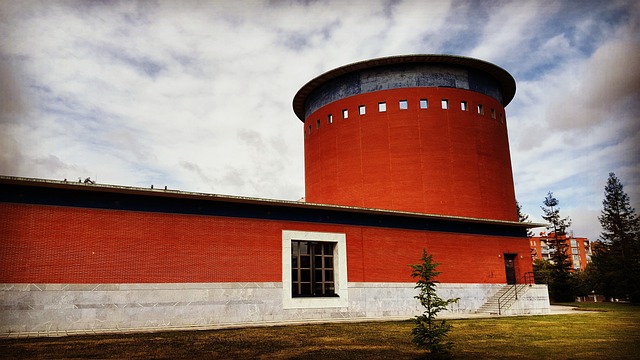

How to Spot November’s Supermoon, the Closest of the Year
November’s supermoon will be the year’s closest lunar event, appearing larger and brighter than any other full moon of 2024. Its proximity to Earth during perigee creates heightened luminosity and gravitational effects observable even without advanced instruments. Experts at Chabot Planetarium have prepared detailed observation strategies to capture this rare alignment with precision. For those studying lunar behavior or conducting optical calibration tests, this event offers an unmatched opportunity to analyze perigee-syzygy dynamics and their influence on Earth’s tides and atmospheric optics.
Understanding November’s Supermoon Phenomenon
The November supermoon will not only dominate night skies but also serve as a valuable case study in celestial mechanics. Its occurrence near perigee allows astronomers to measure variations in apparent diameter and brightness under optimal conditions.
The Astronomical Definition of a Supermoon
A supermoon occurs when a full moon coincides with the Moon’s closest approach to Earth, known as perigee-syzygy alignment. During this phase, the Moon appears up to 14% larger and nearly 30% brighter than when it is at apogee. In contrast, a micromoon happens when the full moon aligns near apogee, making it appear smaller and dimmer. Orbital eccentricity—caused by gravitational interactions primarily with Earth and the Sun—drives these visual changes in size and brightness.
Distinction Between Supermoons, Micromoons, and Regular Full Moons
Regular full moons occur when the Moon is opposite the Sun from Earth but not necessarily near perigee or apogee. The difference between these events lies in orbital distance: roughly 356,500 km at perigee versus about 406,700 km at apogee. This variation alters angular diameter measurements by several arcminutes, providing measurable data for optical calibration in professional observatories.
Orbital Mechanics Influencing the Apparent Size and Brightness of the Moon
The elliptical orbit of the Moon causes periodic fluctuations in its distance from Earth. When illuminated fully at perigee, reflected sunlight covers a greater solid angle, enhancing luminance levels recorded by photometric sensors. These measurable shifts allow astrophysicists to refine dynamic models of lunar motion used in predictive astronomy.
Why November’s Supermoon Is Notable
This particular supermoon stands out for its exceptional proximity to Earth compared with other lunar events in 2024. It provides both visual spectacle and scientific value through enhanced brightness metrics and tidal correlations.
Analysis of Its Proximity to Earth Compared to Other Lunar Events in the Year
During November’s event, the Moon will reach a distance slightly below 357,000 km from Earth—closer than any other full moon this year. This proximity amplifies gravitational forces that subtly affect ocean tides and crustal stress patterns measurable by geophysical instruments.
Expected Changes in Luminosity and Angular Diameter Measurements
Lunar surface brightness is expected to increase by approximately 30%, while its apparent angular diameter may expand by nearly half a degree under ideal atmospheric conditions. Such variations are significant enough for both naked-eye observation and quantitative imaging through telescopic systems.
Correlation With Tidal Variations and Gravitational Influences
The intensified gravitational pull during perigee-syzygy enhances tidal amplitudes known as spring tides. Coastal monitoring stations often record deviations of several centimeters above average high-tide marks during these events—data useful for modeling oceanic responses to celestial mechanics.
The Role of Chabot Planetarium in Lunar Observation
Chabot Planetarium continues its legacy as a hub for advanced astronomical research through state-of-the-art instrumentation designed for precision observation of transient celestial phenomena such as supermoons.
Advanced Observation Capabilities at Chabot Planetarium
The facility employs large-aperture reflecting telescopes equipped with adaptive optics systems that correct atmospheric distortion in real time. High-resolution CCD arrays capture detailed surface imagery during perigee events, enabling comparative analysis across multiple wavelengths. Digital sky mapping tools synchronize telescope tracking with real-time ephemeris data for accurate lunar positioning throughout observation sessions.
Expert Guidance From Chabot Astronomers
Before each observation cycle, Chabot astronomers calibrate instruments using standardized photometric references to maintain measurement accuracy. They apply differential refraction correction techniques during peak visibility hours when atmospheric turbulence is minimal. Spectral analysis further allows them to study variations in surface albedo under intensified illumination conditions typical of supermoons.
Optimal Observation Strategies for November’s Supermoon
Effective observation depends on timing, location, and instrument configuration. Near Chabot Planetarium’s coordinates, specific environmental factors can significantly influence image clarity.
Determining the Best Viewing Conditions
Observers should select elevated sites away from urban light pollution within a few kilometers radius of Oakland Hills where Chabot is located. The best viewing window typically begins shortly after moonrise when atmospheric scattering is reduced but before humidity increases near midnight. Transparency indices above 8 on standard astronomical scales yield optimal contrast ratios for imaging.
Recommended Observation Equipment and Settings
Telescopic Adjustments for Maximum Resolution
A telescope aperture between 150 mm and 250 mm provides sufficient brightness control while preserving fine detail across cratered regions like Tycho or Copernicus. A focal length around f/10 balances magnification with manageable field curvature during long-exposure imaging sessions.
Imaging Techniques for Professional Documentation
Exposure times should remain below one millisecond under direct illumination to avoid sensor saturation; neutral-density filters help moderate glare without altering spectral distribution. For color fidelity studies or HDR imaging sequences, stacking multiple short exposures yields superior results compared with single-frame captures.
Collaborative Research Opportunities at Chabot Planetarium
Beyond public viewing sessions, Chabot fosters collaboration among professional astronomers through structured research initiatives focusing on photometric consistency and global data sharing.
Data Sharing and Comparative Analysis Among Experts
Observatories worldwide coordinate simultaneous measurements during supermoons to validate magnitude readings across hemispheres. Shared repositories aggregate datasets including brightness curves and albedo maps that enhance cross-institutional model verification efforts.
Educational Outreach and Expert Workshops
Chabot regularly hosts specialized workshops covering advanced topics such as adaptive optics calibration or spectral decomposition methods applied to lunar analysis. These programs encourage experts to contribute findings that enrich both academic literature and public astronomy education initiatives.
Broader Implications of Studying Supermoons at Perigee
Researching supermoons extends beyond visual fascination—it deepens insight into how celestial alignments influence terrestrial systems while advancing observational science itself.
Understanding Lunar Influence on Earth Systems
Perigee-syzygy alignments amplify tidal forces that can subtly affect oceanic circulation patterns and even stress distribution along tectonic boundaries. Continuous monitoring helps correlate these variations with broader geophysical processes relevant to climate modeling.
Advancing Astronomical Observation Methodologies
Frequent documentation of supermoons refines orbital prediction algorithms by providing empirical benchmarks against theoretical models. Moreover, public engagement events anchored around scientifically rigorous observations strengthen community interest in astronomy while maintaining methodological integrity consistent with professional standards like those endorsed by IEEE or ISO observational protocols.
FAQ
Q1: When will November’s supermoon reach peak visibility?
A: It will reach maximum illumination shortly after local moonrise around sunset hours on November 15th–16th depending on geographic longitude.
Q2: How much brighter is a supermoon compared with an average full moon?
A: Typically about 30% brighter due to reduced Earth-Moon distance increasing reflected sunlight intensity per unit area observed from Earth.
Q3: Can tidal changes during a supermoon cause flooding?
A: While spring tides rise higher than normal, they rarely cause flooding unless combined with meteorological factors such as storms or low-pressure systems.
Q4: What telescope type works best for capturing detailed images?
A: Medium-aperture reflectors (150–250 mm) equipped with neutral-density filters offer optimal performance balancing resolution with light control.
Q5: Does observing from Chabot Planetarium provide unique advantages?
A: Yes, its elevation above urban haze combined with precision-guided optics allows exceptionally clear views ideal for both research-grade imaging and educational demonstrations.