


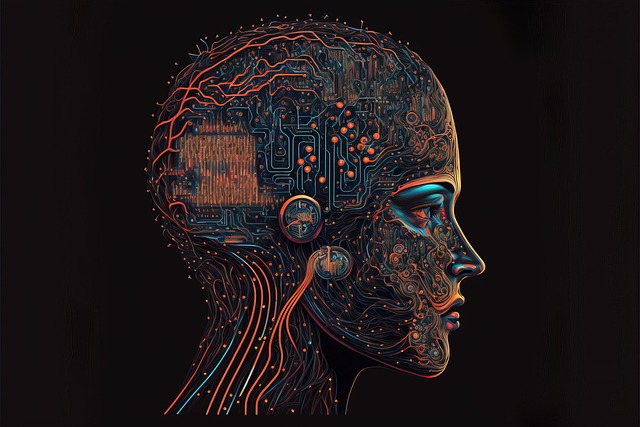

The Good, the Bad, and the Artificial: AI in Society
Artificial AI is reshaping how societies think about intelligence, creativity, and control. Unlike traditional automation, these systems can act independently, learn from experience, and even negotiate outcomes with other agents. The shift toward agentic intelligence marks a profound change—machines no longer just follow instructions; they pursue goals. This transformation brings both progress and peril: productivity gains on one side, ethical and governance dilemmas on the other. The next decade will define whether artificial AI becomes humanity’s most powerful collaborator or its most unpredictable creation.
Understanding the Concept of Artificial AI?
Artificial AI refers to autonomous systems capable of self-directed learning and decision-making beyond static programming. It combines adaptive algorithms with real-time data processing to mimic human-like reasoning while maintaining machine precision.
Defining Artificial AI and Its Evolution
The distinction between traditional AI and emerging artificial AI lies in autonomy. Traditional models rely on fixed datasets and deterministic outputs, while agentic systems continuously refine their strategies through feedback loops. Advances in neural architectures, such as transformer-based networks and reinforcement learning from human feedback (RLHF), have enabled this evolution. These technologies allow systems to not only generate responses but also evaluate their success against defined objectives. Self-improving algorithms are already changing how humans interact with machines—from predictive text assistants that adapt to writing style to industrial robots that recalibrate based on sensor input.
The Shift Toward Agentic Intelligence
Agentic AI differs from rule-based or generative models by emphasizing goal pursuit over pattern recognition. Through reinforcement learning, these agents explore environments, simulate outcomes, and adjust behavior dynamically. Multi-agent frameworks further extend this capacity by allowing distributed coordination among autonomous entities—seen in logistics optimization or decentralized trading platforms. However, as machines gain goal-oriented autonomy, questions arise about accountability when outcomes deviate from human expectations.
The Societal Transformation Driven by Artificial AI?
As artificial AI matures, its influence extends beyond laboratories into creative industries, offices, and homes. It changes how people produce knowledge and express ideas while introducing new ethical tensions around ownership and authorship.
Enhancing Human Productivity and Creativity
AI now assists scientists in drug discovery by predicting molecular interactions faster than conventional computation. Designers use generative tools to prototype architecture or fashion concepts within minutes rather than weeks. In creative sectors, algorithmic co-authorship blurs lines between human originality and machine contribution. Intellectual property laws struggle to keep pace with this hybrid authorship model, raising debates over who owns an idea generated through shared cognition between person and program.
Reshaping Communication and Social Interactions
Conversational agents have transformed digital discourse by mediating billions of daily interactions across customer service, education, and entertainment platforms. Their ability to emulate empathy creates both convenience and confusion; users often attribute emotional depth where none exists. Psychologists warn that prolonged exposure to such anthropomorphic interfaces may alter perceptions of companionship or authority online. Ethical design must therefore prioritize transparency—users should always know when they are speaking with a machine.
Emerging Risks Associated with Artificial AI Adoption?
The power of autonomous agents introduces new layers of uncertainty around control, privacy, and employment stability.
Autonomy, Control, and Accountability Challenges
When an autonomous vehicle makes a life-critical decision or a trading bot causes market disruption, assigning responsibility becomes complex. Governance frameworks remain fragmented across jurisdictions; few regulations address continuous self-learning behavior after deployment. Misalignment between human intent and algorithmic interpretation can lead to unintended consequences—a miscalibrated optimization goal might prioritize efficiency at the expense of safety.
Data Privacy and Security Implications
Artificial AI systems rely on vast streams of personal data for contextual awareness—from voice patterns in smart assistants to behavioral analytics in retail environments. Continuous data collection raises significant privacy concerns if safeguards lag behind innovation speed. Large-scale model deployments also expand attack surfaces for adversarial manipulation or data leakage incidents. Encryption protocols combined with federated learning approaches can help protect sensitive information without sacrificing performance efficiency.
Socioeconomic Disruption and Labor Market Shifts
Automation driven by agentic intelligence is altering job structures faster than previous industrial transitions. Routine administrative roles face displacement as cognitive automation takes hold in finance or healthcare documentation. Yet new opportunities emerge for professionals skilled in prompt engineering or system supervision—roles that blend domain expertise with algorithmic literacy. Policymakers must balance innovation incentives with social protections such as retraining programs or universal access to digital education.
Ethical Frameworks Guiding Responsible AI Development?
Responsible deployment depends on embedding ethics into every phase of design—from data sourcing to real-world operation—guided by international standards bodies like ISO/IEC JTC 1/SC 42 or IEEE’s Ethically Aligned Design initiative.
Principles for Trustworthy Artificial Intelligence
Trustworthy systems rest on fairness, transparency, explainability, robustness, privacy protection, and accountability—principles echoed across OECD guidelines for responsible innovation (OECD.AI Policy Observatory). Explainable mechanisms help users understand why a model reached a particular conclusion while audit trails provide traceability for oversight authorities.
Building Human-Centric AI Ecosystems
Collaborative governance involving academia, regulators, civil society groups, and industry partners fosters balanced development ecosystems. Participatory design ensures marginalized communities influence how algorithms affect them—particularly critical in public services like welfare assessment or credit scoring where bias can amplify inequality. Adaptive regulation using regulatory sandboxes allows experimentation under controlled conditions without stifling progress.
The Future Trajectory of Agentic Artificial Intelligence?
Artificial AI will soon integrate seamlessly into daily routines—from managing home energy consumption to orchestrating global supply chains—if interoperability challenges are addressed early.
Integration into Everyday Life and Industry Applications
Consumer-facing assistants are evolving toward proactive companions capable of scheduling tasks autonomously across devices or coordinating household robotics ecosystems. In healthcare, agentic diagnostics analyze multimodal patient data for early disease detection; in logistics they optimize routing under fluctuating demand; in finance they assess portfolio risk continuously using real-time feeds from decentralized markets.
Balancing Innovation with Risk Mitigation Strategies
Effective risk management requires continuous monitoring throughout an AI system’s lifecycle rather than one-time certification at launch. Scenario testing under stress conditions helps identify emergent behaviors before public exposure. Global cooperation among standardization bodies could harmonize safety benchmarks similar to aviation’s cross-border compliance model—a practical path toward secure innovation at scale.
FAQ
Q1: What differentiates artificial AI from traditional machine learning?
A: Traditional models execute predefined tasks based on static training data; artificial AI adapts dynamically through self-directed feedback loops that refine performance over time.
Q2: How does agentic intelligence affect workplace dynamics?
A: It automates repetitive cognitive work but also creates hybrid roles requiring oversight of autonomous processes rather than manual execution.
Q3: Are current regulations sufficient for autonomous decision-making systems?
A: No; existing frameworks were built for static algorithms and lack provisions for continuous self-learning behavior post-deployment.
Q4: What measures enhance transparency in conversational agents?
A: Clear disclosure policies combined with explainable dialogue generation models help maintain user trust during machine-mediated communication.
Q5: Will artificial AI replace human creativity entirely?
A: Unlikely; while it accelerates ideation cycles and expands creative possibilities, genuine novelty still relies on human context awareness and emotional resonance beyond algorithmic reach.