



Fascinating NASA Astronomy Pictures of the Week: Dancer
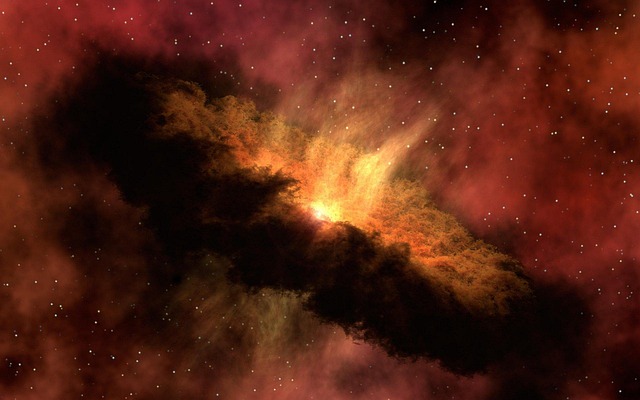
The “Cosmic Dancer” phenomenon featured in NASA astronomy pictures captures fluid, motion-like structures within nebulae and galaxies. These images are not mere artistic impressions but visual evidence of dynamic astrophysical processes. Gas flows, stellar winds, and gravitational interactions create patterns that appear to move like dancers across the cosmic stage. By combining multi-wavelength data from instruments such as Hubble and Webb, scientists reveal how energy and matter interact in space. The result is a blend of science and art that deepens insight into cosmic evolution.
Exploring the Cosmic Dancer Phenomenon in NASA Astronomy Pictures
NASA astronomy pictures often depict vast celestial formations that seem to twist and flow with graceful motion. The so-called “Cosmic Dancer” effect draws attention not only for its beauty but also for what it reveals about the universe’s physical dynamics.
The Origins of the “Cosmic Dancer” Concept
The term “Cosmic Dancer” originates from observing luminous gas clouds and stellar nurseries that appear to move rhythmically under the influence of stellar radiation and gravity. High-resolution telescopic imaging captures these transient forms where dust filaments stretch like arms in motion. In regions such as the Carina Nebula or the Whirlpool Galaxy, turbulence within interstellar gas gives rise to wave-like contours that mimic choreography on a cosmic scale.
NASA’s Imaging Techniques Behind the Phenomenon
NASA employs sophisticated imaging systems to capture these phenomena. The Hubble Space Telescope records optical and ultraviolet light, while the James Webb Space Telescope extends observations into infrared wavelengths, exposing structures hidden by dust. Multi-wavelength imaging allows scientists to map temperature variations and density gradients within nebulae. Through color mapping and data calibration, researchers translate raw photon data into visible patterns resembling movement—an approach that merges technical precision with aesthetic resonance.
Interpreting Motion and Structure in Astronomical Imagery
Behind every image of a “dancing” nebula lies an intricate set of physical forces shaping interstellar matter. The appearance of motion results from dynamic feedback between stars and their environments.
The Role of Stellar Feedback in Creating Dynamic Forms
Massive stars emit powerful winds that compress surrounding gas into arcs and shells. Radiation pressure sculpts clouds into elongated plumes, producing forms reminiscent of flowing fabric. Supernova explosions inject turbulence into nearby regions, amplifying these effects and creating complex morphologies observable even thousands of light-years away. These feedback processes produce transient visual effects—fleeting yet captured permanently through NASA’s imaging archives.
Gravitational Interactions as a Source of Cosmic Choreography
Gravitational forces also play a central role in generating apparent motion across galaxies. During mergers, tidal interactions stretch stellar streams into curved trails resembling rotational movement. Spiral galaxies exhibit rhythmic symmetry shaped by gravitational density waves propagating through their disks. Observations from missions such as Hubble reveal how gravity orchestrates large-scale cosmic choreography, transforming static star fields into dynamic compositions.
Spectral Analysis and Energy Distribution in the Cosmic Dancer Images
To interpret these intricate structures, astrophysicists rely on spectral analysis across multiple wavelengths. Each frequency band reveals different aspects of energy distribution within cosmic clouds.
Insights from Multi-Wavelength Observations
X-ray observations expose high-energy regions associated with young stars or supernova remnants. Infrared imaging traces cooler dust components that define much of a nebula’s visible structure. By combining these datasets, scientists reconstruct three-dimensional models showing how heat, density, and composition vary throughout each region. This synthesis allows deeper insight into how physical mechanisms produce visually striking formations captured in NASA astronomy pictures.
Understanding Energy Transfer Within Dynamic Nebulae
Energy propagation through ionized gases follows principles described by radiative transfer models used in computational astrophysics. Shock fronts generated by stellar outflows delineate bright filaments that appear to shimmer or twist over time. Variations in luminosity correspond to evolving stages of stellar birth or decay—an ongoing cycle recorded frame by frame through long-term observation campaigns.
Symbolism and Scientific Value of the Cosmic Dancer Imagery
Beyond physics, the Cosmic Dancer concept bridges scientific visualization with human interpretation. These images invite reflection on both aesthetics and empirical inquiry.
Aesthetic Interpretation Versus Physical Reality
The perception of dance arises from human pattern recognition applied to chaotic natural systems. What appears as movement is often a static interplay between light intensity, color contrast, and structural curvature frozen in time by exposure frames. Yet this illusion fosters emotional engagement that enhances scientific outreach without compromising accuracy.
Contributions to Astrophysical Understanding Through Visual Data
Each high-resolution image contributes measurable data refining models of star formation dynamics and interstellar medium behavior. Comparative analysis across galactic environments reveals recurring structural motifs—from filamentary networks to spiral arms—suggesting universal organizing principles governing matter distribution at multiple scales. Continuous monitoring further enables time-domain studies detecting actual motion within expanding shells or rotating clusters.
Future Prospects for Studying Cosmic Motion Through NASA Imagery
As observational technology advances, future missions promise even greater clarity in tracing cosmic motion across space-time scales.
Upcoming Missions Enhancing Observational Capabilities
The Nancy Grace Roman Space Telescope will extend temporal resolution for detecting subtle shifts within star-forming regions over months or years. Integration with machine learning algorithms will automate identification of recurring patterns among terabytes of imagery data collected weekly by NASA astronomy programs. Cross-mission collaboration between optical, infrared, and radio observatories will build comprehensive datasets mapping fluid dynamics across interstellar space.
Advancing Theoretical Models Through Image-Based Data Interpretation
Image-based simulations now validate theoretical frameworks describing turbulence, magnetic field alignment, and feedback loops within molecular clouds. These visual datasets guide refinements in computational astrophysics models used by research institutions worldwide under standards recognized by IEEE for data integrity protocols. Such synergy between observation and modeling continues to deepen knowledge about morphological evolution throughout the cosmos.
FAQ
Q1: What does “Cosmic Dancer” refer to in NASA astronomy pictures?
A: It describes nebular or galactic structures whose shapes resemble fluid motion caused by stellar winds or gravitational forces.
Q2: Which telescopes capture these images?
A: Primarily Hubble Space Telescope for optical wavelengths and James Webb Space Telescope for infrared observations.
Q3: Are these images color-enhanced?
A: Yes, color mapping translates non-visible wavelengths into visible hues to highlight structural details otherwise unseen by human eyes.
Q4: How do scientists analyze energy distribution within these formations?
A: They combine X-ray, infrared, and optical spectra to trace temperature gradients and identify energetic events like supernovae or star births.
Q5: Why are such images significant beyond aesthetics?
A: They provide empirical data refining astrophysical theories while engaging public imagination through visual storytelling grounded in real science.