



NASA’s James Space Webb Telescope Finally Approaches
The james space webb telescope marks a decisive leap for observational astronomy. Its design, centered on infrared detection and precision optics, enables scientists to view cosmic epochs previously hidden by dust and distance. Unlike Hubble, which focused on visible and ultraviolet light, Webb’s sensitivity reaches deep into the infrared spectrum, revealing the earliest galaxies and planetary systems. As it nears full operational capacity, its data promise to reshape astrophysics—refining cosmological constants, probing exoplanet atmospheres, and mapping dark matter structures with unmatched clarity.
The Capabilities of the James Webb Space Telescope
The james space webb telescope redefines how astronomers collect and interpret cosmic light. Its architecture combines advanced optics with cryogenic engineering to detect signals billions of years old.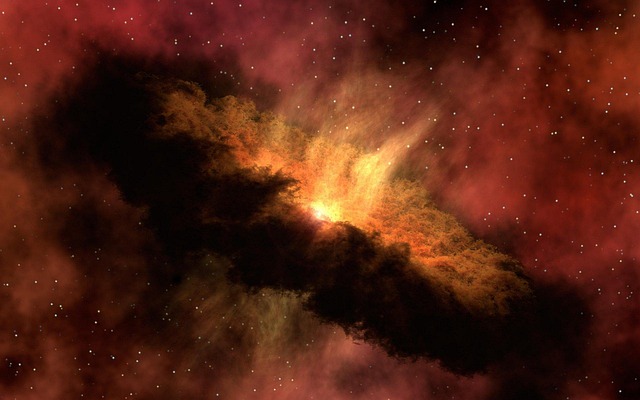
Design and Technological Advancements
Webb’s segmented primary mirror spans 6.5 meters across, made of 18 hexagonal beryllium segments coated in gold to maximize infrared reflectivity. The mirror’s configuration allows folding during launch and precise alignment once deployed at L2 orbit. Cryogenic cooling keeps instruments below 50 Kelvin, minimizing thermal noise and improving sensitivity to faint emissions from early galaxies. Compared with Hubble’s 2.4-meter mirror and Spitzer’s narrower wavelength range, Webb delivers higher resolution across 0.6–28 microns—bridging optical to mid-infrared domains that earlier observatories could not fully explore.
Instruments Enabling Deep Space Observation
Four main instruments drive Webb’s scientific reach: NIRCam captures high-resolution near-infrared images; NIRSpec performs multi-object spectroscopy; MIRI observes in mid-infrared wavelengths for cooler celestial bodies; FGS/NIRISS provides fine guidance and calibration support. Together they enable simultaneous imaging and spectral analysis across vast distances. Adaptive optics and fine steering mirrors maintain sub-arcsecond accuracy, ensuring data consistency even during long exposures.
Exploring the Early Universe Through Infrared Astronomy
Infrared capability lets the telescope peer beyond optical limits, detecting redshifted light from the universe’s infancy.
Observing the First Galaxies and Stars
Webb detects photons emitted just a few hundred million years after the Big Bang. By measuring extreme redshifts (z > 10), astronomers determine both distance and composition of primordial galaxies. Spectral data reveal hydrogen recombination lines and trace elements like oxygen or carbon—key to modeling early star formation rates and initial mass functions that shaped galactic evolution.
Understanding Cosmic Reionization
The telescope investigates how ultraviolet radiation from young stars ionized neutral hydrogen roughly one billion years after cosmic dawn. Through spectroscopic mapping of ionized regions across different redshifts, it identifies when reionization completed and how it correlates with galaxy clustering patterns. These insights refine simulations linking starburst activity with intergalactic medium transparency.
Probing the Formation and Evolution of Galaxies
Webb extends our view of galactic history by capturing structural transitions over billions of years.
Structural Evolution Across Cosmic Time
High-resolution imaging reveals morphological diversity—from compact proto-galaxies to mature spirals. By comparing shapes across redshifts, scientists quantify how mergers, accretion flows, and feedback from supernovae sculpt stellar distributions. Metallicities measured through emission-line ratios expose enrichment gradients that trace chemical evolution over time.
The Interplay Between Dark Matter and Galaxy Formation
Gravitational lensing observed by Webb helps map dark matter halos surrounding distant clusters. Rotation curves derived from spectroscopic velocity fields constrain mass distributions beyond visible components. These measurements test models predicting halo growth rates within ΛCDM cosmology frameworks.
Insights Into Star and Planet Formation Processes
Within nearby molecular clouds, Webb observes processes obscured in visible light—shedding light on how stars ignite and planets assemble.
Observing Protostellar Systems in Molecular Clouds
Mid-infrared imaging penetrates dense dust where protostars form. Data reveal accretion disks feeding young stars alongside bipolar jets expelling excess angular momentum. Spectral signatures identify silicates, water ice, and organic molecules vital for pre-planetary chemistry within these regions.
Characterizing Protoplanetary Disks and Exoplanetary Environments
Spectroscopy detects molecular bands of water vapor, methane, carbon dioxide, and ammonia within disks around young stars. Mapping thermal gradients across these disks clarifies where rocky versus gaseous planets may emerge—often referred to as “snow lines.” Such observations highlight environments potentially leading to habitable worlds similar to Earth.
Investigating Exoplanet Atmospheres and Habitability Potential
Beyond star formation zones, Webb explores mature planetary systems orbiting distant suns.
Transmission Spectroscopy for Atmospheric Composition Analysis
When an exoplanet transits its host star, starlight filters through its atmosphere. Webb measures these subtle absorption features to identify gases such as oxygen or methane under suitable conditions that might indicate biological activity. Comparative modeling distinguishes between abiotic photochemical sources and potential biosignatures consistent with life-supporting chemistry.
Direct Imaging Techniques for Distant Worlds
Using coronagraphs integrated into NIRCam and MIRI suppresses stellar glare enough to directly image exoplanets several light-years away. This approach reveals albedo patterns indicating cloud dynamics or surface reflectivity variations possibly linked to oceans or continents—critical parameters for assessing habitability potential around nearby stars.
Contributions to Cosmology and Fundamental Physics
Webb’s precision photometry supports measurements central to modern cosmology while testing physics beyond standard frameworks.
Refining Measurements of Cosmic Expansion Parameters
By observing Type Ia supernovae as standard candles at high redshift, Webb improves distance calibrations essential for determining the Hubble constant (H₀). Comparing these results with cosmic microwave background estimates addresses existing tensions between local expansion rates and early-universe predictions—a major topic in astrophysical research circles today.
Testing Theories Beyond the Standard Model of Cosmology
Deep-field surveys may uncover evidence of primordial black holes or exotic particle interactions influencing early structure formation. Deviations from ΛCDM predictions at small scales could signal alternative dark energy behaviors or modifications to general relativity itself—areas where Webb’s unprecedented sensitivity offers new empirical leverage on fundamental physics questions long debated among theorists.
FAQ
Q1: How does the james space webb telescope differ most from Hubble?
A: It operates primarily in infrared rather than visible wavelengths, allowing observation through cosmic dust to see older structures invisible to Hubble.
Q2: What is the significance of its location at Lagrange Point 2?
A: L2 provides a stable thermal environment with minimal Earth interference, ideal for maintaining cryogenic temperatures required for infrared detection.
Q3: Can Webb detect signs of life on exoplanets?
A: It cannot confirm life directly but can identify atmospheric molecules like water vapor or methane that suggest potentially habitable conditions.
Q4: Why is cryogenic cooling essential?
A: Cooling reduces infrared noise from the telescope itself so faint celestial signals can be captured without contamination from instrument heat emission.
Q5: How long will Webb operate?
A: Its mission lifespan is expected to exceed ten years depending on fuel consumption for orientation adjustments at L2 orbit.