



The Gold in Your Ring Formed Before Earth Existed — and the Atoms in That Small Band Are Older Than Every Ocean, Every Continent, and Every Form of Life That Has Ever Lived on This Planet
Gold’s story began long before Earth existed. The atoms in a wedding ring trace their origin to cataclysmic events billions of years ago when ancient stars died in violent explosions. Those cosmic forges scattered heavy elements across space, later becoming part of the dust and gas that formed the Solar System. Every gram of gold on Earth carries that stellar signature, linking human civilization directly to the life cycles of stars and the evolution of galaxies.
The Cosmic Origins of Gold
The chemical fingerprint of gold reveals a history written in the cosmos. Its creation required energy levels far beyond ordinary stellar fusion, pointing to rare astrophysical events that shaped the elemental diversity observed across earth & space.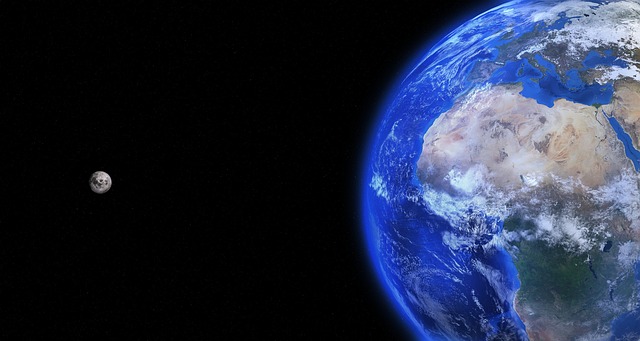
The Formation of Heavy Elements in the Universe
Stars fuse hydrogen into helium and progressively heavier elements up to iron through nuclear reactions. However, forming gold demands conditions exceeding those within normal stellar cores. Only environments with intense neutron fluxes can transform lighter nuclei into heavy ones through rapid neutron capture, known as the r-process. This process links gold’s ancestry to extreme cosmic phenomena rather than steady star burning.
The Role of Supernovae and Neutron Star Mergers
Supernova explosions expel vast amounts of material into interstellar space, enriching galaxies with newly synthesized elements. Yet recent evidence points to neutron star mergers as dominant sites for r-process nucleosynthesis. When two neutron stars collide, they eject dense matter where neutrons rapidly combine with atomic nuclei, creating gold and other precious metals. Observations from gravitational wave detections have confirmed such mergers produce visible kilonovae rich in heavy elements—direct proof that these collisions continue shaping elemental abundance today.
Pre-Solar Material and the Early Solar Nebula
Before Earth formed, ancient stellar remnants seeded interstellar clouds with dust grains containing heavy elements. These pre-solar materials became part of the molecular cloud that birthed our Sun and planets.
Evidence from Meteorites and Isotopic Signatures
Meteorites act as time capsules preserving isotopic compositions older than Earth itself. Laboratory analyses reveal isotopic anomalies consistent with grains originating from supernovae or red giant stars. Ratios between certain isotopes show enrichment patterns characteristic of r-process nucleosynthesis, confirming that some solar system material predates our Sun by millions of years.
Incorporation of Ancient Matter into the Solar System
As the solar nebula collapsed under gravity, it mixed gas and dust from multiple stellar generations. Within this turbulent disk, microscopic particles condensed into planetesimals—the building blocks of planets. These early aggregates trapped traces of gold-bearing dust forged by ancient stars. Over time, accretion processes incorporated this atomic heritage into Earth’s mantle and crust precursors.
Geological Distribution of Gold on Earth
Gold’s cosmic origin explains its rarity on Earth’s surface today. Planetary differentiation during early formation redistributed metals deep within the planet while later extraterrestrial impacts altered surface concentrations.
Differentiation During Planetary Formation
When proto-Earth was molten, dense elements like iron and gold sank toward the core under gravity. This segregation left only small amounts within the silicate mantle and crust. Subsequent mantle convection brought limited quantities back toward accessible layers through volcanic activity and hydrothermal circulation. This geochemical behavior clarifies why most terrestrial gold remains locked deep below ground.
Extraterrestrial Contributions After Earth’s Formation
After core formation ended, a period known as late heavy bombardment delivered additional metal-rich meteorites to Earth’s surface. Geochemical modeling suggests much of today’s recoverable gold originated from these impacts rather than primordial differentiation alone. This late veneer hypothesis aligns with isotopic evidence showing enrichment patterns inconsistent with core-derived sources.
Astrophysical Implications for Elemental Evolution
Gold serves as a tracer connecting stellar life cycles with planetary composition across cosmic timescales, bridging astrophysics and geochemistry.
Linking Stellar Evolution to Planetary Composition
The abundance pattern of heavy elements within our Solar System mirrors cumulative contributions from countless supernovae and neutron star mergers over billions of years. Comparing solar abundances to galactic chemical evolution models reveals how successive stellar generations enriched interstellar matter before planetary systems emerged.
Observational Evidence from Modern Astronomy
Spectroscopic surveys show that old stars in different parts of the Milky Way contain varying amounts of r-process elements such as europium and gold analogs. Data from kilonova observations confirm ongoing synthesis today—demonstrating that cosmic element formation is an active process shaping both distant galaxies and materials found on modern Earth.
Philosophical and Scientific Reflections on Cosmic Continuity
Every atom within human bodies or jewelry shares a lineage stretching back to ancient stars, reminding science professionals that planetary chemistry is inseparable from cosmic history.
The Temporal Scale of Atomic Heritage
Each atom composing terrestrial matter has existed for billions of years before Earth coalesced. That continuity underscores humanity’s connection to universal processes spanning unimaginable timeframes—a perspective often lost amid daily scientific precision but central to cosmochemistry’s narrative.
Implications for Future Research in Cosmochemistry and Planetary Science
Advances in isotope measurement techniques will refine knowledge about pre-solar materials embedded within meteorites or lunar samples. Integrating astrophysical observations with geochemical data will further clarify how galactic events influenced planetary element distribution. Such interdisciplinary work continues revealing how universal mechanisms shaped Earth’s unique elemental identity across both earth & space domains.
FAQ
Q1: How old are the atoms in terrestrial gold?
A: They likely formed more than 4.5 billion years ago during supernova or neutron star merger events predating our Solar System.
Q2: Why is accessible gold scarce on Earth?
A: Most gold sank into Earth’s core during differentiation; later volcanic processes brought only trace amounts upward.
Q3: What evidence supports neutron star mergers as sources of gold?
A: Gravitational wave detections paired with kilonova light signatures confirm heavy element production consistent with theoretical predictions.
Q4: Did meteorite impacts significantly add to Earth’s gold supply?
A: Yes, late heavy bombardment introduced additional metal-rich material after core formation ended.
Q5: How does studying gold help astrophysics?
A: Gold acts as a benchmark element tracing r-process nucleosynthesis across galaxies, linking stellar death events to planetary composition today.