



Almost Half of Everything Orbiting Earth Is Space Junk
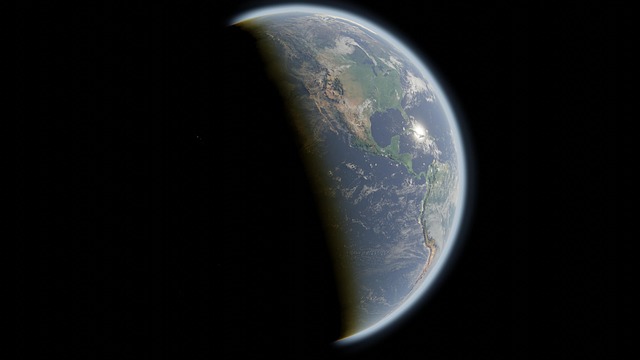
Nearly half of all objects circling our planet are no longer functioning spacecraft but fragments of debris, defunct satellites, and discarded rocket parts. The orbital environment has become increasingly congested, posing risks to active missions and future launches. From large rocket bodies to millimeter-sized paint flecks, each fragment contributes to a growing hazard that challenges space operations and international cooperation. Observations of Earth from space now reveal not only the beauty of our planet but also the clutter that surrounds it.
The Expanding Presence of Space Junk in Earth’s Orbit
The orbital region around Earth hosts a mix of operational satellites, spent rocket stages, and countless fragments from past collisions. This complex ecosystem reflects decades of human activity beyond the atmosphere.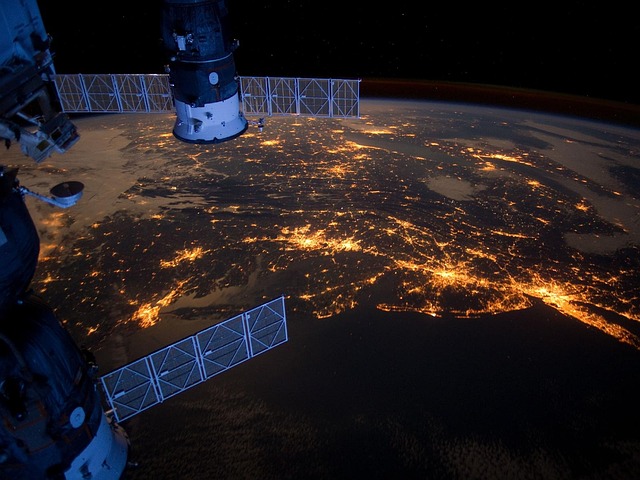
Understanding the Composition of Objects Surrounding Earth
Objects orbiting Earth fall into three broad categories: active satellites performing communication or observation tasks, defunct spacecraft that have ceased operation, and debris fragments left by explosions or collisions. Rocket upper stages often remain in orbit after delivering payloads, becoming some of the largest uncontrolled objects. Smaller particles, such as metal shards or insulation flakes, are harder to track yet still capable of damaging active systems. Statistical data from global monitoring networks show that less than one-third of cataloged objects remain functional, while debris dominates low Earth orbit.
Historical Growth of Orbital Debris
The first artificial satellite launched in 1957 marked the beginning of human presence in orbit—and inadvertently, the start of space debris accumulation. Early missions left booster segments and fairings behind. Over time, catastrophic events like the 2007 Chinese anti-satellite test and the 2009 Iridium–Cosmos collision dramatically increased debris counts. Low Earth orbit (LEO) has seen the fastest growth due to frequent launches, while geostationary orbit (GEO) accumulates slower-moving but long-lived remnants.
Visualizing Earth from Space: What Satellite Imagery Reveals
When viewed through modern imaging systems, Earth from space appears surrounded by a faint halo—a visual representation of orbital congestion invisible to the naked eye but critical for mission planning.
Interpreting Orbital Congestion Through Earth Observation Data
Visualization platforms use radar tracking and telemetry data to map debris distribution across orbital shells. Optical imagery captures larger satellites but misses micro-debris below ten centimeters. Ground-based radar arrays fill these gaps by detecting smaller targets through reflected signals. Combined datasets allow researchers to estimate density gradients and identify high-risk zones for collisions.
The Role of Earth Observation Systems in Monitoring Space Debris
Global surveillance programs such as the U.S. Space Surveillance Network (SSN) and Europe’s ESA tracking initiatives maintain catalogs exceeding 30,000 trackable objects. These systems integrate optical telescopes, radar sensors, and AI-assisted algorithms to predict orbital paths with increasing precision. Machine learning models now help flag untracked fragments by analyzing irregular motion patterns against known trajectories.
The Dynamics and Risks of Orbital Congestion
As orbital traffic intensifies, operational satellites face rising collision probabilities that threaten essential services like navigation and weather forecasting.
How Space Junk Affects Satellite Operations
Even a one-centimeter fragment traveling at several kilometers per second can disable a satellite on impact. Operators regularly perform avoidance maneuvers based on predicted conjunction alerts issued by tracking agencies. These adjustments consume fuel reserves and shorten mission lifetimes but remain necessary to prevent catastrophic loss.
The Kessler Syndrome and Long-Term Orbital Sustainability
The Kessler model predicts that once debris density crosses a certain threshold, collisions will trigger self-sustaining cascades—each event generating new fragments that further increase risk. Simulations using current launch rates suggest some orbital bands are approaching this instability point within decades unless mitigation improves.
International Efforts to Manage Orbital Debris
Mitigating orbital clutter requires coordinated global policy backed by technological innovation capable of removing existing hazards while preventing new ones.
Policies and Guidelines for Debris Mitigation
International frameworks under UNCOPUOS promote voluntary guidelines for post-mission disposal within 25 years after mission end. ISO standards specify passivation protocols to prevent explosions caused by residual fuel or battery energy. National regulations vary widely; enforcement remains inconsistent due to differing economic priorities among spacefaring nations.
Emerging Technologies for Active Debris Removal (ADR)
Mechanical Capture Systems
Robotic arms and tethered nets are being tested for capturing large inactive satellites safely. Japan’s Kounotori mission demonstrated electrodynamic tether concepts aimed at controlled reentry.
Directed Energy Concepts
Laser ablation methods propose altering debris orbits through surface heating without physical contact—reducing altitude gradually until atmospheric drag completes reentry.
Electrodynamic Tethers and Drag Augmentation Devices
Passive solutions such as expandable sails or conductive tethers accelerate orbital decay by increasing atmospheric drag or interacting with Earth’s magnetic field after mission completion.
Future Outlook: Maintaining a Sustainable Orbital Environment
The path forward depends on smarter satellite design combined with transparent international collaboration focused on shared responsibility for orbital stewardship.
Design Innovations for Next-Generation Satellites
Manufacturers are developing modular architectures allowing easier component replacement or recycling in orbit. Electric propulsion enables controlled deorbit burns once missions conclude, minimizing long-term clutter potential.
Global Collaboration Toward a Cleaner Orbit
Shared situational awareness platforms encourage operators to exchange positional data securely across jurisdictions. Joint demonstration missions between agencies test cooperative removal techniques—an encouraging sign that sustainability is becoming an operational priority rather than an afterthought.
FAQ
Q1: How much of what orbits Earth is considered space junk?
A: Nearly half of all cataloged objects in orbit are nonfunctional debris rather than active satellites.
Q2: What causes most new debris creation?
A: Accidental collisions between satellites and deliberate destruction during anti-satellite tests contribute significantly to debris generation.
Q3: Can small fragments really damage large spacecraft?
A: Yes, even millimeter-sized particles can puncture sensitive components due to their extreme relative velocities in orbit.
Q4: Who tracks all this material around Earth?
A: Networks like the U.S. Space Surveillance Network and ESA’s Space Safety Programme maintain global object catalogs using radar and optical sensors.
Q5: What technologies might clean up existing space junk?
A: Promising approaches include robotic capture arms, drag sails for passive deorbiting, and laser-based trajectory modification systems aimed at reducing collision risk over time.