



NASA’s James Webb Space Telescope Reveals Massive Star Clusters Form Faster Inside Galaxies
Recent data from NASA’s James Webb Space Telescope (JWST) show that massive star clusters can form in just a few million years, far faster than previously estimated. The telescope’s infrared imaging has captured dense protoclusters within galaxies, revealing that high-pressure environments accelerate stellar birth. These findings reshape current models of galactic evolution and point to a tighter link between gas dynamics, feedback processes, and cluster assembly rates.
Insights From Space and Telescope Observations on Star Cluster Formation
Modern astrophysics has entered a new era of precision with the advent of space-based telescopes. Observations from JWST and similar instruments are not just expanding the cosmic map—they are redefining how scientists trace the life cycle of stars within galaxies.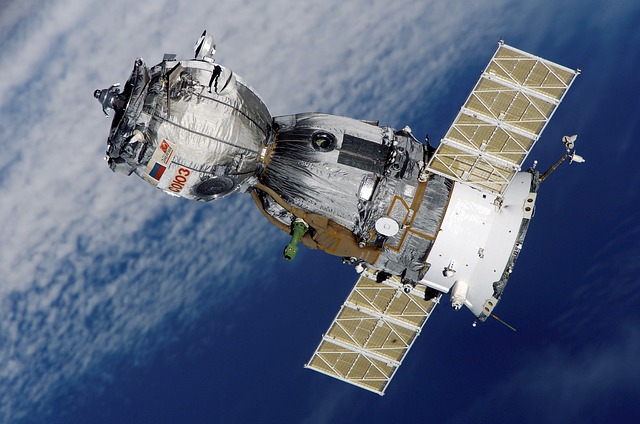
The Role of Advanced Space Telescopes in Modern Astrophysics
Space telescopes like JWST provide high-resolution infrared imaging that penetrates dust-obscured regions where optical light fails. This capability allows researchers to measure stellar densities, gas motion, and star formation rates with unprecedented accuracy. By combining infrared, optical, and radio data, astronomers can trace early cluster formation environments across multiple wavelengths, revealing how dense molecular clouds evolve into compact stellar systems.
How Space-Based Observations Differ From Ground-Based Data
Unlike ground observatories, space telescopes operate free from atmospheric distortion. This absence of interference yields sharper images of dense star-forming regions and faint background galaxies. Infrared sensors detect embedded protoclusters invisible at optical wavelengths, while continuous observation cycles allow for time-dependent studies that track cluster evolution over months or years. Such precision is crucial for mapping rapid changes in star-forming complexes.
The Mechanisms Behind Rapid Star Cluster Formation
The speed at which clusters form depends on internal galactic forces and environmental conditions. JWST’s observations have provided direct evidence linking gas dynamics to the sudden onset of starburst activity within galaxies.
Gas Dynamics and Gravitational Instabilities in Galactic Environments
Dense molecular clouds collapse under their own gravity once internal pressure drops below a critical threshold. Turbulent gas flows combined with magnetic field interactions cause these clouds to fragment into smaller subclusters that rapidly coalesce into massive groups of stars. Feedback from newly formed massive stars—through radiation and stellar winds—then regulates further growth by dispersing residual gas.
Influence of Galactic Structures on Cluster Formation Timescales
Galactic structures such as spiral arms or bars act as compression zones that funnel interstellar gas into localized pockets. These regions often become sites of intense starburst activity. Central galactic areas with higher gas concentrations tend to assemble clusters faster than outer disks, while galaxy collisions can amplify this process by compressing interstellar material, enhancing cluster formation efficiency across interacting systems.
Contributions of the James Webb Space Telescope to Understanding Cluster Evolution
JWST’s infrared sensitivity has made it possible to observe early cluster formation stages previously hidden behind thick dust layers. Its data reveal both structural details and chemical signatures that offer clues about how young clusters evolve over time.
High-Resolution Imaging of Early Star Clusters
With its near-infrared cameras, JWST can resolve individual stars inside compact clusters billions of light-years away. Observations show that massive clusters form within only a few million years—an astonishingly short timescale in cosmic terms. These images help constrain initial mass functions and clarify how early stellar feedback shapes subsequent evolution.
Spectroscopic Analysis and Chemical Composition Mapping
Spectroscopy performed by JWST identifies elemental abundances in young clusters, providing insight into enrichment histories following supernova events. Emission lines from ionized gases trace recent star formation activity and radiation intensity fields around newborn stars. Chemical gradients across cluster regions also shed light on internal mixing processes that influence long-term stellar evolution pathways.
Comparing Observational Data With Theoretical Models
As JWST continues to collect detailed datasets, astrophysicists are comparing real observations against decades of numerical simulations to refine theoretical frameworks describing cluster assembly.
Testing Predictions From Numerical Simulations
Simulations have long predicted that clusters form rapidly under high-pressure conditions typical of galactic centers. JWST’s imaging validates many such predictions but also reveals discrepancies—particularly regarding turbulence driven by radiation pressure and feedback effects—that require refined modeling approaches. Integrating observational constraints improves predictive accuracy for future galaxy formation models used by institutions such as NASA’s Goddard Space Flight Center and ESA’s cosmology programs.
Implications for Galaxy Evolution Studies
Rapid cluster formation plays a major role in shaping galactic bulges and halos through cumulative stellar mass buildup. Feedback from young clusters drives large-scale outflows that regulate subsequent star formation efficiency across entire galaxies. These processes connect small-scale physics with large-scale cosmic structure formation, influencing models used in cosmological simulations by agencies like the European Southern Observatory (ESO).
Future Prospects in Space-Based Astrophysical Research
The next decade will bring an expanded toolkit for exploring early universe phenomena beyond JWST’s current capabilities. Collaborative missions will extend temporal coverage and spectral range across vast cosmic volumes.
Upcoming Missions Complementing JWST Discoveries
The Nancy Grace Roman Space Telescope will soon complement JWST by surveying larger sky areas at lower resolution but higher statistical depth. When paired with ALMA’s millimeter-wave data or Hubble’s archival optical imagery, these missions will create comprehensive multi-wavelength datasets capturing different phases of cluster emergence throughout cosmic history.
Expanding Analytical Frameworks for Star Formation Studies
Machine learning techniques are increasingly used to identify emerging clusters within complex image datasets from space telescopes. Cross-correlation between spectroscopic catalogs enhances classification accuracy for young stellar populations across different galaxies. Integrating data from multiple observatories enables researchers to map interconnected networks of star-forming regions more effectively—a step toward constructing dynamic models of galactic ecosystems rather than static snapshots.
FAQ
Q1: Why is JWST particularly suited for studying star cluster formation?
A: Its infrared instruments penetrate dusty regions where most early-stage clusters reside, allowing detailed observation unavailable through optical telescopes.
Q2: How fast do massive star clusters form inside galaxies?
A: Observations indicate they can assemble within a few million years due to high-pressure environments accelerating gas collapse.
Q3: What distinguishes space-based telescopes from ground observatories?
A: They operate above Earth’s atmosphere, eliminating distortion and enabling continuous monitoring across multiple wavelengths.
Q4: How does feedback from massive stars affect cluster growth?
A: Stellar winds and radiation disperse surrounding gas, halting further accretion but shaping subsequent generations of stars within the same region.
Q5: Which future missions will build upon JWST’s findings?
A: The Nancy Grace Roman Space Telescope will expand survey coverage, while collaborations with ALMA will add complementary spectral insights into early cluster development.