


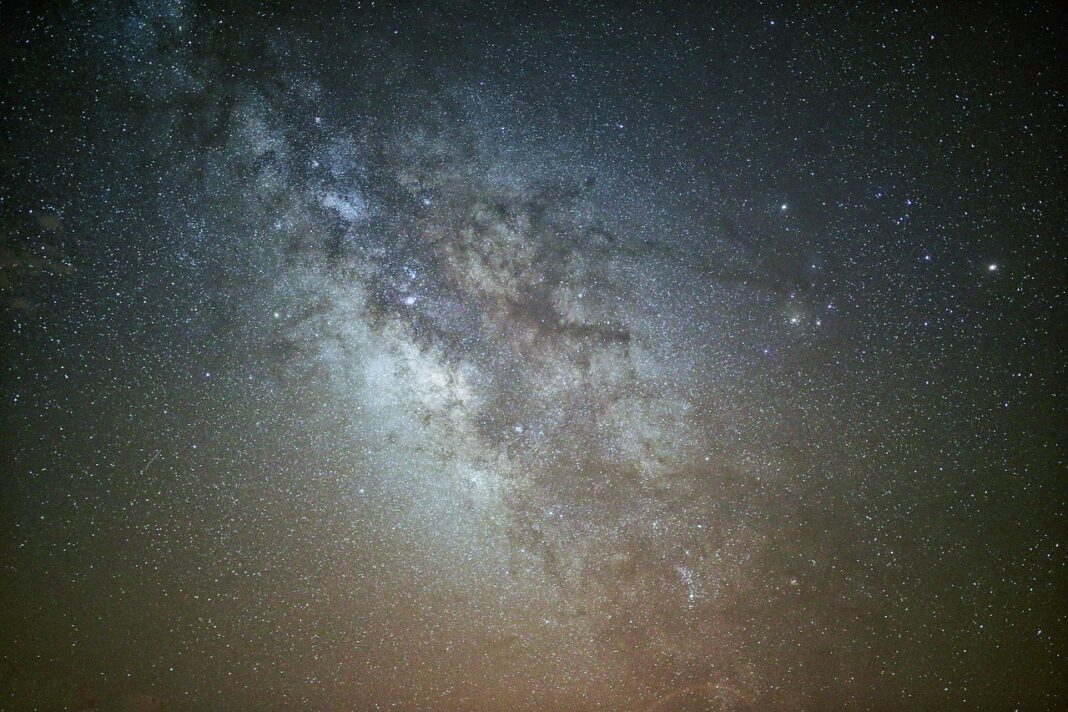

Why Do Basic Space Numbers Feel So Strange?
If you are searching for science facts about space, start with scale. Space is not only big. It has distances, clocks, speeds, and temperatures that daily life does not prepare you for. The facts worth using usually tie back to measured public data, not reposted graphics with no clear source.
- Strong space facts usually point to a real measurement, such as distance, light time, mass, or temperature.
- NASA, ESA, NOAA, and peer reviewed mission teams are better references than unsourced social posts.
- Strange facts are easier to understand when you compare them with a normal scene, like waiting at a traffic light or looking at the Moon after dinner.
Plain numbers come first. When light, distance, and gravity make sense across space, ideas like black holes, exoplanets, ancient galaxies, and solar storms start to read less like science fiction and more like measured reality.
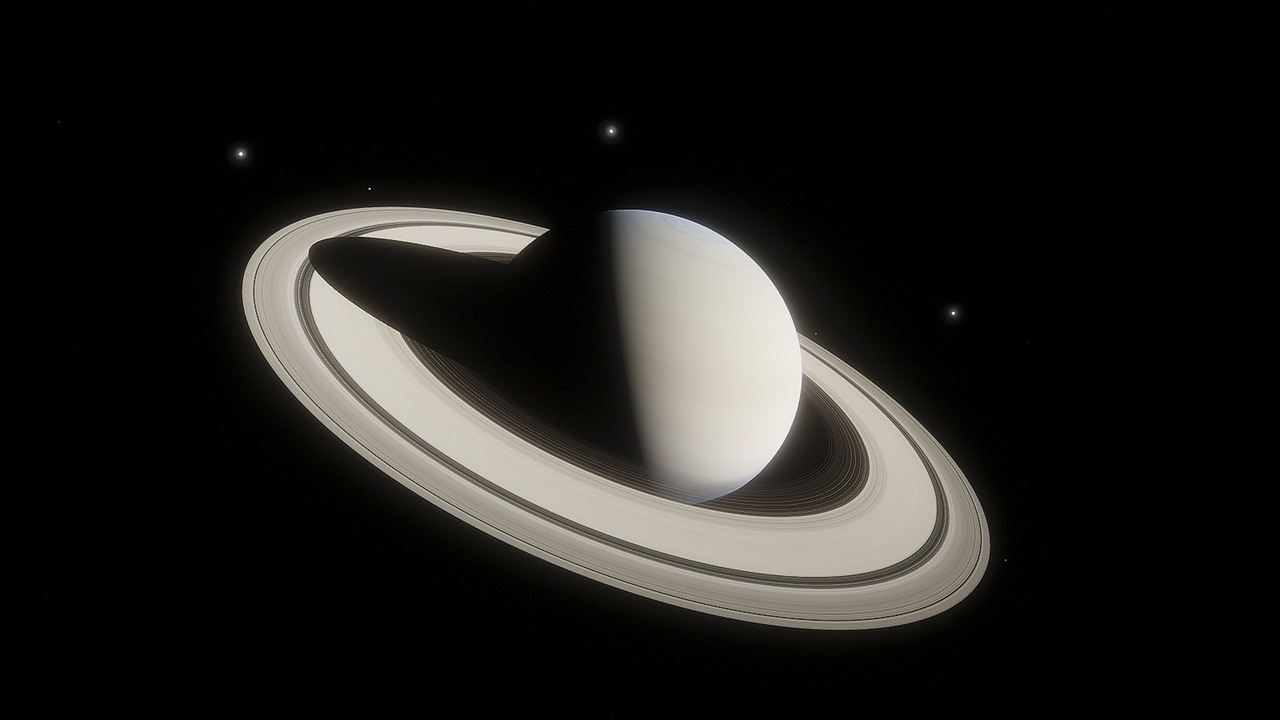
Sunlight Reaches Earth in Eight Minutes
The Sun is about 93 million miles from Earth on average, according to NASA Earth Facts in 2026. Light from it takes roughly 8.35 minutes to reach this planet. So the warm sunlight on your face left the Sun several minutes before you noticed it. That delay is short for space, but it still feels odd when you put it next to daily life. A cup of coffee can cool a bit in that time.
One Astronomical Unit Gives Space a Ruler
Astronomers use one astronomical unit, or AU, as the average distance from Earth to the Sun. NASA lists it at about 150 million kilometers. With that unit, solar system maps become easier to read. Mars can sit more than 1 AU from Earth at some points, Jupiter is much farther, and the outer solar system makes any road trip comparison fall apart fast.
The Moon Is Close Yet Still Far
The Moon looks near because it fills a clear night sky, but NASA Moon Facts places its average distance at about 239,000 miles, or 385,000 kilometers. Apollo crews crossed that gap in about three days. For a backyard comparison, if Earth were a basketball, the Moon would not sit on the same table. It would be several meters away, small and easy to miss.
What Makes Planets More Weird Than They Look?
Planet facts are often easy to enjoy because you can find planets with a telescope, a phone app, or sometimes just your eyes. The familiar lineup still hides strange weather, uneven heat, and huge clouds of icy leftovers. Public mission data is useful here because it separates real planetary science from catchy claims that get repeated online.
Venus Is Hotter Than Mercury
Mercury sits closest to the Sun, but Venus is the hottest planet in the solar system. NASA Solar System Facts states this directly. The reason is Venus has a thick carbon dioxide atmosphere that traps heat very well. Its surface temperature is high enough to melt lead. That detail is a good reminder for anyone reading planet data: distance from the Sun matters, but atmosphere can matter more.
Earth Is the Only Known Living World
NASA describes Earth as the only world currently known to have liquid water on the surface and life. That does not prove life exists nowhere else. It means public evidence has not confirmed it yet. This is why Mars sample studies, icy moon missions, and exoplanet atmosphere research get so much attention. The search is not only about scenery; it is about chemistry that could support biology.
The Oort Cloud Extends Far Beyond Pluto
Pluto is not the edge of the solar system. NASA Solar System Facts notes that the Oort Cloud, a distant shell of icy debris, may stretch as far as about 1.6 light years from the Sun. That region is still under the Sun’s gravitational influence, but it sits far beyond the planets. Put another way, the solar system has a busy inner area and a very wide, cold outer yard.
How Big Is Space Beyond the Solar System?
After Neptune, space facts stop feeling local. Stars become suns, planets become exoplanets, and telescopes work like tools for seeing old light. Careful wording matters in this part of astronomy. Scientists can count confirmed discoveries, but some large totals, such as the number of planets in the whole observable universe, are still estimates rather than direct counts.
Confirmed Exoplanets Now Top 6200
NASA’s exoplanet program reported in 2026 that more than 6,200 exoplanets had been confirmed. Thousands more remain candidates until follow up checks support them. That difference matters. A candidate may be likely, but a confirmed planet has passed extra tests. So when you see exact planet totals online, check whether they mean confirmed worlds, candidates, or broad estimates.
Billions of Worlds Likely Fill the Milky Way
NASA often describes the Milky Way as holding billions of planets, based on survey results and the large number of stars in the galaxy. Still, no telescope has counted every world one by one. A safer reading is that exoplanets are common, and the confirmed list keeps growing. Claims that every possible life zone has been mapped are not supported by public data.
Telescope Images Look Back in Time
Because light takes time to travel, distant images show the past. NASA said Webb’s First Deep Field, released in July 2022, combined 12.5 hours of observations and revealed thousands of galaxies in infrared light. Some objects in deep fields appear as they were billions of years ago. It is not a replay button, but it is close enough to make most people stop and think.
What Do Black Holes Teach You about Gravity?
Black holes sound like monsters, but they are mainly places where gravity becomes very strong. They do not roam around eating everything. They follow physics. The useful point is not that black holes are scary. The useful point is that they show what mass, motion, and light can do under conditions you will never meet on Earth.
Sagittarius A* Sits at the Galactic Center
The Milky Way has a supermassive black hole called Sagittarius A* at its center. NASA’s Hubble black hole materials describe it as around 4 million times the mass of the Sun. That number is huge, but it is also modest compared with some supermassive black holes in other galaxies. Space has a way of making normal ideas of large feel small.
Stellar Orbits Reveal Hidden Mass
Astronomers did not prove Sagittarius A* by guessing. They tracked stars moving around an unseen central object. NASA’s black hole science pages explain that stellar orbit measurements near the Milky Way center helped show a compact, massive object was there, work tied to the 2020 Nobel Prize in Physics. When stars move fast around space that looks empty, gravity gives away what is hidden.
Event Horizon Images Test Extreme Physics
The Event Horizon Telescope Collaboration released results for Sagittarius A* in 2022, giving astronomers event horizon scale evidence tied to the Milky Way’s central black hole. Images like these are not normal photos in the family album sense. They come from radio observatories working together across Earth. The takeaway is plain: gravity near a black hole can bend light into a bright ring. See also: AI.
Why Does the Universe Have a Measured Age?
The age of the universe is not a loose guess. It comes from measurements of old light, expansion, and models checked against sky surveys. Different methods can create scientific tension, especially in expansion measurements. Even so, the broad age figure used in major mission summaries remains one of the best known numbers in cosmology.
Planck Data Points to 13.8 Billion Years
The European Space Agency’s Planck science highlights give the age of the universe as 13.8 billion years. Planck studied the cosmic microwave background, the faint afterglow from the early universe. That number does not mean every star is that old. Stars, planets, and galaxies formed later at different times, like neighborhoods built long after a city first started.
Cosmic Microwave Background Acts Like a Fossil
The cosmic microwave background is often treated as a fossil of the early universe. It is not a rock in a museum, of course. It is radiation spread across the sky. Planck measured tiny temperature patterns in that radiation. Those patterns help scientists test models for matter, dark matter, expansion, and the early structure that later grew into galaxies.
Expansion Makes Far Galaxies Look Younger
When a telescope catches light from a galaxy billions of light years away, you see that galaxy as it looked when the light began the trip. This creates one of the cleanest science facts about space: looking farther often means looking earlier. A far galaxy can appear young not because it is young now, but because its old light is only just arriving. That is a strange idea, but the rule behind it is just light travel time.
What Can Space Weather Do Near Earth?
Space is not an empty background. The Sun sends particles, radiation, and magnetic disturbances through the solar system. Most days, people on the ground do not notice. During active periods, space weather can matter for satellites, radio signals, power grids, astronauts, and even airline routes near polar regions. This is practical science, not only a source of pretty auroras.
Solar Maximum Makes the Sun More Active
NASA and NOAA announced on October 15, 2024, that the Sun had reached the solar maximum phase of Solar Cycle 25. During solar maximum, sunspots, solar flares, and coronal mass ejections tend to happen more often. The Sun is not getting angry, even if headlines sometimes make it sound that way. Its magnetic cycle is doing what magnetic cycles do.
Earth’s Magnetic Field Shields the Planet
Earth’s magnetic field helps deflect many charged particles from the Sun. That shield is one reason the surface stays friendly compared with exposed space. During strong geomagnetic storms, some particles still interact with the upper atmosphere and create auroras. If you have seen green curtains in the sky, you have watched solar activity meet Earth’s defenses.
Satellites and Power Systems Need Forecasts
NOAA’s Space Weather Prediction Center tracks solar activity because technology now depends on near Earth space. Strong storms can disturb GPS signals, radio communication, satellite drag, and power systems. This is why space weather is not only for astronomers. It can affect maps, flights, phones, and the quiet machines people notice only when they stop working.
FAQ
Q1: What Is the Most Surprising Science Fact About Space? A: One of the most surprising facts is that sunlight takes about 8.35 minutes to reach Earth, based on NASA Earth Facts. You never see the Sun exactly as it is right now.
Q2: Are Space Facts Online Always Reliable? A: No. Reliable facts should point to public data from sources such as NASA, ESA, NOAA, the NASA Exoplanet Archive, or peer reviewed mission teams. Exact numbers with no source deserve caution.
Q3: How Many Exoplanets Have Scientists Confirmed? A: NASA reported in 2026 that more than 6,200 exoplanets had been confirmed, with many more candidates still needing follow up checks.
Q4: Is Venus Really Hotter Than Mercury? A: Yes. NASA lists Venus as the hottest planet because its thick atmosphere traps heat very strongly, even though Mercury is closer to the Sun.
Q5: Can Space Weather Affect Daily Life on Earth? A: Yes, during stronger solar activity. NOAA tracks space weather because geomagnetic storms can disturb satellites, GPS, radio systems, and power infrastructure.