



A wider view of planets beyond Earth
Planets in outer space are no longer limited to the eight worlds shown in basic solar system diagrams. Astronomers still use our solar system as the nearest reference point, but the field now includes dwarf planets, ocean-bearing moons, and thousands of confirmed planets orbiting other stars. NASA Science lists eight planets and five officially recognized dwarf planets in the solar system, while the NASA Exoplanet Archive reported 6,445 confirmed exoplanets after its Oct. 8, 2026 update. (science.nasa.gov)
That wider inventory has changed the questions researchers ask. The issue is not only how many planets exist, but what types of worlds can form, how often Earth-like conditions may occur, and which targets justify closer observation. For more coverage of space exploration and astronomy context, see the Space Science section.
What makes an object a planet
The modern definition of a planet in our solar system comes from a 2006 decision by the International Astronomical Union. Under that definition, a planet must orbit the Sun, have enough mass for its gravity to pull it into a nearly round shape, and clear the neighborhood around its orbit. The same resolution defined a dwarf planet as a nearly round body orbiting the Sun that has not cleared its orbital neighborhood and is not a satellite. (astronomy2006.com)
This is why Pluto is no longer counted among the eight major planets, although it remains scientifically important. Pluto, Ceres, Haumea, Makemake, and Eris are recognized as dwarf planets. The distinction is not a measure of scientific interest or complexity. It is a classification rule that separates gravitationally dominant planets from smaller bodies that share their regions with many other objects.
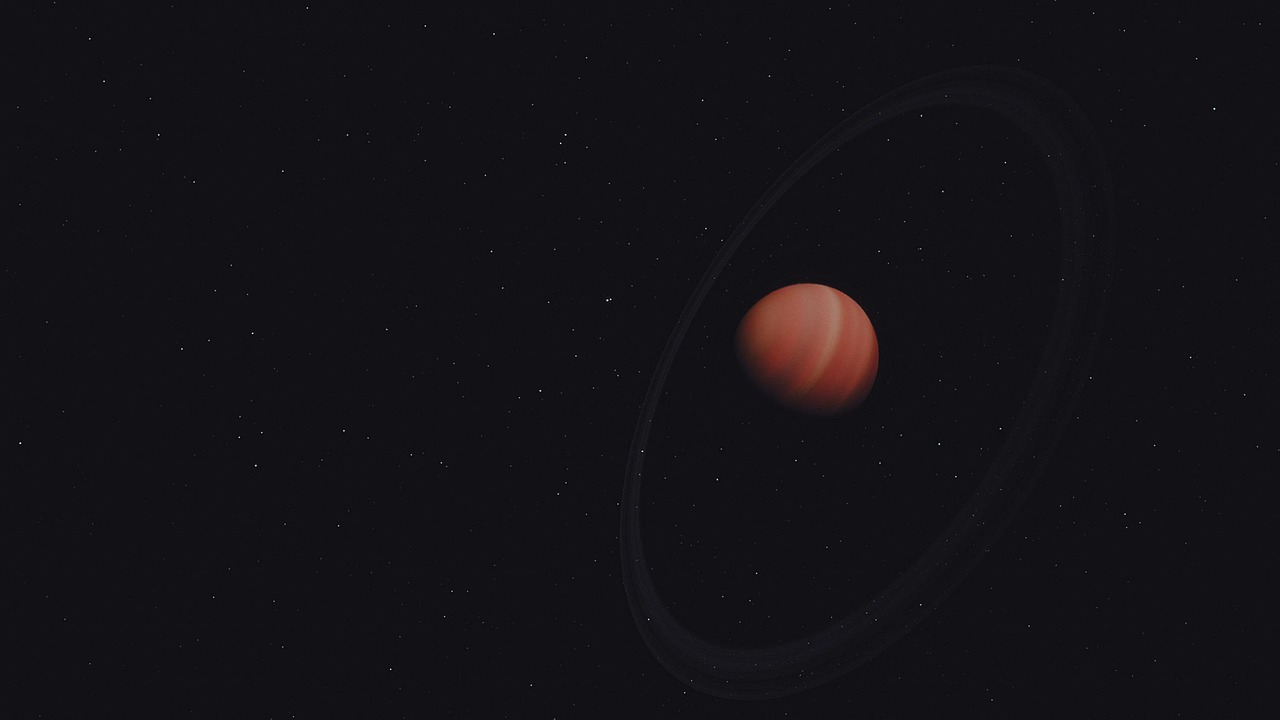
Exoplanets make the wording less straightforward because they orbit stars other than the Sun. In practical use, astronomers use exoplanet to mean a planet beyond our solar system, while recognizing that some cases are difficult to classify. Large bodies near the mass boundary between giant planets and brown dwarfs, free-floating planetary-mass objects, and young worlds embedded in dusty disks all show that natural systems do not always fit clean categories.
The eight solar system planets are not eight versions of Earth
Our solar system is a useful starting point because it shows how varied planets can be even when they formed around the same star. NASA describes the system as forming about 4.6 billion years ago from a cloud of gas and dust. Close to the young Sun, rocky material survived the heat, helping form Mercury, Venus, Earth, and Mars. Farther out, colder conditions allowed larger worlds rich in gases and ices to grow. (science.nasa.gov)
| Group | Planets | What sets them apart |
|---|---|---|
| Inner terrestrial planets | Mercury, Venus, Earth, Mars | Rocky bodies with solid surfaces, relatively small sizes, and few or no moons compared with the giant planets. |
| Gas giants | Jupiter, Saturn | Massive outer planets dominated by hydrogen and helium, with deep atmospheres, ring systems, and many moons. |
| Ice giants | Uranus, Neptune | Outer planets with large shares of heavier compounds often described as planetary ices, along with thick atmospheres and distant orbits. |
These groupings provide a baseline for interpreting planets elsewhere. A newly discovered planet larger than Earth but smaller than Neptune may have no close equivalent in our solar system. A hot Jupiter may resemble Jupiter in mass while orbiting much closer to its star. A rocky planet near a red dwarf may receive Earth-like levels of starlight but still face very different stellar activity.
Exoplanets changed the scale of the question
For most of human history, the known planets in outer space were the bright wanderers visible in our own solar system. That picture has expanded quickly. The NASA Exoplanet Archive said on Oct. 8, 2026 that 70 newly added planets brought the archive to 6,445 confirmed planets and pushed discoveries made with data from NASA’s Transiting Exoplanet Survey Satellite to the 1,000-planet milestone. (exoplanetarchive.ipac.caltech.edu)
The confirmed count is not the same as the true number of planets in the galaxy. It reflects what scientists have detected, validated, and added to catalogs using available instruments and methods. Many planets are found when they pass in front of their stars and cause a small dip in starlight, a method known as transit detection. Others are detected through tiny stellar wobbles, direct imaging, gravitational microlensing, or timing variations.
Exoplanet catalogs have revealed worlds that were once largely hypothetical: compact systems with several planets packed inside Mercury-like orbits, gas giants skimming close to their stars, planets around red dwarfs, and super-Earths or mini-Neptunes that do not exist as major planets in our own solar system. The result is a broader and less Earth-centered view of planetary architecture.
Even so, more detections do not automatically answer whether life is common. A planet can be in a star’s habitable zone, where surface liquid water might be possible under the right atmospheric conditions, and still be sterile, airless, or hostile. Habitability is not one measurement. It depends on a chain of factors involving orbit, atmosphere, chemistry, radiation, geology, magnetic environment, and time.
Moons and dwarf planets add context to the search for habitable environments
Some of the most important planetary science targets are not classified as planets at all. Europa and Titan are moons, while Pluto and Ceres are dwarf planets. Each helps scientists test ideas about water, chemistry, geology, and the formation of worlds. For that reason, planetary science often studies systems rather than planets in isolation.
| Target or mission | Status and timing | Why it matters |
|---|---|---|
| Europa Clipper | NASA says the spacecraft launched on Oct. 14, 2024 and is traveling to Jupiter for arrival in April 2030. | It will make 49 close flybys of Europa to investigate whether the icy moon has conditions that could support life. |
| ESA Juice | The European Space Agency says Juice launched on April 14, 2023 and is planned to arrive at Jupiter in July 2031. | It will study Jupiter and the icy moons Ganymede, Callisto, and Europa, with special attention to ocean-world science. |
| Dragonfly | NASA reported in March 2026 that integration and testing had begun; launch is scheduled no earlier than 2028. | The rotorcraft will explore Titan’s chemistry, geology, and atmosphere during a mission designed to study prebiotic chemistry. |
Europa Clipper is especially important because NASA describes strong evidence for a saltwater ocean below Europa’s icy shell and states that the moon may hold more than twice as much liquid water as Earth’s oceans combined. The mission will not land or drill through the ice, so it is not a life-detection mission in the simplest sense. Its role is to assess whether Europa has the ingredients and conditions that make habitability plausible. (science.nasa.gov)
Titan offers a different kind of laboratory. It has a thick atmosphere, complex organic chemistry, surface liquids made of methane and ethane, and water ice acting like rock at extremely low temperatures. Dragonfly’s planned flights between sites could give scientists a rare ground-level view of a world where chemistry relevant to life’s origins may occur under conditions unlike Earth’s. See also: AI.
What telescopes can and cannot tell us yet
Space telescopes are moving planet science from counting worlds toward studying their atmospheres. NASA reported in 2023 that the James Webb Space Telescope detected methane and carbon dioxide in the atmosphere of K2-18 b, along with a possible detection of dimethyl sulfide. Because possible biosignature claims are difficult to confirm, wording matters: these observations are clues about chemistry, not proof of life. (science.nasa.gov)
Webb has also expanded the range of exoplanets that can be characterized. NASA reported on July 15, 2026 that Webb helped identify a hidden giant planet in the Beta Pictoris system and detected water vapor and methane in follow-up observations. In September 2026, NASA reported strong evidence for an atmosphere around the hot rocky exoplanet TOI-561 b. These examples show how atmospheric studies are becoming more detailed, but they also underline the limits of current interpretation. (science.nasa.gov)
A spectrum can show how molecules absorb light, but it does not provide a simple image of clouds, oceans, or biology. Stellar activity can contaminate signals. Atmospheric models can produce more than one plausible explanation. The same molecule may have biological and non-biological sources depending on the planetary context. For readers following planets in outer space, the safest approach is to treat early atmospheric findings as evidence to be tested, not as final verdicts.
What to watch next in planetary science
The next phase of discovery is likely to combine catalog growth with closer study of selected targets. Broad surveys will continue to find planets, while observatories such as Webb and future ground-based telescopes examine atmospheres in more detail. Solar system missions will provide close-up data that helps researchers interpret faraway worlds indirectly.
- Exoplanet catalogs will keep changing. Confirmed counts rise as candidates are validated, so any number should be read with a date attached.
- Ocean-world missions will test habitability ideas locally. Europa Clipper, Juice, and Dragonfly will not answer every question, but they can narrow the range of plausible environments beyond Earth.
- Atmospheric claims will need repeated checks. The most exciting molecules are also the ones that require the most careful modeling and independent confirmation.
- Planet definitions may remain debated. Pluto’s status shows that classification is both scientific and practical, especially as new classes of worlds are discovered.
The larger story is not that Earth has become less special. It is that scientists now have enough examples to ask sharper questions. Which planetary systems resemble ours? Which do not? How often do rocky worlds keep atmospheres? Can ocean worlds remain chemically active for billions of years? The answers will come gradually, but each mission and catalog update adds another constraint.
Frequently asked questions
How many planets are in outer space?
In our solar system there are eight recognized planets. Beyond the solar system, the confirmed exoplanet count changes frequently as new discoveries are validated. NASA’s Exoplanet Archive reported 6,445 confirmed exoplanets after its Oct. 8, 2026 update.
Is Pluto a planet?
Under the International Astronomical Union definition adopted in 2006, Pluto is classified as a dwarf planet rather than one of the eight major planets. It remains an important world for studying the Kuiper Belt, icy bodies, and the history of the outer solar system.
What is an exoplanet?
An exoplanet is a planet outside our solar system, usually orbiting another star. Exoplanets can be rocky, gaseous, icy, extremely hot, widely separated from their stars, or packed into compact multi-planet systems.
Have scientists found life on another planet?
No confirmed evidence of life beyond Earth has been announced. Some planets and moons are considered promising places to study habitability, but habitability means conditions could be suitable for life, not that life has been found.
Why do scientists study moons when looking at planets?
Moons can preserve clues about planetary formation and may host environments relevant to habitability. Europa and Titan, for example, are not planets, but they are central targets because of their oceans, chemistry, and potential to reveal how complex environments develop beyond Earth.