


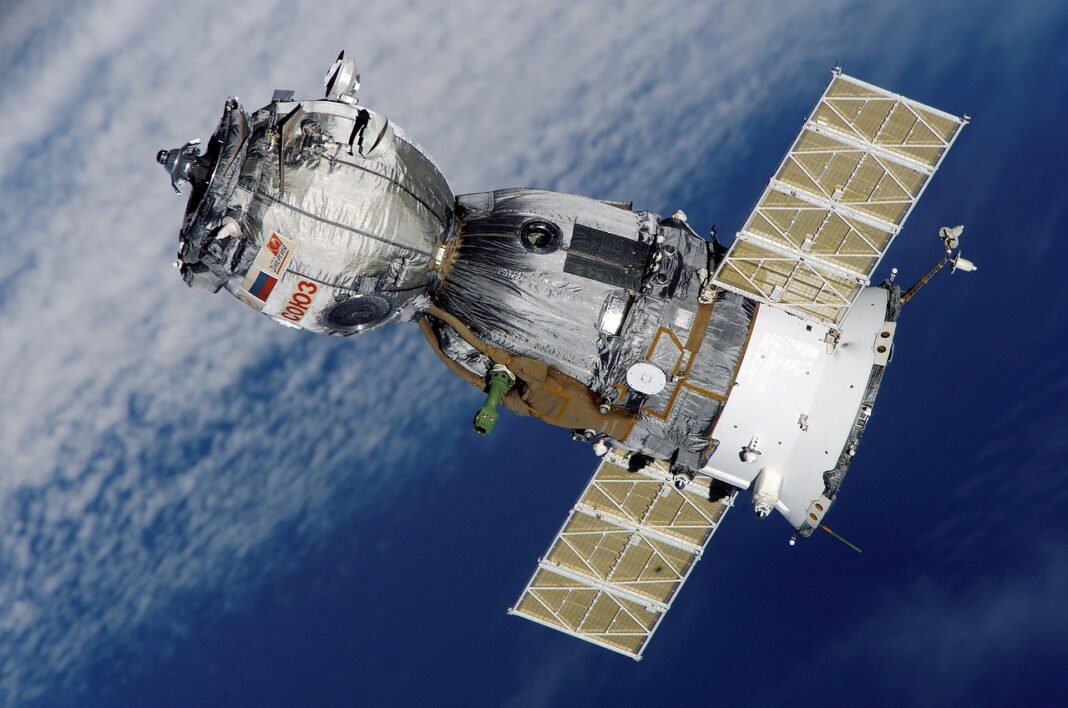

Why Do Fun Facts About Space Still Surprise You?
If you searched for fun facts space, you were probably not looking for a list copied from a poster. You wanted numbers that make the night sky feel closer, stranger, and a bit more useful. This guide for the Space Science section uses public data from NASA, ESA, and NOAA, and it keeps dates next to figures that may change.
The Sun Holds Nearly Everything
The Sun is more than the bright object that sets the pace for daytime. NASA Science says the Sun took in more than 99% of the available matter when the solar system formed about 4.6 billion years ago. The rest is shared by every planet, moon, asteroid, comet, ring, and dust grain. That fact also explains why the Sun has such a large role in motion, light, heat, and the energy balance across the local system. (science.nasa.gov)
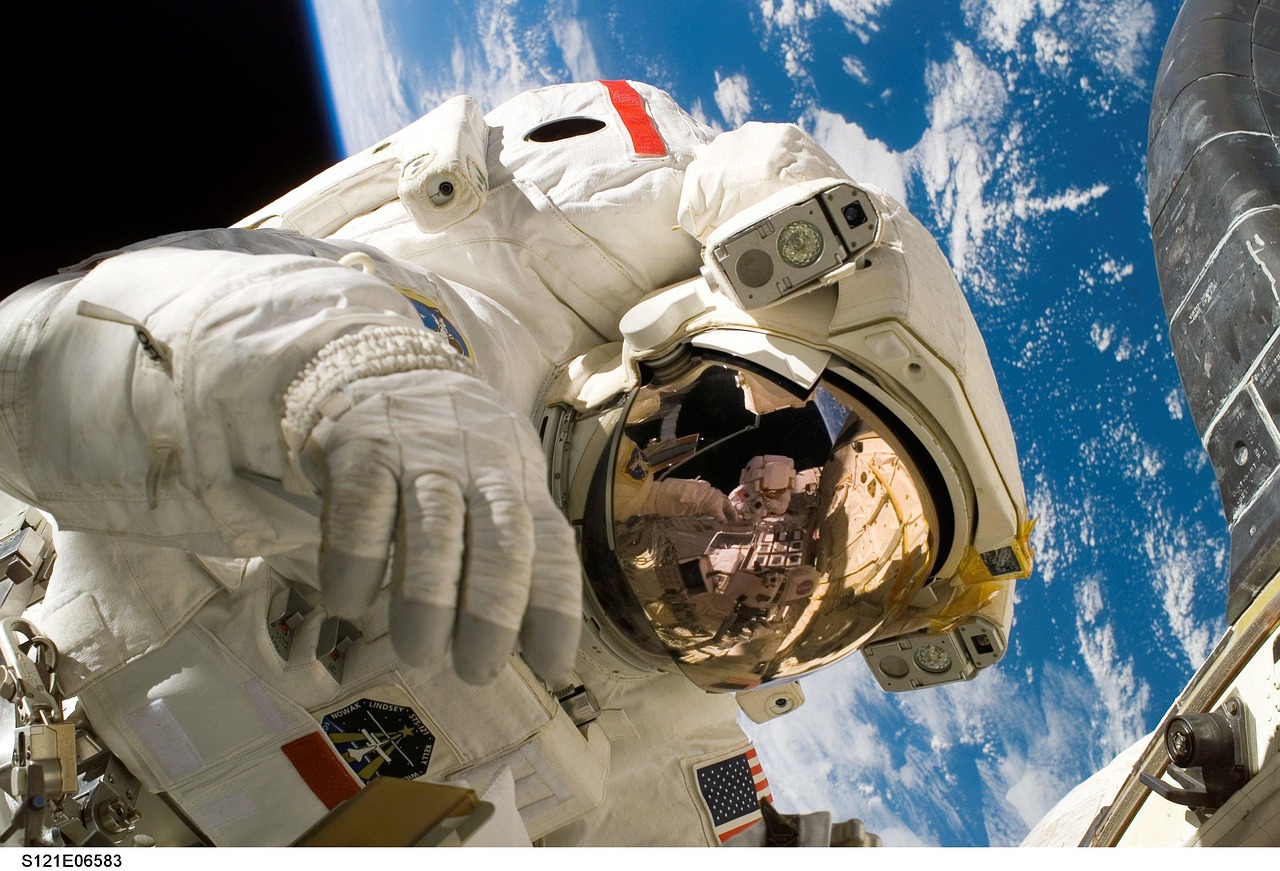
Space Is Fast Even When It Looks Still
At night, the stars can look fixed, almost like marks on a dark ceiling. They are moving, and so are we. NASA lists the solar system as moving around the Milky Way at about 515,000 miles per hour, or 828,000 kilometers per hour. Even at that speed, one orbit around the galactic center takes about 230 million years. A small telescope in the yard will not show the movement tonight, but the numbers are not guesswork. (science.nasa.gov)
Earth Is the Known Living Exception
At this point, Earth is the only world known to support life. That does not prove life is absent everywhere else; it only means confirmed evidence has not been found. NASA keeps looking inside and outside the solar system. For now, the plain result is that this everyday planet is rare in the record: it has liquid water on the surface, a protective atmosphere, and enough long-term stability for scientists to use it as the main comparison point.
What Makes Planets Stranger Than Science Fiction?
Planets look simple in school posters, lined up as clean round balls. Real planets do not behave that neatly. Some spin backward, some sit under thick clouds, and some carry rings or groups of moons. The better fun facts are not only odd; they show how gravity, heat, and chemistry shape each world.
Venus Has a Longer Day Than Year
On Venus, one rotation takes 243 Earth days, while one trip around the Sun takes 225 Earth days, according to NASA Science. That means a Venus day is longer than a Venus year. Venus also spins backward compared with Earth, so the Sun would rise in the west and set in the east. With surface pressure about 93 times Earth sea-level pressure, it becomes clear fast that this is not a place built for visitors. (science.nasa.gov)
Jupiter Could Hold a Thousand Earths
Jupiter is so big that, if it were a hollow shell, about 1,000 Earths could fit inside it, according to NASA Solar System facts. That image is easy to remember, but it should not be read as Jupiter being empty or solid. It is a giant planet made mostly of hydrogen and helium, with deep atmospheric layers and strong storms. The Great Red Spot gets much of the attention, yet the scale of the planet is already enough to change how you read a solar system chart.
Rings Are Not Just Saturn’s Thing
Saturn still gets the clearest ring image in most people’s minds. NASA notes that the four giant planets, Jupiter, Saturn, Uranus, and Neptune, all have rings, and at least one asteroid does too. Many of those rings are faint, dusty, or narrow, so they do not stand out in the same way. It is a good reminder that the best-known example of a space feature is often just the easiest one to see.
How Big Is Space When You Use Real Numbers?
Talk about space can turn vague fast. Words such as huge, vast, and endless are easy to use, but they do not help much by themselves. Numbers do a better job. They still leave space bigger than the mind wants it to be, but at least there is something firm to hold onto.
The Oort Cloud Stretches the Map
NASA describes the Oort Cloud as a predicted icy shell around the solar system, reaching as far as about 1.6 light-years from the Sun. It has not been observed directly, so scientists work from models and comet behavior. That point is important because not every space fact is measured in the same way. A solid fact should tell you what was observed, what was inferred, and what still has room for change. (science.nasa.gov)
Gaia Turned Stars into a Living Census
The European Space Agency says Gaia made more than three trillion observations of about two billion stars and other objects from July 27, 2014, to January 15, 2025. This is not just a number for a wall graphic. It is a working set of positions, motions, brightness measurements, and related data. When people say the Milky Way contains billions of stars, Gaia is one reason astronomers can turn that broad line into data they can use. (esa.int)
Exoplanets Are No Longer Rare
Planets beyond the solar system used to sound like a topic for careful guesswork. That phase is over. The NASA Exoplanet Archive listed 6,298 confirmed planets in its June 4, 2026 snapshot, and NASA Science described the total as more than 6,200 confirmed exoplanets in 2026. The number changes as peer-reviewed finds are added, so a current figure should always carry a date. (exoplanetarchive.ipac.caltech.edu)
Can Space Weather Touch Your Daily Life?
Space weather may sound like something only mission teams need to watch, but it can reach systems on Earth. You may not feel it directly. Your phone, GPS, airline route, radio signal, or satellite internet may show the effect first.
Solar Flares Move at Light Speed
NOAA’s Space Weather Prediction Center describes a solar flare as an intense burst of radiation tied to magnetic energy near sunspots. If a flare happens on the Sun’s Earth-facing side, its light and radiation can affect the ionosphere almost at once. That is why space weather teams monitor the Sun in real time. It is not a side interest; it is part of keeping modern systems informed. (spaceweather.gov)
Magnetic Storms Disturb Modern Systems
NOAA explains that coronal mass ejections can reach Earth in roughly 30 to 72 hours, depending on speed and conditions. Strong events can disturb the magnetosphere, add drag to low-orbit satellites, affect radio communication, and induce currents in long conductors on the ground. That wording sounds plain, but the point is practical. Power grids use long conductors, so engineers have a reason to pay attention.
Auroras Are Beautiful Warning Signs
Auroras look good, and most people notice the color before the physics. They also show charged particles interacting with Earth’s upper atmosphere and magnetic field. NOAA notes that space weather can affect satellites, navigation, communication, and human activity. When bright auroras move into unusual latitudes, the sky is giving a show, while forecasters may be dealing with a busy shift. (spaceweather.gov) See also: AI.
What Do Space Missions Reveal That Telescopes Miss?
Telescopes collect light. Spacecraft can measure particles, fields, surfaces, and atmospheres close to the target. Both tools matter. A telescope may find a target, while a mission can make that point of light into a place with surface details and chemistry.
Robots Have Reached Beyond Earth Orbit
NASA states that more than 300 robotic spacecraft from many nations have explored destinations beyond Earth’s orbit. That includes flybys, orbiters, landers, rovers, and sample missions. The number matters because space science is not built on one headline launch. It is steady work by machines, teams, failures, repairs, and years of data handling. (science.nasa.gov)
Voyager Crossed into Interstellar Space
Voyager 1 entered interstellar space in 2012, and Voyager 2 followed in 2018, according to NASA. They will remain inside the wider reach of the Oort Cloud for many thousands of years, but they have crossed the heliopause, where the solar wind gives way to the interstellar environment. Those two 1977 spacecraft are still useful science assets. That fact makes a dead modern phone battery feel a little silly.
Samples Make Distant Worlds Physical
Space samples change the level of proof. A photograph can show a crater, but a returned grain can show minerals, water-related chemistry, age clues, and impact history in a laboratory. Not every mission brings material home, and most missions never will. When a sample return works, a far-off object becomes material scientists can test again as instruments get better.
How Can You Use Fun Space Facts Without Getting Them Wrong?
Space trivia moves quickly because it is easy to share. The problem is that some facts get old, some are shortened too much, and some become wrong after too many reposts. A simple check can keep the interest without spreading bad information.
Check the Date Behind the Number
Moon counts, exoplanet totals, spacecraft distances, and catalog sizes can change. A fact like Venus has a 243-Earth-day rotation is stable. A fact like the number of confirmed exoplanets needs a date beside it. If a post gives a precise current count with no source or timestamp, treat it as unfinished rather than automatically false.
Separate Confirmed Worlds from Candidates
Exoplanet hunters often report candidates before confirmation. A candidate may be a strong lead, but it is not the same as a confirmed planet. NASA has noted thousands of additional candidates awaiting further work. That context makes the confirmed total more useful because it has passed checks, peer review, or accepted verification methods.
Treat Big Claims with Healthy Doubt
The best space facts hold up when questioned. Who measured it, and when? Was it observed directly, modeled, or inferred? Does the source explain uncertainty? Asking that does not remove the fun. It keeps the surprise clean, and it saves you from having to correct the fact later.
FAQ
Q1: What Is the Best Fun Fact About Space? A: Venus having a longer day than year is a good one. NASA verifies the numbers, and the fact shows how odd planetary motion can be.
Q2: Are Fun Facts About Space Always Accurate? A: No. Many are shortened, outdated, or missing context. Check the source, the date, and whether the claim was measured or modeled.
Q3: How Many Exoplanets Have Scientists Confirmed? A: NASA sources in 2026 reported more than 6,200 confirmed exoplanets, with the NASA Exoplanet Archive showing 6,298 in a June 4, 2026 snapshot. The live count changes.
Q4: Can Space Weather Affect You on Earth? A: Yes, mostly through technology. Strong space weather can disturb satellites, GPS, radio communication, airline routes, and power systems.
Q5: Why Do Space Facts Change Over Time? A: New missions, better instruments, and new peer-reviewed papers update the record. Space science is active, so honest facts often include dates.