



Why 2026 matters for astronomy and space science
As of September 20, 2026, the clearest trend in astronomy and space science is the shift from isolated discoveries to continuous survey systems. NASA’s Nancy Grace Roman Space Telescope launched on August 30, 2026, adding a wide-field infrared observatory to the space telescope fleet. The NSF–DOE Vera C. Rubin Observatory began full survey operations on June 30, 2026, turning the southern sky into a repeated time-lapse dataset. The James Webb Space Telescope, meanwhile, continues to show why spectroscopy matters when images alone are not enough to explain a planet, galaxy, or environment.
The result is not simply more data. It is a different discovery workflow: wide surveys identify targets, precision observatories investigate them, and future missions build on both. The main science questions remain familiar: how the universe expands, how galaxies evolve, how planets form, whether habitable worlds are common, and how Earth can be protected from hazardous objects. What has changed is the observing system now being assembled to address them.
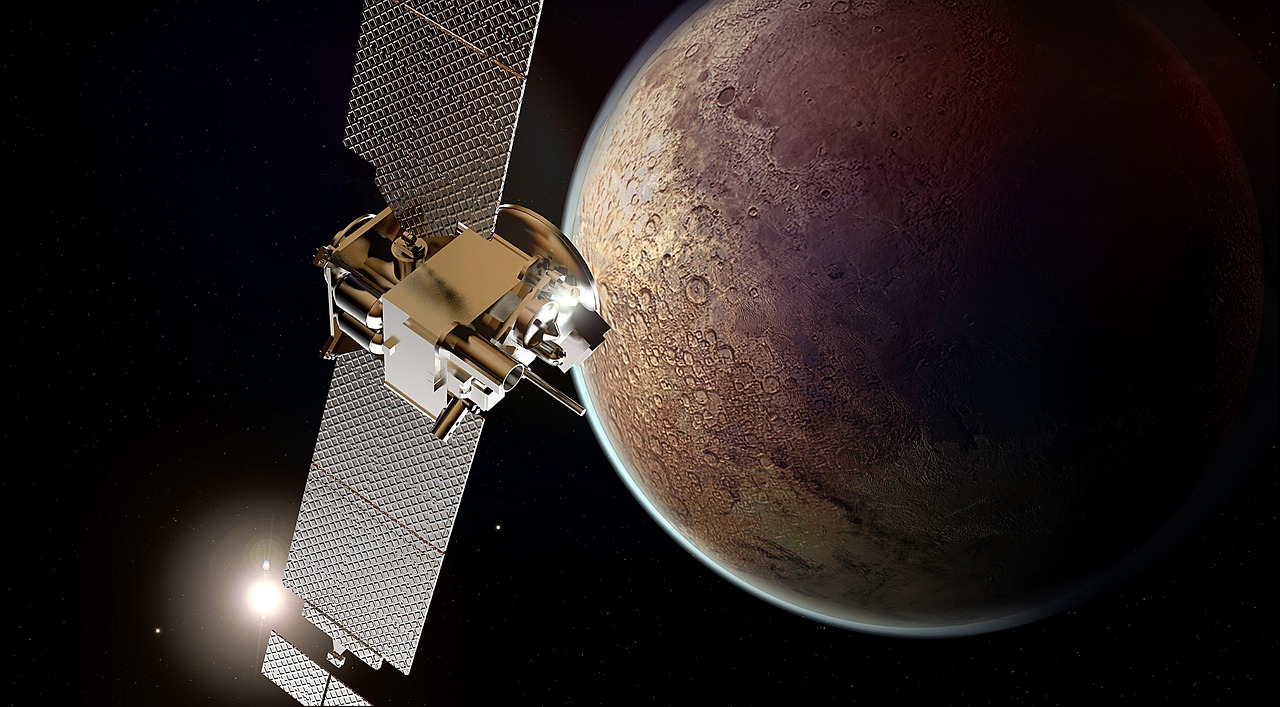
From individual observatories to discovery engines
For much of modern astronomy, public attention followed a familiar cycle: a new telescope launched, released striking images, and then produced discoveries one observing program at a time. That model still exists. But in 2026, the more important pattern is the rise of facilities built as discovery engines. They scan large areas, repeat observations, and produce datasets that many research teams can mine for years.
Roman adds wide infrared surveys from space
NASA said Roman launched from Kennedy Space Center’s Launch Complex 39A at 7:26 a.m. EDT on August 30, 2026, aboard a SpaceX Falcon Heavy rocket. The observatory is traveling toward the Sun-Earth L2 region, a stable observing environment used by several major space observatories. Roman’s role is not the same as Webb’s. Webb is optimized for highly detailed infrared observations of selected targets. Roman is designed to survey vast areas with Hubble-class sharpness and a field of view NASA describes as at least 100 times larger than Hubble’s.
That wide view is why Roman is expected to affect several fields at once. Its surveys will help study dark energy by mapping the large-scale distribution of matter and measuring cosmic expansion over time. Its microlensing work could also reveal many planets across the Milky Way, including worlds that are difficult to detect through transit surveys. NASA has described Roman as capable of discovering as many as 100,000 exoplanets, but that figure is a mission estimate, not a completed result.
Rubin turns the sky into a time-domain dataset
On the ground, Rubin Observatory represents a different kind of scale. The observatory’s first public imagery was released on June 23, 2025, and its full survey operations began on June 30, 2026, according to Rubin Observatory announcements. Equipped with a 3,200-megapixel camera, Rubin is designed to capture a new detailed image roughly every 40 seconds and repeatedly scan the observable southern sky during its 10-year Legacy Survey of Space and Time.
The key feature is cadence, not only image size. Rubin is built to find change: asteroids shifting position, supernovae brightening, variable stars pulsing, and unexpected transients appearing where no object was visible before. Its alert stream sends candidate events to brokers for classification and distribution, allowing other facilities to decide what needs rapid follow-up. In practice, Rubin may become the discovery front end for many telescopes.
The most important shift is cadence, not just sensitivity
Sensitivity remains essential, but the 2026 shift is also about cadence, coverage, and coordination. A very sensitive telescope can study a faint galaxy or a planetary atmosphere in detail. A survey telescope can show which targets are changing, rare, or statistically important. Modern astronomy needs both functions working together.
| Facility or mission | What changed in 2026 | Primary value | Limit to remember |
|---|---|---|---|
| Roman Space Telescope | Launched on August 30, 2026 | Wide-field infrared surveys for dark energy, galaxies, and exoplanets | Major science results depend on commissioning, survey execution, and later analysis |
| Vera C. Rubin Observatory | Survey operations began on June 30, 2026 | Repeated optical scans of the southern sky and rapid transient alerts | Alerts require classification and follow-up before many claims can be confirmed |
| James Webb Space Telescope | Continued detailed infrared studies, including 2026 exoplanet work | High-precision spectroscopy and imaging of selected targets | It is not a wide all-sky survey instrument |
| NEO Surveyor | Continued development toward launch no earlier than September 2027 | Infrared detection of potentially hazardous asteroids and comets | Planetary-defense gains depend on survey duration and orbital follow-up |
The table shows why the field should not be described as a simple competition between telescopes. Rubin may identify a fast-changing object. Webb may study its chemistry. Roman may provide wide-field context. Future observatories may then revisit the same target with new instruments. The scientific value comes from the chain, not from one facility operating in isolation.
What recent discoveries say about the next questions
Recent Webb results show how this chain is changing exoplanet science. In July 2026, NASA reported that astronomers using Webb identified Beta Pictoris d, a giant exoplanet in the young Beta Pictoris system. The system already had two known giant planets, and NASA described it as only the second planetary system known to contain at least three directly imaged planets. The important point was the method: the planet was identified through the chemical fingerprint of its atmosphere, rather than simply as a bright point in an image.
That points to where astronomy is heading. The search for planets is no longer only about counting worlds. It is also about measuring atmospheres, orbital architecture, dust disks, and formation histories. Roman’s expected planet census can expand the statistical map. Webb can characterize selected worlds in more detail. The future Habitable Worlds Observatory concept, recommended through the Astro2020 decadal survey framework, is aimed at the longer-term goal of studying potentially Earth-like planets around nearby stars.
Cosmology faces a similar pattern. The question of dark energy is not settled by a single observation. It requires multiple probes, including galaxy distributions, supernova distances, gravitational lensing, and cosmic structure across time. Roman and Rubin approach these questions differently, but together they improve the ability to compare independent measurements. That comparison matters because any claim that dark energy behaves differently than expected must survive cross-checks across instruments, methods, and datasets.
Planetary defense is becoming part of everyday space science
Space science is broader than distant galaxies. It also includes the practical study of objects moving through the solar system. NASA’s NEO Surveyor is scheduled to launch no earlier than September 2027, according to NASA and JPL mission descriptions. It is designed as an infrared space telescope for discovering and characterizing potentially hazardous asteroids and comets, especially objects that are hard to find in visible light. See also: AI.
The infrared approach matters because dark asteroids may reflect little sunlight while still glowing in heat-sensitive wavelengths. JPL says NEO Surveyor is designed to conduct a five-year baseline survey and find at least two-thirds of near-Earth objects larger than 140 meters, the size range often associated with major regional damage if one were to impact Earth. That does not mean an impact is expected. It means the risk-management system depends on finding objects early enough for tracking, modeling, and, if necessary, response planning.
Rubin also contributes to solar system science by repeatedly imaging the sky and detecting moving objects. The difference is that Rubin observes from the ground in optical wavelengths, while NEO Surveyor is designed to observe from space in infrared. Together, these systems show that planetary defense is becoming a normal part of the astronomical survey ecosystem rather than a separate niche.
What readers should not overinterpret
The survey era is powerful, but it does not remove uncertainty. Roman’s launch is a major milestone, not the same thing as completed science. Its instruments must complete commissioning, surveys must be executed, and discoveries must be analyzed. Rubin’s alert stream will produce huge numbers of candidates, but candidates are not automatically confirmed discoveries. Webb’s exoplanet findings are significant, but they do not mean life has been detected beyond Earth.
It is also important to separate mission goals from results. A phrase such as “could discover up to 100,000 exoplanets” is a forecast based on mission design and models. It should not be reported as an achieved number. Similarly, the expectation that Rubin will image billions of galaxies reflects survey design, not a completed final catalog. Strong reporting on astronomy and space science should keep that distinction clear.
Another limit is follow-up capacity. Surveys can find more interesting objects than the global telescope network can immediately study in detail. That creates a prioritization challenge. Which transient deserves rapid spectroscopy? Which asteroid needs additional tracking? Which exoplanet candidate is worth scarce Webb time? In the survey era, discovery is often not the bottleneck. Confirmation and interpretation are.
What to watch next
- Roman commissioning: Watch for instrument checkout updates, first-light milestones, and the transition from engineering operations to regular science surveys.
- Rubin alert performance: The practical value of Rubin will depend on alert quality, broker classification, community access, and the speed of follow-up observations.
- Webb exoplanet spectroscopy: Webb’s ability to detect atmospheric signatures will continue shaping how scientists choose future planet targets.
- NEO Surveyor development: Its no-earlier-than September 2027 launch target makes 2026 and 2027 important years for planetary-defense readiness.
- Cross-observatory science: The biggest advances may come from combining Rubin, Roman, Webb, ground-based spectroscopy, radio observatories, and archival data rather than from one facility alone.
The broader conclusion is straightforward: astronomy and space science is becoming more systematic. Instead of waiting for a single spectacular image, researchers are building a layered observing network that can detect change, measure detail, and test ideas across independent datasets. The next decade may be defined less by one telescope and more by how well the global observatory system works as a coordinated scientific infrastructure.
Frequently asked questions
What is the difference between astronomy and space science?
Astronomy focuses on observing and understanding celestial objects such as stars, planets, galaxies, black holes, and the universe as a whole. Space science is broader and can include planetary science, heliophysics, space environments, astrobiology, and planetary defense. In practice, the two fields overlap heavily.
Why are Roman and Rubin important together?
Roman observes from space in infrared wavelengths with a wide field of view, while Rubin repeatedly surveys the southern sky from the ground in optical light. Roman can provide deep space-based survey data, and Rubin can identify changing objects over time. Their strengths are complementary rather than redundant.
Has Webb found life on another planet?
No confirmed detection of life beyond Earth has been announced. Webb has advanced the study of exoplanet atmospheres and planetary systems, but atmospheric chemistry requires careful interpretation and does not automatically prove biology.
What does the survey era mean for ordinary readers?
It means space news may increasingly come from large datasets rather than single images. Readers should expect more discoveries involving statistical catalogs, alert streams, candidate follow-up, and cross-checks between observatories.