



The short answer for 2026
In 2026, the Samsung Galaxy S10 is still easy to appreciate for its hardware. The 6.1-inch Dynamic AMOLED display remains sharp, the triple rear camera system covers useful focal lengths, and the body is lighter than many current phones. Features such as microSD expansion, wireless charging and a 3.5mm headphone jack also give it a practical edge over some newer budget models. The limiting factor is no longer the original specification; it is age.
As of September 18, 2026, Samsung’s current mobile security update scope no longer lists the Galaxy S10 among its current monthly or quarterly Galaxy S models. Samsung’s own update records for at least one U.S. Galaxy S10 variant show Android 12 as the software base, with later maintenance releases that do not make the phone a currently supported flagship. That puts the Galaxy S10 in a narrow category: reasonable as a spare handset, media player or low-cost secondary device, but hard to recommend for heavy banking, work profiles or long-term primary use.
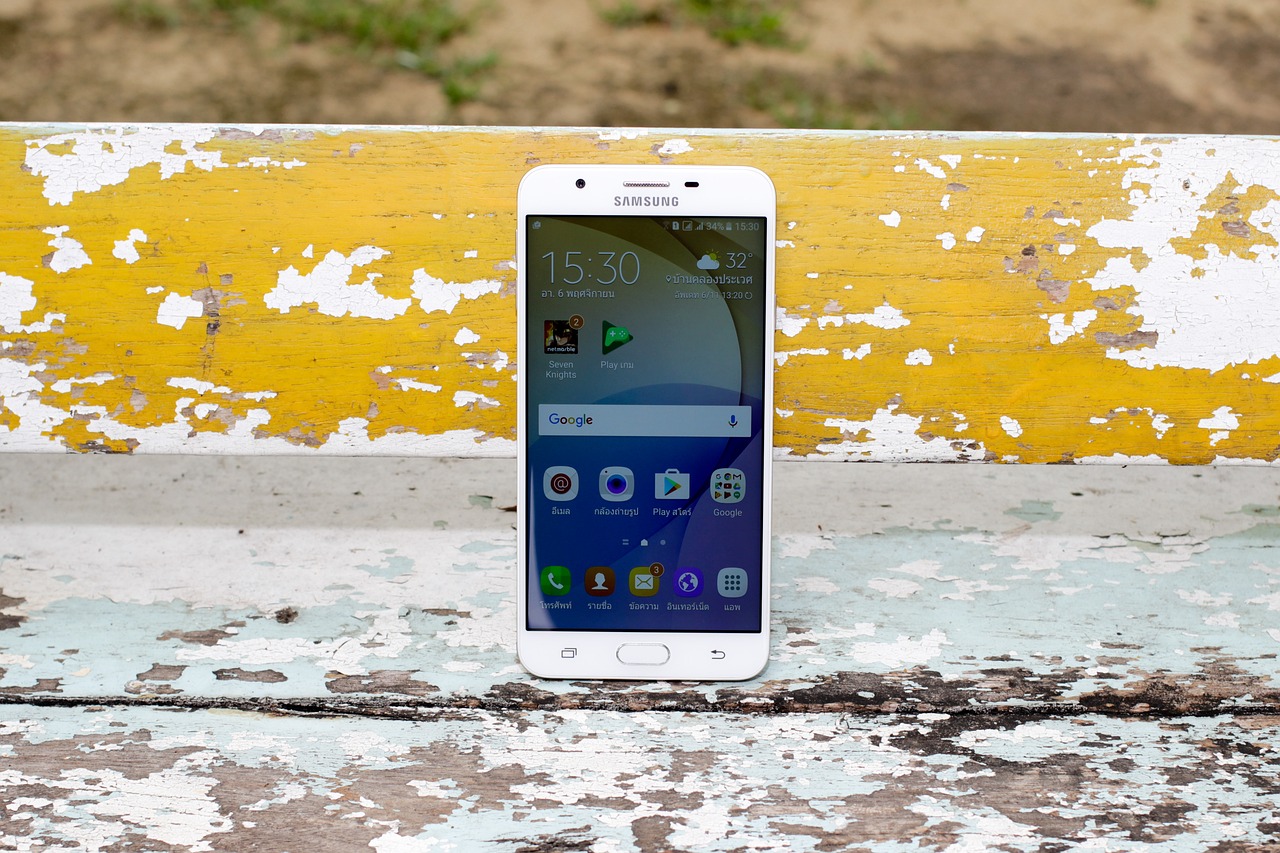
For more device coverage and buying context, visit our Devices section.
What the Samsung Galaxy S10 was designed to be
Samsung introduced the Galaxy S10 line on February 20, 2019, with global availability following in March 2019. The launch marked the tenth generation of the Galaxy S family, and Samsung split the range into several models rather than treating one size as the default choice. The core 2019 lineup included the compact Galaxy S10e, the standard Samsung Galaxy S10, the larger Galaxy S10+, and the Galaxy S10 5G.
The standard S10 sat in the middle of that range. It was more advanced than the S10e, smaller and less expensive than the S10+, and separate from the early 5G hardware used in the S10 5G. That balance is still why many used-phone shoppers look for it. It combines a premium display, triple rear cameras, wireless charging, a glass-and-metal design and expandable storage in a body that remains compact compared with many later flagships.
Samsung’s official Galaxy S10 specification material listed a 6.1-inch Quad HD+ curved Dynamic AMOLED display, a 149.9 x 70.4 x 7.8mm body, a 157g weight, 8GB of RAM, 128GB or 512GB of internal storage and microSD expansion up to 512GB. Those figures explain much of the phone’s staying power: the S10 is small enough for comfortable one-handed use, while its resolution and pixel density still feel strong for reading, video and web browsing.
Core specs that still hold up
The Galaxy S10 is too old to be compared directly with current premium phones on raw performance, camera processing or battery endurance. It is not obsolete in every area, though. Several launch-era hardware choices remain useful because they were high-end in 2019 and because later phones have removed some of them.
| Area | Samsung Galaxy S10 detail | Why it still matters |
|---|---|---|
| Display | 6.1-inch Quad HD+ curved Dynamic AMOLED, 19:9, 550ppi listed in Samsung’s launch specifications | Still sharper than many budget phones and suitable for reading, maps and video |
| Rear cameras | 12MP wide, 12MP telephoto and 16MP ultra-wide triple camera system | Offers more framing flexibility than single-camera or dual-camera budget models |
| Front camera | 10MP selfie camera with autofocus | Useful for video calls and casual social posts |
| Memory and storage | 8GB RAM with 128GB or 512GB storage, plus microSD support up to 512GB | Expandable storage remains valuable for offline media and photos |
| Battery | 3,400mAh typical capacity with wired charging, wireless charging and Wireless PowerShare | Convenient charging options, though actual used battery health is critical |
| Connectivity | 4G LTE on the standard S10 | Fine for many users, but not a 5G phone |
The display is the strongest reason the phone can still feel premium. Samsung’s Dynamic AMOLED panel was a flagship component, not a mid-range compromise. Text is crisp, contrast is high, and the curved edges give the device a more modern look than many flat budget phones. The practical caveat is repair cost. Curved panels are more expensive to replace, and used units may show burn-in, scratches, uneven brightness or evidence of previous screen repairs.
The camera system is still flexible. The S10’s wide, ultra-wide and telephoto combination gives users options for landscapes, regular snapshots and tighter framing. It will not match current computational photography in difficult night scenes or fast motion, but it remains serviceable for daylight photos and social-media use. Buyers should test focus, lens switching, stabilization and video recording before paying for a used unit.
Performance depends heavily on region, variant and condition. Many U.S. units used Qualcomm’s Snapdragon 855 platform, while many international units used Samsung’s Exynos 9820. Both were flagship-class chips at launch, but neither should be expected to deliver current flagship gaming performance or the efficiency of newer 4nm and 3nm platforms. For messaging, maps, browsing, streaming and light productivity, a healthy S10 can still feel responsive. For heavy gaming, long video capture or demanding multitasking, newer mid-range phones may run smoother and cooler.
Software support is the deciding factor
The biggest difference between a usable used Galaxy S10 and a sensible daily driver is software support. Samsung’s public security update scope now focuses on newer Galaxy S models for monthly and quarterly updates. On the current scope reviewed on September 18, 2026, Samsung lists Galaxy S23, S24, S25 and S26 families under monthly S-series security updates, while Galaxy S22 and Galaxy S21 FE appear under quarterly S-series updates. The Galaxy S10 is not listed in those current S-series support groups.
That does not mean every Galaxy S10 stops working. It means buyers should treat the phone as an out-of-regular-support device unless their exact model, carrier and region show otherwise in the phone’s software update screen or Samsung’s device-specific records. Samsung’s update pages can vary by model code and carrier, so the final build may differ. For example, Samsung’s U.S. SM-G973U update record lists Android 12 and shows maintenance activity after the main Android upgrade period, but the security patch level shown in that record is far behind current Android security bulletins.
This matters because Android security is not only about whether apps open today. Google’s Android Security Bulletin explains that monthly device updates are an important tool for protecting Android users and devices. Samsung’s own security scope says its firmware security updates include Android OS patches from Google and Samsung-specific security fixes for selected devices. If an older phone is no longer in the selected-device lists, it may miss fixes for vulnerabilities found after its last patch.
For low-risk use, that may be acceptable. A Galaxy S10 used offline for music, as a backup camera, as a car navigation device with limited accounts, or as a test phone carries less exposure. A Galaxy S10 used for banking, business email, two-factor authentication, confidential files and public Wi-Fi carries more risk. The more sensitive the account or workflow, the harder it is to justify an unsupported phone as the primary device.
How it compares with other S10 models
Many searches for Samsung Galaxy S10 are really searches for the wider S10 family. The differences matter because used listings often mix model names, storage sizes and network claims. See also: AI.
| Model | Main difference | Best fit |
|---|---|---|
| Galaxy S10e | Smaller 5.8-inch flat display, fewer rear camera features and a compact body | Buyers who want the smallest and simplest S10-era phone |
| Galaxy S10 | 6.1-inch curved display, triple rear cameras and 3,400mAh typical battery | Balanced option for size, cameras and price |
| Galaxy S10+ | Larger 6.4-inch display, bigger battery and higher-end memory options in some versions | Media users who prefer a larger screen |
| Galaxy S10 5G | Larger body, early 5G hardware and different camera and battery configuration | Collectors or users who specifically need that model, not casual bargain hunters |
| Galaxy S10 Lite | Released later with a different design and positioning | Buyers comparing name recognition should check specs carefully |
The standard S10 is usually the cleanest choice for buyers who want the classic flagship feature set without the larger S10+ body. The S10e is easier to hold and has a flat display, but it gives up some camera versatility. The S10+ is better for video and battery capacity, but it is larger. The S10 5G should not be confused with the standard S10: it is a different device, and early 5G band support may not align with what every carrier prioritizes today.
Used buying checklist
A used Galaxy S10 can be a smart purchase only when condition and price reflect its age. The phone is now more than seven years removed from its 2019 launch, so battery wear, display condition and update status matter more than the original retail specification.
- Check the exact model number. Look in Settings before buying. Confirm whether it is an unlocked, carrier, international or regional unit.
- Check the security patch level. In Settings, review the Android version and Android security patch level. Treat a very old patch as a risk, not just a minor detail.
- Test the display on gray, white and black backgrounds. Watch for AMOLED burn-in, green tint, dead pixels, heavy scratches and uneven brightness.
- Inspect the battery behavior. A 3,400mAh battery from 2019 may be heavily degraded unless replaced. Sudden drops, swelling, overheating or poor standby time are warning signs.
- Test all cameras. Switch between wide, ultra-wide, telephoto and front cameras. Check focus, stabilization, microphone audio and 4K video recording.
- Confirm carrier compatibility. The standard S10 is a 4G LTE phone. Do not buy it expecting modern 5G service.
- Check charging and ports. Test USB-C charging, wireless charging, speakers, microphones, SIM tray, microSD slot and the 3.5mm headphone jack.
- Avoid unclear refurbishments. Replacement screens, back glass, batteries and water-damaged boards can change reliability. Ask for repair history when possible.
Price should reflect support status. If a seller prices the S10 close to a newer supported mid-range Android phone, the newer device is usually the safer buy. If the S10 is inexpensive, clean, unlocked, battery-healthy and intended for limited use, it can still make sense.
Who should keep it and who should upgrade
Keeping a Galaxy S10 is reasonable if the phone is already paid off, the battery still lasts through the day, the display is clean, and usage is light. Calls, messaging, maps, music, photos in good light, email and web browsing are not beyond the phone’s capabilities. It also remains attractive for users who value a compact flagship body, expandable storage and a headphone jack.
Upgrading is the better route if the phone is the main security device, if mobile banking is important, if work apps are required, or if carrier coverage has shifted toward 5G in places where the user travels. It is also time to upgrade if the battery needs replacement and the repair cost approaches the price of a newer supported model. A new or recent mid-range phone may lose some of the S10’s premium feel, but it can win on battery life, update policy and warranty coverage.
The editorial takeaway is straightforward: the Samsung Galaxy S10 is still a well-designed phone, but it is no longer a current-support purchase. Its strengths are hardware quality and low used cost. Its weaknesses are aging batteries, repair uncertainty, older cameras in difficult conditions, no 5G on the standard model and security support that no longer matches modern Samsung flagships.
Frequently asked questions
Does the Samsung Galaxy S10 still get security updates in 2026?
Samsung’s current security update scope reviewed on September 18, 2026 does not list the Galaxy S10 among current monthly or quarterly Galaxy S models. Some device-specific pages may show past maintenance releases for certain variants, but buyers should not assume regular ongoing security support without checking the exact model and region.
Is the standard Galaxy S10 a 5G phone?
No. The standard Samsung Galaxy S10 is a 4G LTE phone. Samsung sold a separate Galaxy S10 5G model with different hardware. Used listings should be checked carefully because sellers sometimes use the S10 name loosely.
Is the Galaxy S10 still good for photos?
It is still useful for daylight photos, ultra-wide shots, portraits and casual video. It is weaker than newer phones in night photography, moving subjects and advanced image processing. Condition also matters because camera modules can be damaged by drops or poor repairs.
Should I replace the battery or buy a newer phone?
If the S10 is otherwise clean and the battery replacement is inexpensive from a reputable repair provider, replacement can extend its life as a secondary device. If repair cost is high, a newer supported phone is usually the better long-term value.
Can the Galaxy S10 run banking and work apps?
Many apps may still run on Android 12, but app requirements and security policies change over time. For banking, business email and authentication, a currently supported device is the safer choice because it is more likely to receive recent security patches.