



Space exploration science in 2026 is being judged less by destination alone and more by measurable return: data that can be compared, samples that can be curated and mission designs that can withstand budget and schedule pressure. NASA’s Artemis II lunar flyby brought astronauts back around the Moon, but its scientific value came through human observations, biomedical monitoring and thousands of lunar images. NISAR has moved Earth observation into regular radar mapping. Europa Clipper and ESA’s Hera show how long cruise phases can still support sharply defined science goals. At the same time, Mars Sample Return planning and budget scrutiny are forcing agencies to show that ambitious programs can deliver credible results at realistic cost. For more coverage of space missions and research trends, visit our Space Science section.
Why the science agenda is changing
The priorities behind space exploration science have changed because the field itself has changed. For decades, public attention often focused on launch dates, spacecraft size, crew names and dramatic firsts. Those details still matter, but agencies, researchers and taxpayers increasingly ask a harder question: what new knowledge will this mission produce that cannot be obtained in a cheaper or safer way?
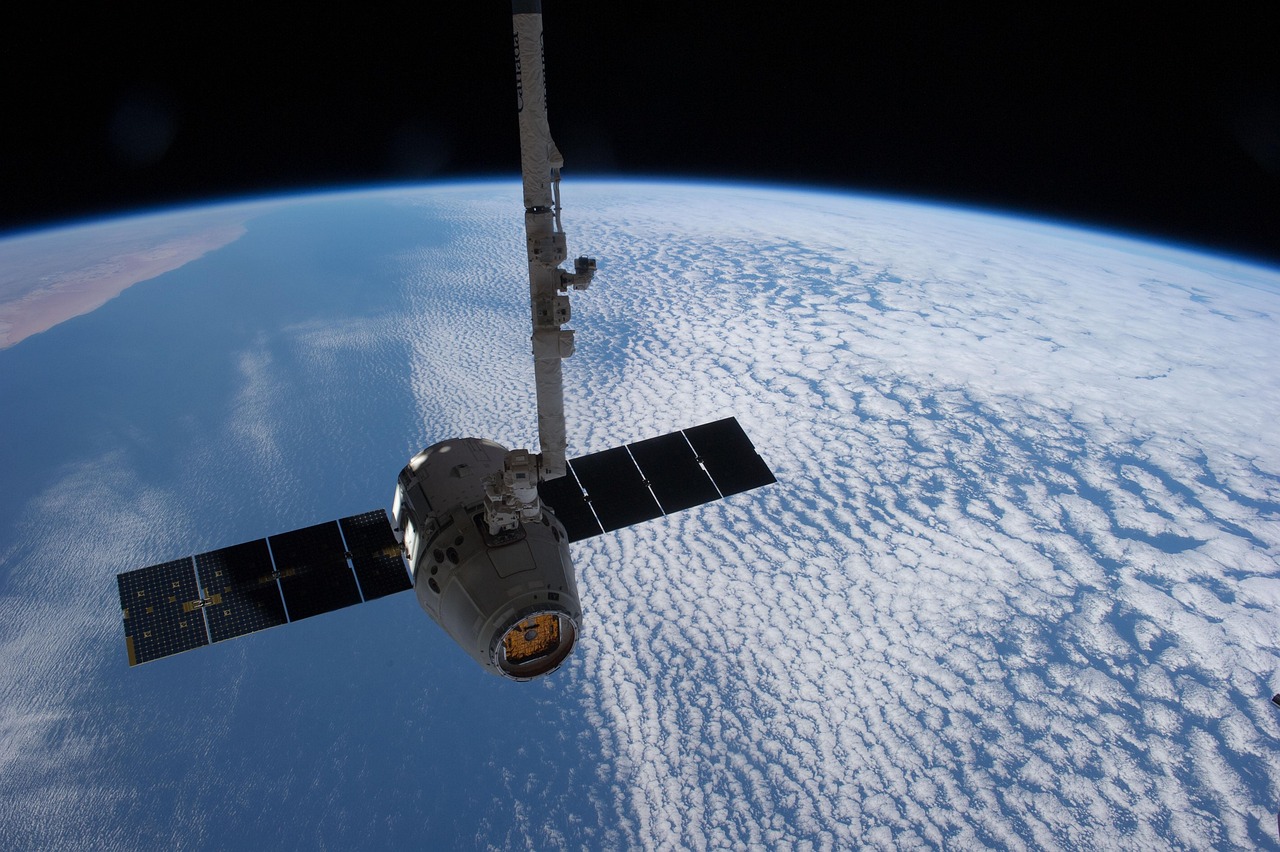
That question now connects human spaceflight, planetary science, astrophysics, Earth science and planetary defense. A lunar mission is not only a transportation test if it records how astronauts respond to deep-space radiation, how Orion performs beyond low Earth orbit and how humans observe lunar geology in real time. A planetary probe is not only a destination mission if its instruments are built to assess whether an ocean world could be habitable. An asteroid mission is not only an engineering demonstration if it turns a deflection test into a measured and repeatable planetary defense method.
The result is a more data-driven era. Successful missions are expected to produce calibrated datasets, well-curated samples, reproducible measurements and operational lessons that can feed the next mission architecture.
Key missions show the 2026 pattern
A practical way to understand the current direction is to compare missions by the science question they are intended to answer, not only by where they travel.
| Mission or program | Recent or upcoming milestone | Main science value |
|---|---|---|
| Artemis II | NASA’s crewed lunar flyby ran from April 1 to April 10, 2026, and reached a reported farthest distance of 252,756 miles from Earth. | Human deep-space operations, lunar imaging, crew health data and preparation for later lunar surface work. |
| NISAR | The NASA-ISRO radar satellite entered its science operations phase in early January 2026 after launching on July 30, 2025. | Long-term radar observations of land, ice, ecosystems and surface deformation, including areas hidden by clouds or darkness. |
| Europa Clipper | Launched on October 14, 2024, with an Earth gravity assist planned for December 2026 and arrival at Jupiter in 2030. | Assessment of whether Europa has environments below its icy crust that could support life. |
| ESA Hera | Launched on October 7, 2024, and is traveling to the Didymos-Dimorphos asteroid system for detailed post-impact study in 2026 and 2027. | Turning NASA’s 2022 DART asteroid deflection into measured planetary defense science. |
| Mars Sample Return | NASA has studied revised lower-complexity approaches after cost and schedule concerns, with architecture choices expected to shape the next phase. | Laboratory analysis of carefully selected Martian rocks and sediment for planetary history and possible ancient habitability. |
The pattern is clear: missions are being framed around evidence. The destination remains important, but credibility depends on how well the instruments, operations and sample plans answer specific science questions.
Human exploration is becoming a field laboratory
Artemis II is a strong example of how human exploration and science now overlap. The mission was first a flight test of the Space Launch System, Orion and crew procedures beyond low Earth orbit. It also produced scientific and operational information that robotic missions cannot fully duplicate.
During the April 6, 2026 lunar flyby, the crew captured more than 7,000 images of the Moon and a solar eclipse as seen from Orion’s vantage point, according to NASA’s post-mission materials. Those images are more than public engagement assets. They can help scientists compare human-directed observations with spacecraft instrument data, study lighting conditions, identify geologic features and refine how astronauts may document lunar terrain during future surface missions.
The crew’s health data is also important. Long-duration deep-space travel exposes astronauts to different radiation, confinement, workload and sleep conditions than low Earth orbit. Artemis II was shorter than a Mars mission, but it placed humans outside the protective environment of Earth orbit and gave researchers another dataset for mission design. That makes the mission a bridge between engineering validation and biological science.
For mission planners, the lesson is that crewed missions should not be evaluated only by symbolism. Their strongest long-term value comes when astronaut time, vehicle performance and scientific observation are integrated before launch, rather than added later as a secondary activity.
Robotic missions are becoming continuous science systems
Robotic exploration is also moving away from one-time snapshots. NISAR illustrates the shift from spacecraft as a visiting observer to spacecraft as a continuous measurement system. Its radar instruments are designed to monitor Earth’s changing surface repeatedly, helping researchers study ice motion, land deformation, ecosystems, agriculture, hydrology and disaster-related changes. Because radar can operate through cloud cover and in darkness, it expands what scientists can observe compared with optical imaging alone.
Europa Clipper represents a different type of long-term science system. Its main campaign will not begin until after arrival at Jupiter in 2030, but the mission was built around a specific astrobiology question: whether Europa has conditions that could support life. NASA describes the spacecraft as carrying nine science instruments plus a gravity experiment using the telecommunications system. The plan for dozens of close flybys is intended to combine geology, composition, ice-shell structure and magnetic measurements into a broader picture of the moon’s ocean environment.
ESA’s Hera mission adds another category: exploration that improves planetary defense. NASA’s DART impact in September 2022 showed that a spacecraft could measurably alter Dimorphos’ orbit. Hera is meant to inspect the aftermath close up, including the asteroid’s mass, surface, interior and impact crater. Without that follow-up, the deflection would remain an important demonstration with unresolved physical details. With it, the experiment can become a more reliable model for future hazard response.
Sample return remains the gold standard for some questions
Remote sensing can transform science, but some questions still require laboratory instruments on Earth. That is why sample return remains one of the most valuable and difficult areas of space exploration science.
NASA’s OSIRIS-REx mission showed the advantage clearly. The spacecraft delivered material from asteroid Bennu to Earth in 2023. Subsequent laboratory studies reported water-related minerals, carbon-rich material, amino acids and nucleobases among the findings. These results do not mean life existed on Bennu. They do show that pristine extraterrestrial samples can preserve chemical evidence that is extremely hard to measure with the same confidence from a spacecraft instrument alone. See also: AI.
Mars Sample Return is the harder case. Perseverance has already collected carefully selected cores and sediment from Jezero Crater, a site chosen because it preserves evidence of an ancient lake and delta environment. Returning those samples could allow laboratories to search for mineral, chemical and textural clues to Mars’ climate history and possible ancient habitability. But the campaign has faced serious cost, schedule and architecture pressure. NASA’s revised approach has explored alternative landing and retrieval concepts, including use of proven entry, descent and landing heritage and potential commercial capabilities.
The scientific case for Mars samples remains strong, but the management lesson is just as important: even high-priority science can lose momentum if the architecture becomes too expensive or too uncertain.
Budget pressure is shaping mission design
The 2026 environment also shows that science missions do not advance in isolation. They compete for funding, launch opportunities, workforce, communications capacity and political support. NASA’s budget documents released in April 2026, along with public discussion around the fiscal year 2027 request, highlighted the tension between human exploration priorities, science missions and cost control.
This does not mean science and exploration are opponents. The National Academies’ planetary science decadal survey argues for collaboration between human and robotic exploration, especially at the Moon and Mars. Its recommendations emphasize science questions, sample strategies, planetary defense and technology investment. The practical challenge is making that collaboration work within budgets that can support instruments, data analysis, curation facilities and early-career researchers, not just spacecraft hardware.
Sustainable missions, in this context, are not simply cheaper missions. They are missions with clear requirements, realistic schedules, open data plans, resilient operations and enough funding left for scientists to analyze what comes back. A spacecraft that launches but cannot support robust science operations is not a complete success.
What to watch next
The next signals for space exploration science will come from several places. Europa Clipper’s December 2026 Earth gravity assist will be a visible milestone on its path to Jupiter. Hera’s approach to the Didymos system will determine how much scientists can learn from the DART impact. NISAR’s early science products should show how dual-frequency radar can support research and practical applications. Roman Space Telescope preparations will matter for astrophysics because NASA expects the observatory to address dark energy, exoplanets and wide-field infrared astronomy after launch.
The most consequential decision may still be Mars Sample Return. If agencies can define a credible architecture, the mission could anchor planetary science for decades. If not, Mars exploration may shift toward smaller competed missions, in-situ instruments, commercial delivery studies or a longer wait for sample retrieval. Either outcome will influence how future missions are proposed and judged.
The broader conclusion is straightforward: exploration is now measured by knowledge return. Reaching the Moon, Mars, Europa or an asteroid is only the beginning. The lasting value comes from the observations, samples, instruments and datasets that let scientists test ideas about planets, life, hazards and the universe.
Frequently asked questions
What is space exploration science?
Space exploration science is the research produced by missions beyond or above Earth, including planetary geology, astrobiology, astrophysics, heliophysics, Earth observation, astronaut health, sample analysis and planetary defense. It combines spacecraft engineering with testable scientific questions.
Why does Artemis II matter for science if it did not land on the Moon?
Artemis II matters because it tested crewed deep-space systems while collecting lunar imagery, operational data and human health information. Those results help prepare future lunar surface missions and longer journeys beyond the Earth-Moon system.
Is Europa Clipper looking for life?
Europa Clipper is not designed as a direct life-detection mission. Its goal is to determine whether Europa has environments that could support life by studying the moon’s ice shell, ocean-related processes, surface composition and geology.
Why are returned samples so valuable?
Returned samples can be studied in laboratories with instruments too large, sensitive or specialized to fly on spacecraft. They also allow repeated analysis over time as new methods are developed, which is why asteroid and Mars samples are so scientifically important.