



Why Is Space Science Suddenly So Practical?
Space science used to feel far away from normal work. Now it is tied to phone signals, farm forecasts, hurricane maps, airline routing, and the timing used in card payments. The field still looks at planets, stars, black holes, and life beyond Earth, but it also helps solve day-to-day problems here on the ground.
This change is easy to overlook because most space tools run in the background. A satellite image can show wildfire smoke before it spreads across a region. A solar storm alert can give grid teams time to check their systems. A telescope can look at old galaxies and help scientists adjust the history of the universe. It no longer feels like a science fiction topic; for many services, it is part of the basic system.
A Field That Connects Sky and Street
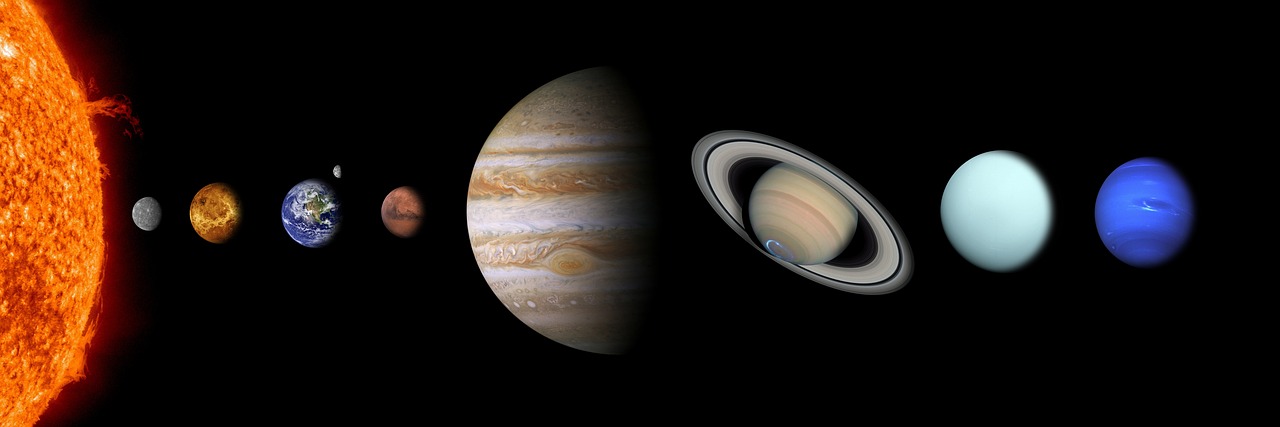
NASA describes its Science Mission Directorate as work across five broad pursuits: Earth Science, Planetary Science, Heliophysics, Astrophysics, and Biological and Physical Sciences. That range is important because space is not one simple subject. It covers linked systems, starting with Earth’s atmosphere and reaching out to the edge of the observable universe.
Public Data With Daily Use
Space agencies release large sets of public data, and that data goes into weather models, crop checks, disaster response, and ocean tracking. NASA Earth Science materials updated in 2026 describe Earth observations as a way to study the living planet and improve the ability to predict its systems. For a planner, port operator, insurer, or local business owner, this can mean better flood maps, cleaner risk models, and quicker action after a storm.
A Market Bigger Than Most People Expect
This is not just a research story. The Space Foundation reported in July 2025 that the global space economy reached $613 billion in 2024, up 7.8% year over year. That number includes commercial revenue and government activity. The business point is clear enough: space science supports a much larger space sector, even when the first mission starts with basic discovery.
What Does Space Science Actually Study?
Space science studies objects, forces, and environments beyond Earth’s surface. It also uses space-based tools to study Earth itself. In daily terms, it asks a group of connected questions. What is changing on this planet? How does the Sun affect those changes? What are other worlds made of? How did galaxies form and grow? Could life exist somewhere else?
Earth Science From Orbit
Earth science uses satellites to measure clouds, ice, ocean color, land cover, heat, sea level, and atmospheric gases. The main value is the wide view. A ground sensor gives one local reading, while a satellite shows the pattern across a wider area. During droughts, fires, storms, or algae blooms, that pattern can help teams move from guessing to acting with data.
Planetary Science and Astrobiology
Planetary science studies moons, planets, asteroids, comets, and planetary systems. Astrobiology asks where life could exist and what signs might point to it. The National Academies’ 2023 to 2032 planetary science decadal survey highlights origins, worlds, life, planetary defense, and human exploration as main themes. Put simply, the field covers both human curiosity and practical safety.
Heliophysics and Astrophysics
Heliophysics studies the Sun and its effects across the solar system. Astrophysics studies stars, galaxies, black holes, dark matter, and the history of the universe. NASA’s public science pages describe astrophysics as work that explores how the universe began, how it changed over time, and whether Earth-sized planets exist around other stars. These are large questions, but the work depends on steady measurements and careful checks.
How Does Space Science Protect Modern Technology?
The practical value of space science becomes easier to see when technology has a problem. A strong solar storm can interfere with radio signals. Extra drag in low Earth orbit can shift satellite paths. A near-Earth asteroid is unlikely in normal planning, but it is not a made-up risk. Space science gives operators earlier warning, better models, and a more controlled way to judge what needs attention.
Space Weather Warnings for Power and GPS
NOAA’s Space Weather Prediction Center states that geomagnetic storms can affect GPS and GNSS accuracy, high-frequency radio, satellites, aviation, and the electric power grid. This is not just a dramatic line for the public; it is guidance for systems that people and companies use every day. The May 2024 geomagnetic storm, tracked by NOAA and other agencies, showed the same point. Auroras can be good to look at, while operators still need to watch communications and satellite performance closely.
Satellite Operations in Busy Orbits
Low Earth orbit is much busier than it was ten years ago. The European Southern Observatory reported on July 1, 2026, that more than 14,000 satellites were orbiting Earth, with fast growth since 2019. More satellites can bring better broadband, imaging, and communications, but they also create more tracking work. Space science helps teams model atmospheric drag, collision risk, brightness, and debris behavior.
Planetary Defense for Rare Risks
Planetary defense can sound extreme until you remember that asteroid impacts are natural events. They do not happen often, but the risk is not zero. The National Academies’ planetary science strategy for 2023 to 2032 treats detection, warning, and mitigation as real public needs. The basic lesson is not panic; it is measure first, then prepare.
Why Do Exoplanets and Deep Space Missions Matter to You?
Deep space missions can feel distant because the numbers are hard to picture. Still, they answer questions that affect science education, technology, and culture. Teams do not build better detectors, cryogenic systems, mirrors, spectrometers, and software only to take nice images of the sky. Those tools often push engineering forward in small steps that later become useful in other work.
More Than 6200 Confirmed Worlds
NASA Science reported in 2026 that more than 6,200 exoplanets had been confirmed, with thousands of additional candidates still needing follow-up. That number will keep moving as teams check new observations. The count matters, but the variety matters more. Researchers have found hot Jupiters, rocky worlds, mini-Neptunes, planets around red dwarfs, and systems that do not look much like the solar system.
Webb and Early Galaxy Evidence
The James Webb Space Telescope has moved early-universe research into a clearer stage. NASA’s Webb early-universe materials note that MoM-z14, confirmed in 2025, has a redshift of 14.44, placing it about 280 million years after the Big Bang. For readers outside the field, the point is simple. Better instruments can change the timeline, so a textbook answer from ten years ago may need to be checked again.
Life Search With Strict Evidence
The search for life beyond Earth draws attention, but the evidence rules are strict. A possible biosignature is not proof, and a strange gas in an atmosphere is not proof either. Scientists need repeat observations, chemistry that matches the planet, and solid reasons to rule out nonliving processes. That slower pace can feel dull, but it keeps the field away from wishful thinking. See also: AI.
How Is Space Science Changing the Economy?
Space science is not separate from the economy. It creates demand for sensors, launch services, software, clean rooms, materials, navigation systems, data platforms, and trained workers. Some gains appear in the news, but many show up in normal procurement files and supplier contracts. That is often where a real industry grows.
The 613 Billion Dollar Space Economy
The Space Foundation’s $613 billion estimate for 2024 gives a useful sense of scale. Commercial services make up a large part of that total, while government science missions often support technology, talent, and long-term capability. A climate satellite, a Mars probe, and a deep-space telescope are not the same business model. Even so, they can use some of the same suppliers, testing methods, and engineering skills.
Earth Observation for Real Decisions
Earth observation data supports insurance, agriculture, logistics, energy, and emergency management. A shipping company may need sea ice data, while a utility may watch wildfire risk near transmission lines. A city may focus on heat islands during summer planning. The science starts with calibrated instruments, and the business value comes when the data helps someone make a better decision.
Launch Access and Faster Experiments
More launch options have changed the pace of space work. Not every mission is cheap, and exact private pricing is often not public enough for a clean comparison. Even with that limit, more frequent launches let universities, startups, and agencies fly smaller instruments, test parts, and learn sooner. The working style shifts from waiting years for one chance to running more measured experiments.
What Should You Watch Next in Space Science?
If you follow space news, launch clips and dramatic images can take up most of the attention. It is more useful to watch a few steady themes. They show where the science is moving and where daily services may feel the impact sooner than expected.
Solar Activity and Space Weather Readiness
Solar Cycle 25 has kept space weather in the news, and operators now follow forecasts closely. You do not need to know every part of plasma physics to understand the risk. Navigation, satellites, aviation communications, and power systems all depend on preparation. NOAA’s public impact guidance remains a key source for that practical view.
Crowded Skies and Debris Tracking
The satellite boom brings another problem: keeping orbit usable. Tracking debris, sharing positions, reducing brightness, and designing satellites that leave orbit safely will matter more each year. The ESO satellite count from 2026 is both a milestone and a warning. Space is large, but the useful orbits are not unlimited.
Moon, Mars, and Sample Science
Samples still matter because lab instruments on Earth can study material in ways spacecraft cannot. Lunar samples, asteroid samples, and future Mars sample plans all connect field exploration with laboratory science. It is a practical reminder that some of the best space discovery happens after the rock comes back to a quiet lab bench. That part may look old-fashioned, but it still works.
FAQ
Q1: What Is Space Science? A: Space science is the study of Earth from space, the Sun, planets, moons, asteroids, stars, galaxies, and physical processes beyond Earth’s surface.
Q2: Why Is Space Science Important for Daily Life? A: It supports weather forecasting, GPS reliability, disaster response, climate data, satellite communications, aviation planning, and protection from space weather.
Q3: How Many Exoplanets Have Scientists Found? A: NASA Science reported in 2026 that more than 6,200 exoplanets had been confirmed, with many more candidates still under review.
Q4: Can Space Weather Really Affect Earth? A: Yes. NOAA states that geomagnetic storms can disturb satellite operations, GPS accuracy, radio communications, aviation systems, and electric power grids.
Q5: What Is the Biggest Space Science Trend to Watch? A: Watch the mix of space weather readiness, crowded low Earth orbit, exoplanet research, and new telescope data. Those themes will shape both science news and real-world services.