



Why planetary and space science matters in 2026
Planetary and space science in 2026 is less about distance alone and more about evidence that can be tested, compared and used. Returned samples, close observations of ocean worlds, asteroid-defense measurements, Mercury arrival operations and stronger space-weather models are setting the agenda. NASA, ESA and the National Academies have framed much of the decade around connected questions: how planetary systems form, where habitable environments may exist, how the Sun affects worlds and infrastructure, and which missions can be delivered within real budget limits. For readers following Space Science, the key shift is integration. Geology, chemistry, heliophysics, biology and engineering are increasingly being applied to the same mission questions.
This article treats planetary and space science as a discipline rather than as a journal title. It reviews the field’s current direction, the missions driving that direction, and the uncertainties that could shape what researchers learn next.
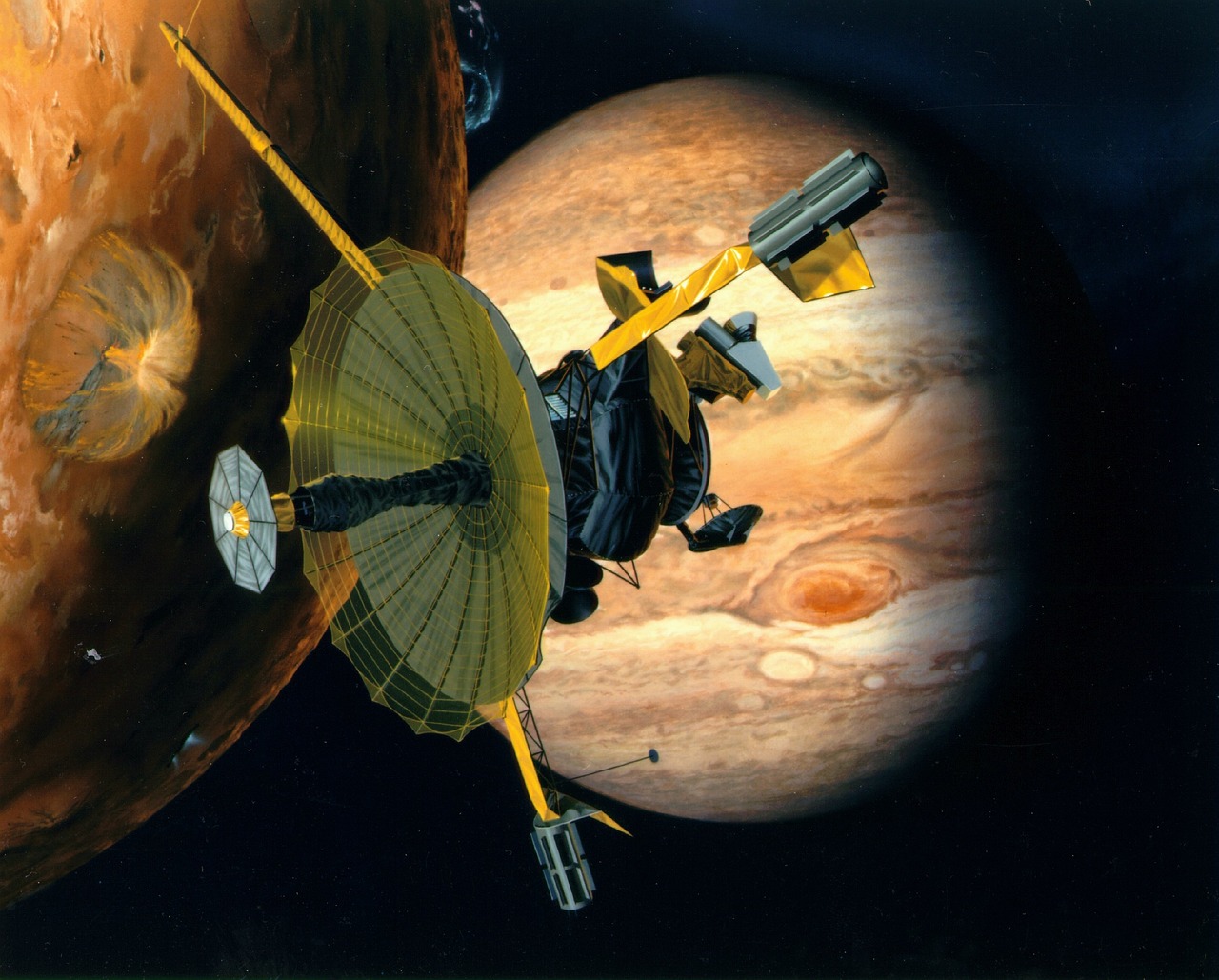
What planetary and space science includes
Planetary science studies planets, moons, asteroids, comets, rings, atmospheres and planetary systems. Space science is broader. It includes planetary exploration, heliophysics, magnetospheres, cosmic particles, space environments and the conditions that affect spacecraft and, increasingly, society on Earth. The overlap between the two is where much of the active work is now taking place.
A Mars sample is geology, chemistry and astrobiology at the same time. Europa and Ganymede are ocean-world targets, but they are also laboratories for ice physics, magnetospheric radiation and geophysical modeling. Mercury is a rocky planet, yet BepiColombo also studies how a small magnetic field interacts with the solar wind close to the Sun. Planetary defense combines asteroid science, orbital dynamics and public-risk management. Space weather links solar eruptions to satellite operations, power-grid concerns, aviation routes and crewed exploration.
That breadth explains why the phrase planetary and space science serves several search intentions. Some readers want a basic definition. Others are tracking missions. Many want to understand why public agencies fund projects that may not reach their main targets for years. The practical answer is that the field turns distant environments into comparative evidence. A single planet can be interesting; a set of worlds lets scientists ask why Earth became habitable, why Venus did not remain Earth-like, why Mars changed, and whether ocean moons could support chemistry relevant to life.
The 2026 mission picture shows a field in transition
The clearest story in 2026 is not a single discovery. It is a group of missions and planning decisions moving at different speeds. Several spacecraft are already in flight, while future projects face schedule, cost and political constraints. That pattern is normal in deep-space science, where a mission can take a decade or more from selection to major results.
| Mission or planning signal | Key date or status | Why it matters |
|---|---|---|
| National Academies planetary decadal survey | Strategy for 2023–2032, published in the early 2020s | It sets community priorities, including Mars sample return, Uranus system exploration and balanced research programs. |
| Europa Clipper | Launched in 2024, with an Earth gravity assist listed by NASA for Dec. 3, 2026 and Jupiter-system arrival planned for 2030 | It focuses on whether Jupiter’s moon Europa has environments that could support life beneath its icy surface. |
| BepiColombo | ESA and JAXA began the Mercury arrival sequence on Sept. 3, 2026 after launch in 2018 | It will help compare Mercury with other rocky planets and study a planetary environment close to the Sun. |
| Hera | ESA launched the mission on Oct. 7, 2024, with arrival at the Didymos system expected in late 2026 | It follows NASA’s DART impact to measure asteroid-deflection effects in detail. |
| Dragonfly | NASA reported in 2025 that the Titan rotorcraft passed critical design review, with launch no earlier than July 2028 | It will investigate prebiotic chemistry and habitability on Saturn’s largest moon. |
| NEO Surveyor | NASA lists launch no earlier than September 2027 | It is designed to improve detection and characterization of potentially hazardous near-Earth objects. |
These dates also separate completed events from expected milestones. BepiColombo’s September 2026 arrival sequence is an event that has begun. Hera’s late-2026 asteroid arrival remains a planned milestone. Europa Clipper’s 2030 Jupiter arrival is a future mission phase, not a current result. That distinction matters in science coverage because spacecraft schedules can change.
Samples are changing how planetary evidence is judged
Remote sensing transformed planetary exploration, but returned samples still occupy a special place. Laboratories on Earth can measure minerals, isotopes, organic molecules and microscopic structures with far more flexibility than most spacecraft payloads. That is why Apollo lunar samples remain scientifically productive decades later, and why Mars samples collected by Perseverance are central to discussions about the next stage of Mars science.
The scientific logic is direct. Orbiters and rovers can identify promising environments, but the deepest chemical and chronological tests often require Earth-based laboratories. A returned sample can be reanalyzed as instruments improve. It can be studied by multiple teams. It can also be preserved under controlled conditions for future techniques that do not yet exist.
Mars sample return is also the clearest example of a tension running through planetary and space science: high priority does not remove cost pressure. The National Academies placed strong scientific weight on returning Mars samples, while NASA has had to examine lower-cost and lower-risk architectures. Public updates in recent years have made clear that schedule and design choices remain tied to budget realities. The takeaway is not that sample return is less important scientifically; it is that even the most important missions can be slowed or reshaped by affordability.
The same sample-based thinking extends beyond Mars. Lunar South Pole and South Pole-Aitken Basin concepts are valuable because the Moon records early solar-system history in accessible materials. Asteroid samples help connect meteorites on Earth to known parent bodies. Comet and icy-world materials are harder to return, but they remain scientifically attractive because they preserve information about volatile compounds and early solar-system chemistry.
Ocean worlds make habitability a measurable question
Astrobiology once sounded speculative to many outside the field. It is now built into mission design through measurable questions: Is there liquid water? What is the chemistry? Is there a source of energy? How does material move between the surface and interior? Can instruments distinguish biological possibilities from non-biological chemistry?
Europa Clipper and ESA’s Juice mission show this shift. Europa Clipper is designed to conduct repeated flybys of Europa from Jupiter orbit, studying the moon’s ice shell, composition and potential subsurface ocean. Juice, launched by ESA on April 14, 2023 with Jupiter arrival planned for July 2031, will study Jupiter and the ocean-bearing moons Ganymede, Callisto and Europa. These missions are not simply asking whether an ocean exists. They will examine how oceans, ice shells, magnetic fields, radiation and chemistry interact.
Dragonfly extends the habitability question to Titan. Titan is not Earth-like in surface temperature or chemistry, but it has a dense atmosphere, complex organic molecules, hydrocarbon lakes and evidence relevant to prebiotic chemistry. NASA’s 2025 critical design review milestone moved the mission closer to construction, while its no-earlier-than July 2028 launch target keeps major results in the 2030s. That long timeline is difficult for public attention, but it is typical for outer-solar-system exploration.
The strongest scientific value comes from comparison. Mars preserves ancient environments. Europa and Ganymede test subsurface-ocean habitability. Titan tests organic chemistry in a cold, complex setting. Enceladus, although not currently the focus of a flagship mission in flight, remains important because plume material offers a way to sample an ocean indirectly. Together, these worlds turn habitability from a yes-or-no idea into a framework for measuring environments.
Mercury, asteroids and planetary defense expand the field beyond life
Habitability attracts public interest, but planetary and space science is not only a search for life. Mercury, asteroids and planetary defense show why comparative planetology and risk reduction are also important.
BepiColombo’s Mercury campaign matters because Mercury is an extreme rocky planet. It is small, dense, heavily cratered and close to the Sun. Studying its surface, interior, exosphere and magnetosphere can test models of how rocky planets form and evolve under intense solar conditions. Because the mission combines ESA’s Mercury Planetary Orbiter and JAXA’s Mercury Magnetospheric Orbiter, it also connects geology with plasma physics. See also: AI.
Asteroid science has a more direct risk-management dimension. NASA’s DART mission intentionally struck Dimorphos in 2022 to test kinetic impact deflection. ESA’s Hera mission is designed to inspect the Didymos-Dimorphos system afterward, measuring the crater, mass, interior structure and orbital effects more completely than Earth-based observations alone can do. If DART demonstrated that asteroid deflection is possible, Hera is intended to help show how predictable and repeatable the technique can become.
NEO Surveyor adds the survey side of planetary defense. Detecting hazardous objects before they become urgent is different from deflecting one after discovery. Infrared observations can help find dark asteroids that reflect little visible light. Better survey completeness also improves the science of near-Earth object populations, because the same catalog useful for risk assessment helps researchers understand small-body origins and evolution.
Space weather links planetary science to everyday infrastructure
Space weather is one of the most practical branches of space science. Solar flares, coronal mass ejections and energetic particles can affect radio communications, navigation, satellite operations and astronaut safety. For future lunar and Mars activity, space-weather forecasting is not optional background knowledge; it is part of mission risk management.
The connection to planetary science is direct. Every planet sits inside a space environment shaped by the Sun. Earth’s magnetic field and atmosphere protect the surface, but satellites and astronauts operate in regions where solar activity matters. Mars lacks a global magnetic field like Earth’s, so solar wind and radiation are central to understanding its atmosphere and future exploration risk. Mercury’s magnetosphere is small and exposed. Jupiter’s system combines solar influence with its own powerful magnetosphere, shaping the radiation environment around Europa and Ganymede.
The current heliophysics planning environment emphasizes the Sun-Earth-space system and the need to safeguard human and robotic activity in space. That makes space-weather science both fundamental and operational. It studies plasma physics and magnetic reconnection, while also informing spacecraft design, warning systems and mission timing.
What could limit the next decade of discoveries
The biggest limits on planetary and space science are not always scientific. They are often programmatic. Deep-space missions depend on launch windows, radioisotope power availability, radiation-hard components, international partnerships, workforce stability and funding across multiple administrations. A mission can be scientifically compelling and still face redesign if its cost profile threatens the rest of a portfolio.
That is why decadal surveys matter. They are not binding budgets, but they provide a community-backed framework for tradeoffs. The 2023–2032 planetary strategy gives high priority to Mars sample return and a Uranus Orbiter and Probe, while also recognizing the need for smaller missions, research funding, data analysis and technology development. Without that balance, flagship missions can dominate attention while the research ecosystem that interprets their data becomes strained.
There is also a communications challenge. Public audiences often notice a mission at launch and then hear little during a long cruise. Yet the cruise phase can include instrument checks, gravity assists, calibration data and science from opportunistic observations. BepiColombo, Juice, Europa Clipper and Hera all show that the journey itself is part of mission execution, not a pause between launch and discovery.
The most realistic expectation for the next decade is steady accumulation rather than a single answer. Some missions will return headline findings. Others will refine models, rule out simpler explanations or provide the measurements needed to design the next spacecraft. That is how planetary and space science advances: by turning uncertainty into narrower, better-tested questions.
Frequently asked questions
What is the difference between planetary science and space science?
Planetary science focuses on planets, moons, asteroids, comets and planetary systems. Space science is broader and includes the Sun, space weather, magnetospheres, cosmic particles and the space environment. The two fields overlap whenever researchers study how planetary bodies interact with solar radiation, plasma, dust, impacts or spacecraft operations.
Why are ocean worlds important?
Ocean worlds such as Europa, Ganymede, Callisto, Titan and Enceladus help scientists test habitability beyond the traditional Earth-like planet model. They raise measurable questions about liquid water, chemistry, energy sources and exchange between interiors and surfaces.
Why does Mars sample return matter if rovers already study Mars?
Rovers can make valuable measurements in place, but Earth laboratories can perform more sensitive and varied analyses. Returned samples can also be preserved and reexamined as technology improves, making them long-term scientific assets.
How is planetary defense part of planetary and space science?
Planetary defense uses asteroid detection, orbit prediction, surface characterization and deflection testing. It is both a scientific field and a practical risk-reduction effort, because understanding small bodies improves the ability to respond to potential hazards.
What should readers watch next?
Key items include BepiColombo’s Mercury operations, Hera’s late-2026 Didymos investigation, Europa Clipper’s gravity-assist path toward Jupiter, NASA’s decisions on Mars sample-return architecture, and preparations for NEO Surveyor and Dragonfly. The dates may change, but these projects show where the field’s most important questions are heading.