



What the Sony Xperia Z3 was in 2014
The Sony Xperia Z3 was Sony Mobile’s late-2014 Android flagship, announced on September 3, 2014 around IFA in Berlin. It was built around a 5.2-inch Full HD display, a Qualcomm Snapdragon 801 processor, a 20.7-megapixel rear camera, IP65/IP68 water and dust resistance, and a 3100 mAh battery. The phone still draws interest because it sits at a useful point in smartphone history: old enough to be considered a retro Android device, but modern enough to include LTE, microSD storage, high-resolution audio features and 4K video recording. In practical terms, the Sony Xperia Z3 is no longer a suitable primary phone for most users, but it remains relevant as a collector device, media player, camera experiment or reference point for Sony’s Xperia design strategy.
Sony’s official 2014 launch materials positioned the Z3 as part of a wider Xperia Z3 family that included the Xperia Z3 Compact and Xperia Z3 Tablet Compact. That context matters because the Z3 was more than a routine specification refresh. It was also Sony’s attempt to connect its mobile hardware with its camera, audio and PlayStation businesses. For more coverage of device trends and historical handset context, visit our Devices section.
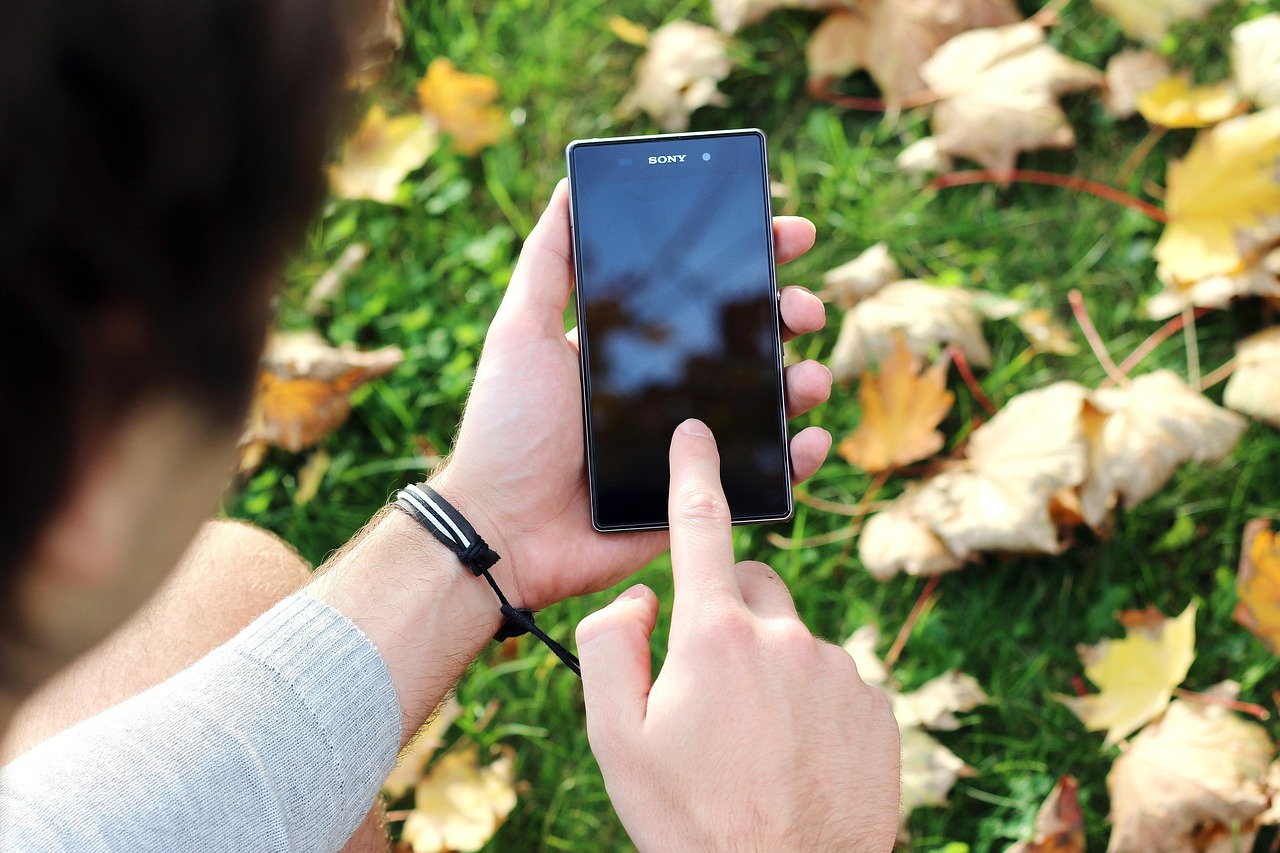
Key Sony Xperia Z3 specifications
The Xperia Z3 specification sheet still reads like a premium Android 4.x-era phone. Sony’s support pages list a 5.2-inch 1080p display, 3 GB of RAM, up to 16 GB of internal flash storage and microSD card support up to 128 GB. The processor was Qualcomm’s Snapdragon 801, a 2.5 GHz quad-core chip paired with Adreno 330 graphics. That platform was common in premium Android devices in 2014, before 64-bit Android hardware became standard in the flagship segment.
| Category | Sony Xperia Z3 details |
|---|---|
| Announcement | September 3, 2014, as part of Sony’s IFA 2014 product lineup |
| Display | 5.2-inch Full HD 1080p display with Triluminos and X-Reality branding |
| Processor | Qualcomm Snapdragon 801, 2.5 GHz quad-core, Adreno 330 GPU |
| Memory and storage | 3 GB RAM, up to 16 GB internal storage, microSD support up to 128 GB |
| Rear camera | 20.7 MP 1/2.3-inch Exmor RS sensor, 25 mm wide-angle G Lens, 4K video recording |
| Front camera | 2.2 MP camera with Full HD video recording |
| Battery | 3100 mAh, with Sony marketing the device around long battery life |
| Durability | IP65 and IP68 water and dust resistance, dependent on closed port covers |
| Software history | Launched in the Android 4.4 era; Sony’s Android overview lists Xperia Z3 versions up to Android 6.0.1 depending on market and operator |
The design was a major part of the pitch. Sony described a slim body measuring about 7.3 mm thick and weighing 152 g, with an aluminium frame and glass panels. Color options varied by market, but Sony’s launch materials highlighted black, white, copper and silver green. In 2014, that mix of glass, metal, water resistance and camera branding gave the Z3 a clear identity against Samsung, HTC, LG and Apple devices from the same period.
Why the Z3 stood out at launch
The first reason was durability. Water resistance was not unique to Sony, but Sony made it central to the Xperia Z identity before it became routine in mainstream flagships. The Z3 carried IP65 and IP68 ratings. Sony’s own footnotes explained that the phone was dust-tight, protected against low-pressure water jets, and could be kept under 1.5 meters of fresh water for up to 30 minutes when ports and covers were firmly closed. That condition is important. The rating did not mean the phone was indestructible, and age, worn seals and replacement parts make water resistance especially uncertain today.
The second reason was the camera package. The 20.7 MP Exmor RS sensor, 25 mm wide-angle G Lens, high ISO claim and 4K video recording gave Sony a strong technical story. Real-world image quality from old phones varies widely today because batteries, sensors, lenses and software processing age differently. Even so, the Z3’s camera specification was a key reason it earned attention in 2014. Sony was also drawing on its Cyber-shot and Handycam branding, which gave the handset more credibility than a simple megapixel claim.
The third reason was entertainment. Sony promoted high-resolution audio support, DSEE HX upscaling, digital noise cancelling with compatible accessories, front-facing stereo speakers and PS4 Remote Play. According to Sony’s IFA 2014 announcement, PS4 Remote Play support for the Z3 family was scheduled from November 2014 and required a PS4 system, DualShock 4 controller, PlayStation Network account, compatible software and a strong connection. That was a distinctive ecosystem feature at a time when most Android flagships competed mainly on screen size, processor speed and camera resolution.
Software support is the biggest practical limit
The most important limitation is software age. Sony’s current Android version overview lists the Xperia Z3 among 2014 devices with Android versions from 4.4 through 6.0.1, depending on country or operator availability. That does not mean every individual unit will be on the same build, and it does not imply modern security support. It means the Z3 belongs to an old Android generation that many current apps, banking tools, workplace management systems and streaming services may not fully support.
This is the dividing line between the Z3 as an interesting device and the Z3 as an everyday phone. Android 6.0.1 was a meaningful update in its time, but it is far behind current Android releases in privacy controls, app compatibility, encryption expectations, browser security and security patch coverage. A device that no longer receives regular security patches should not be treated as a safe place for sensitive accounts, payment apps, password managers or primary email.
Community Android builds have existed for some older Xperia devices, and LineageOS documentation has listed the Xperia Z3 in the past. However, LineageOS device documentation currently warns that the Xperia Z3 is no longer maintained. Unofficial builds may be available from community sources, but they are not the same as official support. They also require technical comfort with bootloaders, recovery tools and the risk of breaking features. For most readers, the safer assumption is that a Z3 should be used offline, on Wi-Fi with limited accounts, or as a non-critical secondary device.
Network use in 2026 needs caution
The Xperia Z3 includes LTE, but LTE alone does not guarantee reliable phone service in 2026. In the United States, major 3G network shutdowns changed how older phones behave on carriers. The practical issue is voice calling. Many older 4G phones relied on 3G fallback for voice or lacked carrier-approved Voice over LTE support. FCC and carrier guidance around the 3G shutdown warned that some older 4G devices without supported VoLTE could lose calling capability, including emergency calling, after legacy networks were retired.
That means a used Sony Xperia Z3 should not be bought on the assumption that it will work as a normal U.S. phone. Model number, carrier history, LTE band support, SIM status, VoLTE provisioning and local carrier policies all matter. A T-Mobile-era U.S. model may not behave like an unlocked international model, and a phone that connects to mobile data may still fail to make voice calls. Anyone considering a Z3 for active service should test it with the exact carrier SIM before relying on it.
For Wi-Fi use, the situation is different. A Z3 can still serve as a music player, alarm clock, offline camera, small video screen, spare remote-control device or nostalgia handset. The battery is the main unknown. A 2014 battery is likely to have reduced capacity unless it has been replaced, and a poor replacement can affect safety, heat and runtime. Water resistance should also be considered expired unless the device has been professionally inspected and resealed.
How the Z3 compares with what came before and after
The Xperia Z3 followed the Xperia Z2 closely, which is why some reviewers at the time treated it as an iterative update rather than a major reinvention. The processor class, camera resolution and display size were familiar, but Sony refined the industrial design, battery story and entertainment features. The Z3 Compact also helped the family stand out because it delivered many flagship-grade features in a smaller body, something Android manufacturers often struggled to do consistently. See also: AI.
Compared with later Xperia phones, the Z3 shows how Sony’s priorities have remained fairly consistent. Modern Xperia flagships still emphasize camera controls, displays, audio features and a narrower appeal to enthusiasts rather than mass-market simplicity. The Z3 sits near the middle of that story: more polished than early Xperia Z models, but less specialized than later creator-focused Xperia 1 devices.
The phone also illustrates a broader industry shift. In 2014, a flagship could stand out with water resistance, stereo speakers, microSD support, a glass-and-metal body and console streaming. Many of those features either became common, disappeared from mainstream phones, or moved into more advanced forms. Today, the Z3 is less useful as a performance benchmark and more useful as a snapshot of what Android manufacturers considered premium design before modern multi-camera systems, 5G, high-refresh OLED displays and long update promises became central selling points.
Should you buy or keep a Sony Xperia Z3 now?
For most people, the Sony Xperia Z3 is not a sensible primary-phone purchase in 2026. The software is too old, app compatibility is uncertain, carrier voice support can be unreliable, and battery condition varies heavily. A low price does not remove those risks. If you need a dependable everyday phone, a newer budget Android device with current security updates will usually be the better choice.
The Z3 makes more sense for specific use cases. Collectors may value it as part of the Xperia Z design era. Enthusiasts may want it for experimentation, repair practice or custom ROM work. Media users may appreciate the headphone jack, stereo speakers, microSD support and Sony audio features. Photography hobbyists may enjoy testing the 20.7 MP camera against modern computational photography. In all of those cases, the buyer should treat the device as a vintage gadget rather than a fully modern smartphone.
- Check the exact model number before buying, because regional variants can differ.
- Assume the battery may need replacement unless there is proof of recent service.
- Do not rely on original water resistance after years of use, repairs or seal aging.
- Test calling, texting and data with your carrier before using it on a mobile plan.
- Avoid using it for banking, password storage or sensitive work accounts.
- Confirm that essential apps still support the installed Android version.
The fairest verdict is that the Sony Xperia Z3 has aged better as an idea than as a daily tool. Its design and feature mix explain why people still search for it, while its software and network limitations define how it should be used today.
Frequently asked questions
When was the Sony Xperia Z3 announced?
Sony announced the Xperia Z3 on September 3, 2014 as part of its IFA 2014 product lineup in Berlin. Regional availability followed later in 2014, including carrier-specific launches in some markets.
What was the final official Android version for the Xperia Z3?
Sony’s Android version overview lists the Xperia Z3 with Android versions from 4.4 through 6.0.1, depending on country or operator. Individual devices may differ based on region, carrier and update history.
Is the Sony Xperia Z3 waterproof today?
The phone was rated IP65 and IP68 when new, subject to Sony’s conditions about closed ports and covers. A used unit should not be trusted as waterproof without inspection because seals, covers and repairs can degrade over time.
Can the Xperia Z3 still be used on U.S. mobile networks?
It may work for some data or limited service scenarios, but it should not be assumed to work reliably for voice calls. After U.S. 3G shutdowns, older 4G phones need carrier-supported VoLTE for dependable calling, and compatibility depends on the exact model and carrier.
Is the Sony Xperia Z3 worth buying now?
It can be worth buying as a collector device, media player or hobby project. It is not recommended as a secure primary smartphone because of outdated software, uncertain app support, aging batteries and carrier compatibility concerns.