



The $122 Billion Round: How OpenAI’s Massive Raise Redefines “Startup”
The word “startup” used to bring to mind small groups of people working in garages or shared offices. They ran on tight budgets but had huge ambitions. Yet the $122 billion valuation for OpenAI in 2026 changes that story completely. When a firm still seen as a startup gets funding that matches the entire economic output of some countries, people start to wonder if the term even applies anymore. This piece looks at how OpenAI’s huge funding round changes what we mean by a startup. It also covers the effects on venture capital. Plus, it discusses what this means for the next wave of top funded startups 2026. Think about it—back in the day, a startup might scrape by with a few million bucks. Now, we’re talking billions. It’s wild how fast things have shifted, especially in tech hubs like Silicon Valley where everyone chases the next big thing.
What Makes OpenAI’s Funding Round So Unprecedented?
OpenAI’s $122 billion valuation did not just set new records. It smashed them to pieces. No other private AI company has drawn in that much money over such a brief period. The funding included big institutional investors. It also had sovereign wealth funds. And there were strategic partners from various parts of the world. One might say this event felt less like a typical startup raise. Instead, it seemed like a key moment in global affairs. For example, imagine funds from places like Saudi Arabia or Norway jumping in because they see AI as vital for their future economies. That’s the scale we’re dealing with here.
The huge size of this raise points to something bigger. Artificial intelligence is not just a test phase in tech anymore. It acts like basic infrastructure, similar to power grids or phone networks from long ago. Investors put money not only on OpenAI’s current tools. They bet on how it could support whole economies. This happens through things like AI that automates tasks, smart reasoning systems, and helpful digital helpers. In real terms, picture factories running smoother with AI oversight or doctors getting quick advice from models like GPT. That’s the kind of everyday impact investors eye.
Back in past years, even big successes like Uber or Airbnb needed a long time to hit high valuations. OpenAI reached this level quickly. It shows how views on AI investing have changed. What started as excited guesses has turned into a must-have for survival. And honestly, with all the hype around AI chatbots in apps we use daily, it’s no surprise money flows in fast.
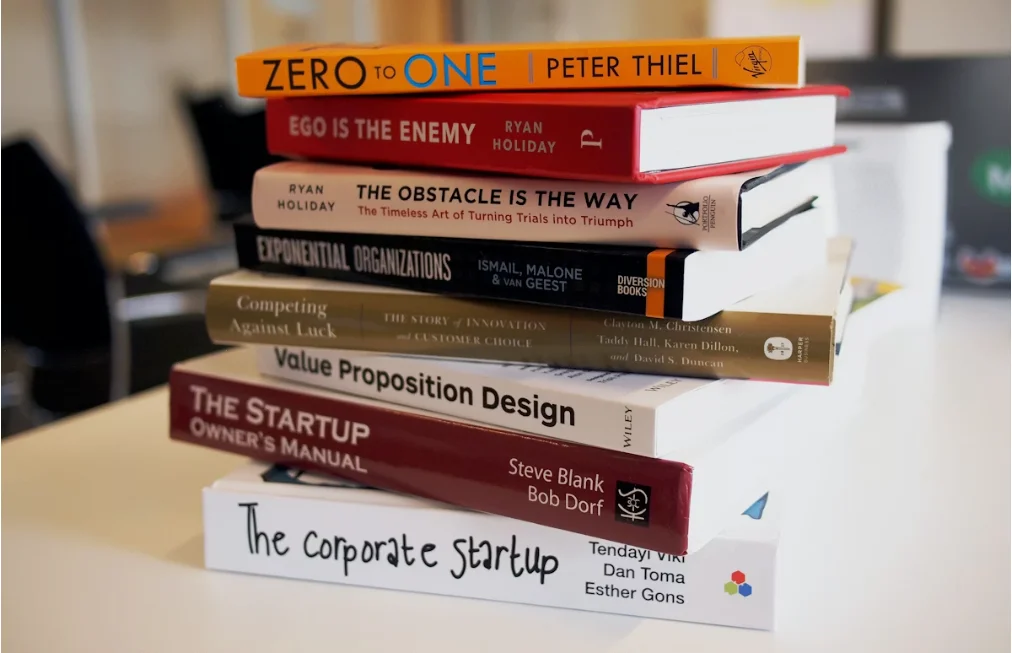
How Does This Redefine “Startup”?
Startups traditionally had three main traits. They dealt with scarce money. They iterated quickly on ideas. And their growth potential stayed unclear. OpenAI goes against all that. It has almost endless cash and computing resources. At the same time, its setup focuses on research. This feels more like a government lab than a standard tech business. I mean, who would have thought a “startup” could afford supercomputers that cost as much as a small city’s budget?
This situation brings up a good point. Can we still label a company as a startup if it has more money in the bank than many listed firms? In reality, yes. That’s because the term “startup” these days means more about aiming for fast growth and fresh ideas. It has less to do with how big or old the company is. OpenAI keeps releasing new models at a rapid pace. It pushes limits quicker than rules from governments can catch up. For instance, just last year, they dropped an update that handled complex math problems better than before, leaving competitors scrambling.
The change also shifts how investors think about risks. In the past, venture capitalists looked for big payoffs from tiny teams with bold plans. Now, they make bets worth billions on companies that already lead their fields. The line between a new startup and an established player has gotten fuzzy. It blends into a phase like “ongoing testing.” Here, new ideas keep coming. But the reach is already worldwide. It’s like these firms never graduate from the exciting early days, even with massive teams and offices everywhere.
What Does This Mean for Venture Capital?
The effects on venture capitalists run deep. When one firm takes such a large chunk of the money out there, it throws off how the market works. It changes how deals happen too. Smaller AI startups now fight hard not just for skilled workers. They also compete for things like GPU chips and a slice of investor time. Picture a young team in a Bay Area incubator. They pitch their idea, but investors keep asking, “How does this fit with OpenAI’s ecosystem?” It’s a tough spot.
Some investment groups have adapted by narrowing their focus. They target specific AI uses, such as tools for spotting diseases in hospitals or ways to engineer new life forms. This avoids going head-to-head with big model makers. Other groups team up in alliances. They combine their funds to stand against giants like OpenAI or Anthropic. From what I’ve seen in industry reports, these partnerships often start with shared access to data centers, which helps everyone involved.
A change in culture is happening inside VC offices as well. Early investing used to depend a lot on gut feelings and chats with founders over coffee. But with giant rounds like OpenAI’s, they need detailed checks on tech details. This happens at a level once only seen in big buyouts of public companies. For example, firms now run simulations on how much power a model might need in five years. It’s all about hard numbers.
To sum it up, venture capital feels more like a factory process now. It moves away from casual hunches during meetings. Instead, it involves charts that compare computing expenses to expected needs for running models. And let’s be real— this shift has made some old-school VCs rethink their whole approach, especially those who built careers on spotting the next Facebook early.
How Do Other Top Funded Startups 2026 Compare?
If you examine the wider group of top funded startups 2026, you see trends that match OpenAI’s path. But they happen on a lesser scale. Firms like Anthropic, Inflection AI, xAI, and Mistral each gathered billions soon after starting. Their worth comes from more than just good products. It stems from smart spots in the growing AI system, led by language models. Take xAI, for instance—Elon Musk’s outfit raised over $6 billion in a single go, aiming to build models that understand the universe better. That’s bold, right?
Beyond AI, areas like tech for fighting climate change and biology-based innovations see funding swell too. Though nothing hits hundreds of billions yet. Say, projects on nuclear fusion now pull in investments from governments. They treat them as key assets for safety in the long run, not just risky chances. One fusion startup I read about got $2.5 billion from a mix of private and public sources, enough to build a prototype reactor by 2028.
Even so, among these well-funded groups, few get the same spotlight or sway as OpenAI. Its tools weave into everyday tasks. This includes helpers for writing code or aids for business teams. Such ties create loops that boost its lead with each new report period. It’s like how Google became part of searching—once you’re in, it’s hard to switch.
Is There Still Room for True Early-Stage Innovation?
Even with money bunching up at the high end of lists, fresh ideas at the start aren’t gone. They just grow under tighter rules. Founders today plan their companies to work well with others. They create add-ons that build on or work alongside big models. They steer clear of direct fights. This setup reminds me of the smartphone boom. Back then, app creators did great by making stuff for iOS or Android. They didn’t try to invent whole new phone systems from scratch.
In the same way, the best new companies now might skip training huge models on their own. Instead, they tweak AIs for certain fields. This could be for handling money in banks, rules in courts, or care in clinics. But hurdles stay high. Even making a basic model that works okay costs millions in machine time. Few brand-new teams can pay that without teaming up or getting help from bigger names. For a real example, a small startup in Boston focused on AI for drug discovery partnered with a cloud provider to cut costs by 40%. Smart move, and it shows how collaboration keeps the little guys in the game.
Could Regulation Change the Trajectory?
Laws will probably decide if this gathering of power keeps going without checks. Or if it spreads out into a fairer setup for rivals. Around the world, officials write rules on clear data use. They cover tests for safe models. And they look at blocking unfair control in AI that generates content. If these rules push for ways systems can connect easily, or limit secret deals on hardware between big cloud firms and model teams, then small startups might get a better chance. This could happen through open groups instead of locked systems.
On the flip side, if rules fall behind how fast tech moves—as often happens in history—the divide between huge players like OpenAI and the rest could grow. It might end with just a few groups running all of global AI setups. We’ve seen this in telecom, where a handful of carriers dominate. Regulators in Europe are already pushing bills that require AI firms to share safety data, which could level the field a bit if the U.S. follows suit.
FAQ
Q1: Why is OpenAI still called a startup despite its massive valuation?
A: Because “startup” now refers more to growth focus and innovation pace than company size or age; OpenAI maintains rapid development cycles typical of early-stage firms even at global scale.
Q2: How does this affect smaller AI companies?
A: It raises barriers around compute access and investor attention but also opens partnership opportunities where smaller firms build specialized tools atop larger platforms.
Q3: Are other industries seeing similar mega-rounds?
A: Yes—climate tech and biotech are drawing multi-billion-dollar rounds as investors seek long-term impact sectors beyond software alone.
Q4: What role does regulation play here?
A: Regulation could either rebalance competition through transparency mandates or entrench dominance if enforcement remains slow relative to innovation speed.
Q5: Will future top funded startups 2026 follow this model?
A: Likely yes; future leaders will blend massive upfront capital with continuous product iteration rather than traditional linear scaling paths common in past decades.